

 Contact Us

 Home /
 Robotic Welding vs Manual Welding: Cost, Quality, Flexibility, and ROI

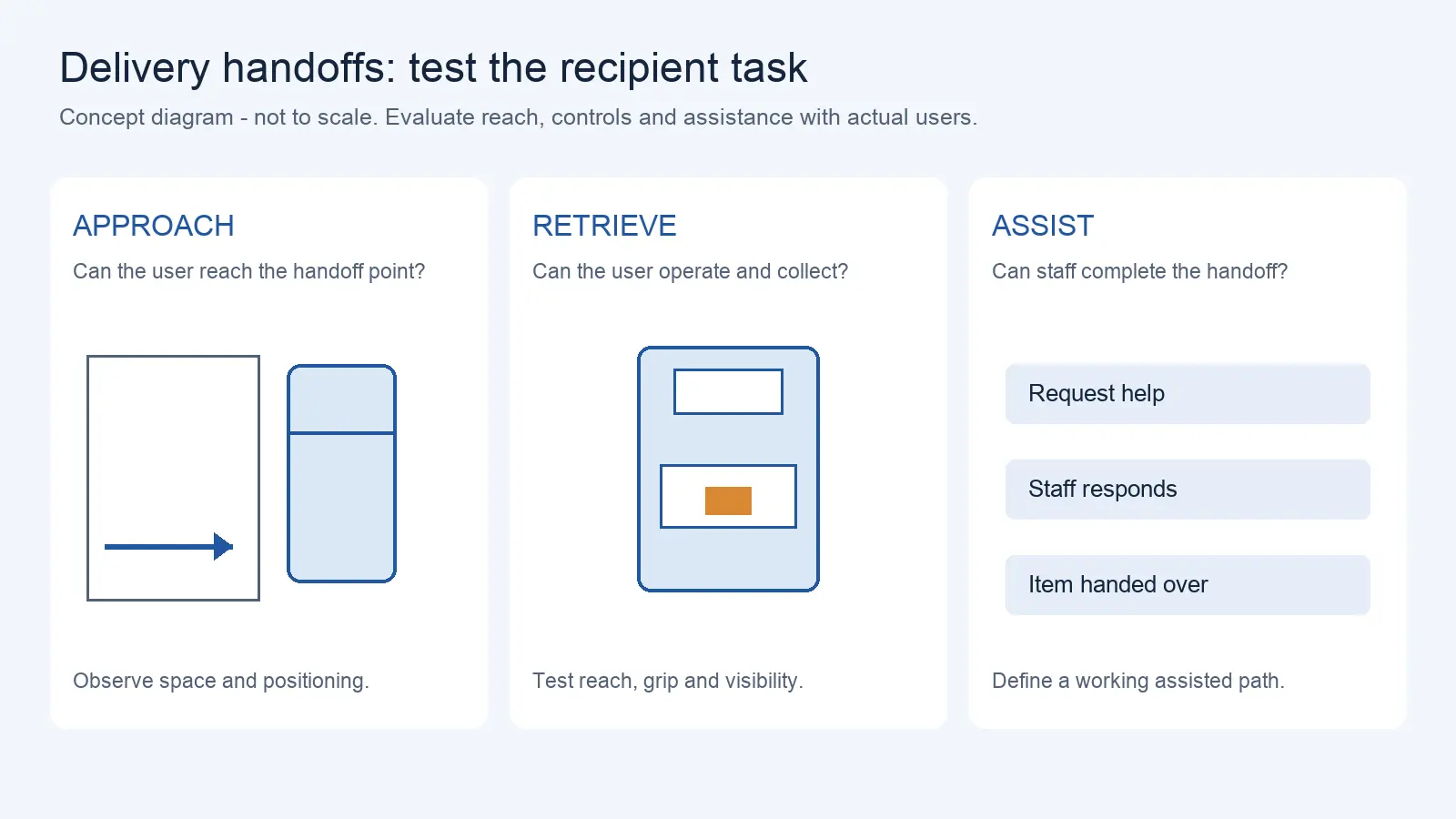
Delivery Robot Accessibility: Tray Reach, Controls, and Assisted Handoffs
Oct 12, 2026
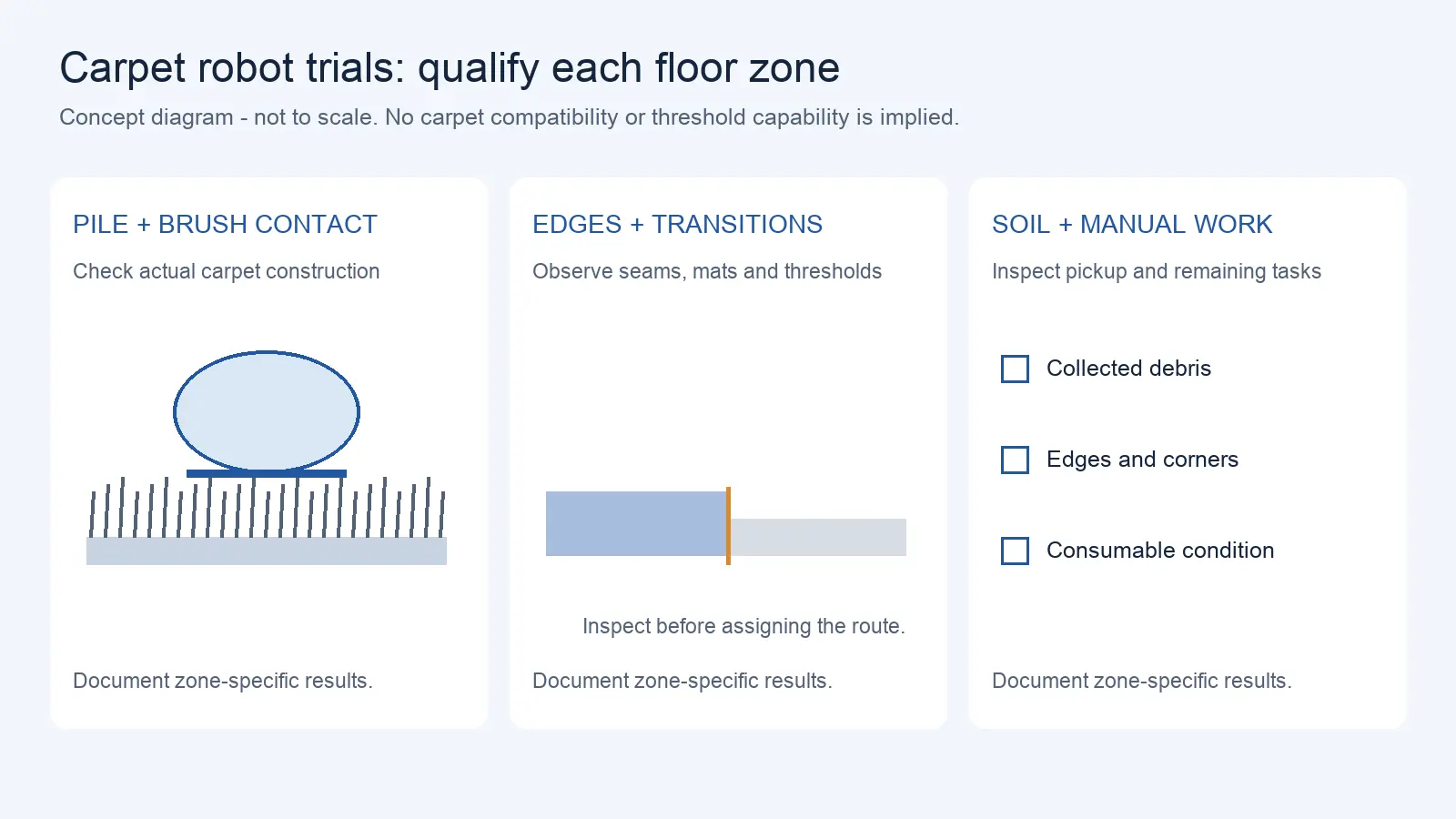
Commercial Carpet-Vacuuming Robots: Pile, Edge Transitions, and Maintenance Limits
Oct 12, 2026
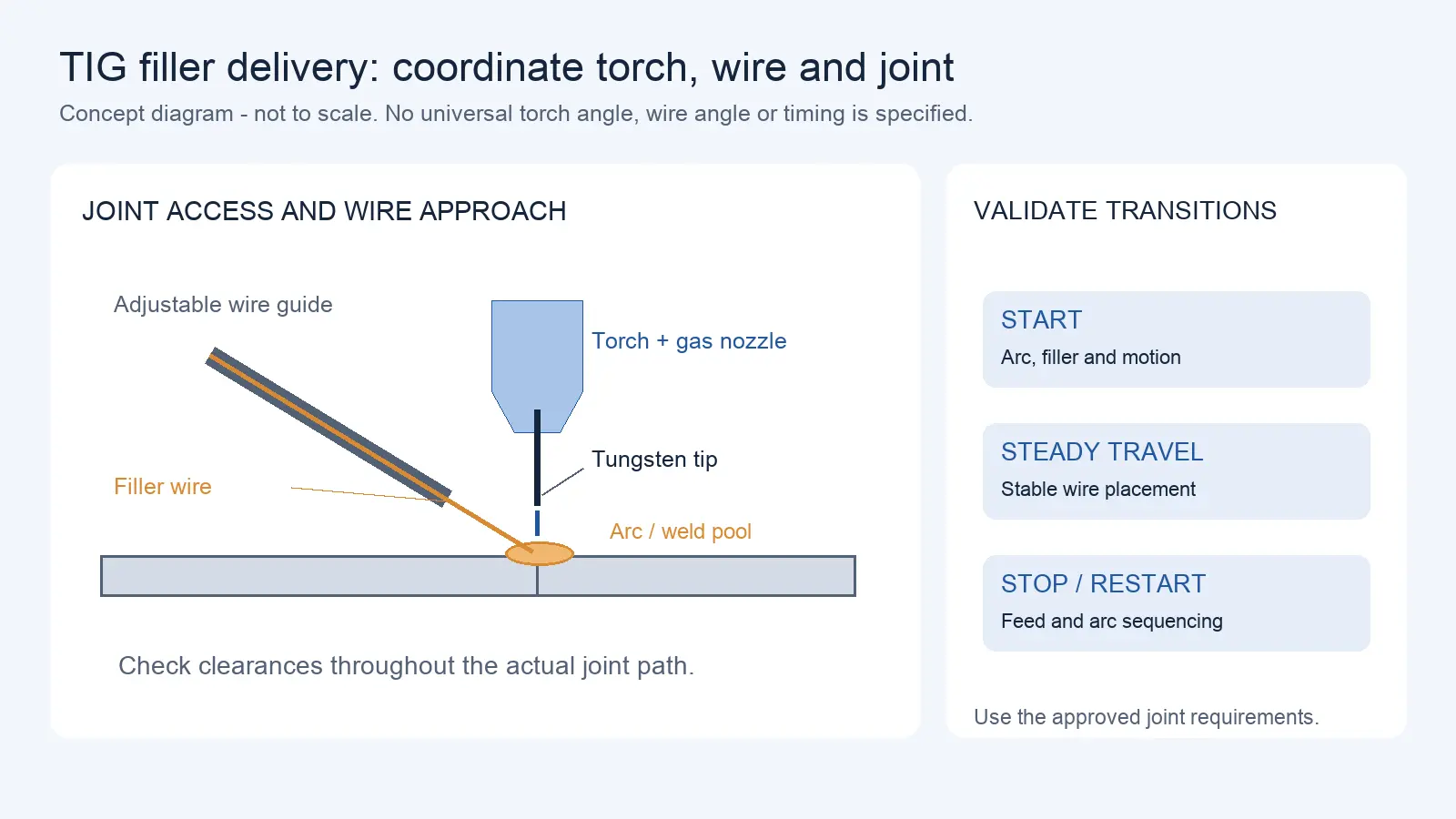
Robotic TIG Filler-Wire Delivery: Feed Angle, Arc Access, and Stop-Start Quality
Oct 12, 2026
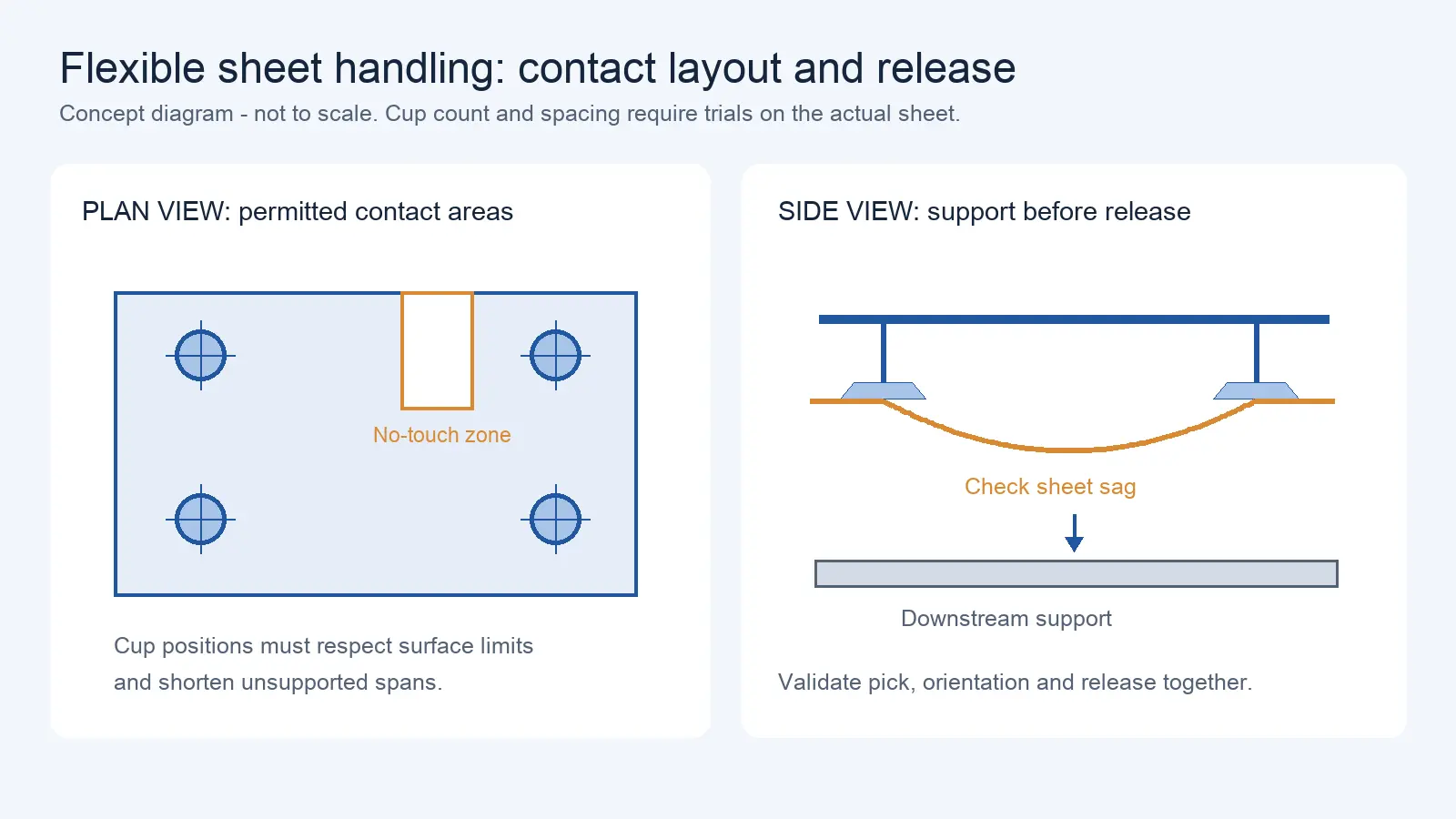
Suction Cup Layout for Flexible Sheets: Sag, Local Stress, and Controlled Release
Oct 12, 2026
The decision between Robotic Welding and Manual Welding is not about whether automation is always better. The right choice depends on actual production conditions, including:
- Workpiece consistency
- Production volume
- Weld complexity
- Labor availability
- Quality requirements
- Investment goals
Some welding applications benefit significantly from robots, while others remain better suited for skilled manual welders. Many operations require a pilot test before making a final investment decision.
The key question is:
Does your production suffer more from human variation or part variation?
A robotic welding system improves consistency when parts, fixtures and processes are stable. Manual welding remains valuable when operators must make real-time adjustments to unpredictable conditions.
The Core Difference Between Robotic and Manual Welding
Manual welding depends on the welder’s:
- Experience
- Visual judgment
- Torch control
- Real-time adjustment ability
Skilled welders can compensate for:
- Weld gap changes
- Part misalignment
- Thermal distortion
- Non-standard conditions
Robotic welding depends on:
- Stable incoming parts
- Accurate fixtures
- Programmed welding paths
- Controlled parameters
The robot repeats:
- The same movement
- The same travel speed
- The same wire feed
- The same welding path
every cycle.
Neither method guarantees quality by itself.
A skilled welder can adapt to inconsistent parts but may not maintain identical output across long shifts.
A robot can repeat thousands of consistent welds but cannot correct poor fixture design or unstable parts automatically.
Quality and Weld Consistency Comparison
Advantages of Manual Welding
Manual welding performs well when flexibility is more important than repetition.
Advantages include:
- Real-time adjustment of weld parameters
- Ability to compensate for fit-up variation
- Handling repairs and one-off projects
- Working with difficult-to-fixture components
Advantages of Robotic Welding
A Robotic Welding System provides advantages when production conditions are repeatable.
Benefits include:
- Consistent weld geometry
- Stable arc length and travel speed
- Reduced variation caused by fatigue
- Repeatable welding records and parameters
Robotic welding is especially valuable for:
- Long production runs
- Repetitive weld seams
- High consistency requirements
What Neither Method Guarantees
Robotic welding does not automatically improve quality.
If:
- Fixtures are unstable
- Parts vary excessively
- Welding parameters are incorrect
the robot may repeatedly produce the same defect.
Manual welding also cannot guarantee quality without:
- Proper training
- Process control
- Inspection standards
The conclusion is:
Robots improve consistency when production inputs are controlled. They do not replace process improvement.
Throughput: Robot Speed vs Real Production Output
A common mistake is comparing only welding speed.
Actual throughput depends on effective arc time.
Manual Welding
Manual welding includes:
- Setup
- Position adjustment
- Inspection
- Breaks
- Part handling
Industry experience estimates that arc-on time may represent approximately:
25–35% of total shift time
Robotic Welding
Well-designed robotic welding cells may achieve:
60–80% arc-on time
depending on:
- Automated loading
- Fixture design
- Part presentation
- Changeover method
However, a robot with manual loading may not achieve significant throughput improvement compared with a skilled welder.
The biggest productivity gains usually come when the entire process is optimized:
- Automated loading
- Better fixtures
- Faster changeover
- Stable part positioning
Cost Comparison: Manual Welding vs Robotic Welding
Comparing welding costs requires a complete cost model.
The question is not:
“Robot price vs welder salary”
but:
Total production cost over the system lifetime
Manual Welding Cost Factors
| Cost Category | Examples |
|---|---|
| Direct labor | Wages, overtime and shift premiums |
| Training | Skill development and supervision |
| Recruitment | Hiring and retention costs |
| Rework | Defects, repair and scrap |
| Consumables | Wire, gas, electrodes and grinding materials |
| Safety | PPE, ventilation and workplace risks |
| Overhead | Space, utilities and insurance |
Robotic Welding Cost Factors
| Cost Category | Examples |
|---|---|
| Robot system | Robot arm, welding source, torch and controller |
| Fixtures | Positioning and workholding systems |
| Safety system | Fume extraction, shielding and risk controls |
| Integration | Programming, commissioning and testing |
| Training | Operator and maintenance training |
| Maintenance | Spare parts and consumables |
| Rework | Defects caused by setup or programming issues |
Robotic welding requires higher initial investment, while manual welding creates continuous labor-related costs.
The economic result depends on:
- Labor cost
- Robot utilization
- Production volume
- Shift pattern
- Operating years
There is no universal ROI period that applies to every factory.
Robotic Welding in High-Mix, Low-Volume Production
High-mix, low-volume production is often considered unsuitable for robots, but the reality depends on product characteristics.
Manual Welding Advantages
Manual welding is better when:
- New parts are introduced frequently
- Production quantities are very small
- Parts cannot be consistently fixtured
- Welders must make real-time decisions
Robotic Welding Advantages
Robotic welding becomes attractive when:
- Parts are repeatable
- Fixtures can hold components accurately
- Production batches are sufficient
- Weld quality consistency is critical
- Skilled welders are difficult to recruit
The key factor is not only batch size.
It is:
Programming time + fixture cost + production frequency
For example:
- Many different parts with only a few pieces each may create excessive programming time.
- Fewer product families with larger batches allow better robot utilization.
When Manual Welding Is the Better Choice
Manual welding is usually more practical for:
Small Batch or Prototype Work
When programming takes longer than welding itself.
Unstable Parts
Including:
- Field repairs
- Large structures
- Poorly repeatable assemblies
Complex Real-Time Adjustment
Applications requiring:
- Visual judgment
- Mid-weld adjustment
- Custom fabrication
Available Skilled Labor
If experienced welders are easily available and affordable, automation urgency may be lower.
When Robotic Welding Is More Suitable
Robotic welding is worth evaluating when:
- Parts are stable and repeatable
- Production volume is moderate or high
- Weld quality consistency is important
- Skilled welders are difficult to retain
- Long weld seams require repeatability
- Operators face significant heat, fumes or repetitive strain
Typical applications include:
- Fillet welds
- Long continuous welds
- Tank and pipe welding
- Repetitive assemblies
Practical ROI Evaluation Framework
A realistic ROI analysis should include:
Step 1: Calculate Current Manual Welding Cost
Include:
- Labor cost per part
- Rework and scrap
- Consumables
- Inspection cost
Step 2: Estimate Robotic Welding Cost
Include:
- Robot system investment
- Fixture cost
- Programming
- Maintenance
- Operator involvement
- Consumables
Step 3: Evaluate Different Scenarios
| Scenario | Purpose |
|---|---|
| Conservative | Tests whether automation works under lower utilization |
| Baseline | Estimates expected production conditions |
| Optimistic | Evaluates maximum potential improvement |
Step 4: Run a Pilot Test
Before full investment, test:
- Representative workpieces
- Actual fixtures
- Welding parameters
- Cycle time
- Weld quality
- Operator involvement
A pilot answers the most important question:
Does robotic welding work with your parts, your fixtures and your production environment?
Robotic Welding Selection Checklist
Robotic welding is worth evaluating when:
| Question | Indicator |
|---|---|
| Are parts dimensionally consistent? | Robot feasibility increases |
| Can parts be reliably fixtured? | Automation becomes practical |
| Are batch sizes large enough? | Programming cost can be absorbed |
| Are welders difficult to recruit? | Automation value increases |
| Are welds repetitive? | Robots provide consistency advantages |
| Is quality variation a problem? | Automation may reduce variation |
| Is facility space available? | Cell deployment becomes easier |
| Is programming support available? | Long-term operation improves |
| Can pilot testing be performed? | Project risk decreases |
Conclusion
The choice between Robotic Welding vs Manual Welding depends on production reality, not technology preference.
Robotic welding provides advantages in:
- Consistency
- Repeatability
- Long production runs
- Labor shortage situations
Manual welding remains valuable for:
- Custom fabrication
- Repairs
- Low-volume production
- Highly variable parts
The best approach is to evaluate:
- Workpiece stability
- Production volume
- Quality requirements
- Labor conditions
- ROI potential
AIsirRobot helps buyers evaluate whether robotic welding is suitable for their operation and organize the technical information required for automation assessment.
Share on Social:


Contact Us
In This Article
Delivery Robot Accessibility: Tray Reach, Controls, and Assisted Handoffs
Oct 12, 2026
Commercial Carpet-Vacuuming Robots: Pile, Edge Transitions, and Maintenance Limits
Oct 12, 2026
Robotic TIG Filler-Wire Delivery: Feed Angle, Arc Access, and Stop-Start Quality
Oct 12, 2026
Suction Cup Layout for Flexible Sheets: Sag, Local Stress, and Controlled Release
Oct 12, 2026