

 Contact Us


Commercial Delivery Robot Solutions:A Comprehensive Guide
Smart Delivery Solutions Tailored to Your Venue
AIsirRobot provides tailored delivery robot solutions for food delivery, room service, document transport, and item retrieval. Based on your venue layout, traffic patterns, delivery distances, load types, and peak demand, suitable configurations can support open-tray or enclosed-cabin delivery, multi-floor movement, and bussing or return tasks, with product and configuration options coordinated through selected supplier partners.
Where Delivery Service Creates Challenges
Common Delivery Scenarios
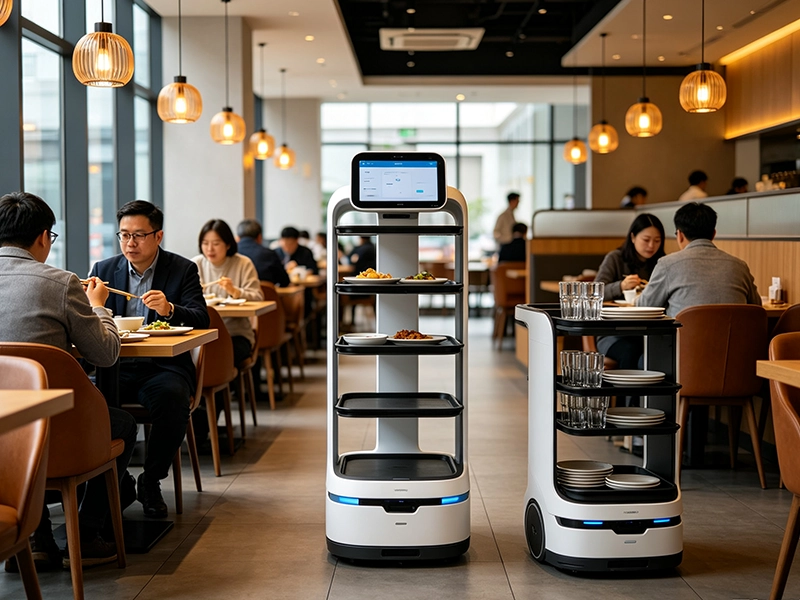
Restaurant Food Delivery and Bussing
Robots deliver food to tables and return used dishes to washing areas. Open-tray models can carry multiple items, while some include screens for orders or promotions.
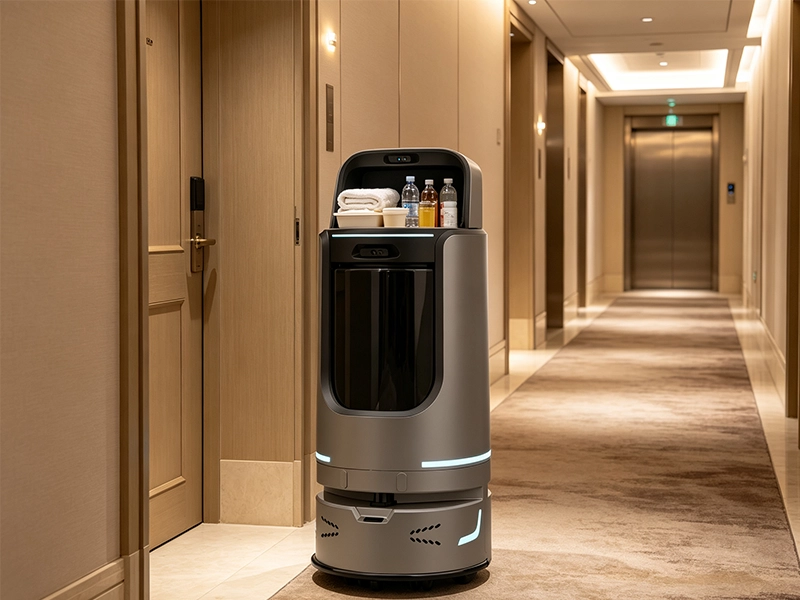
Hotel Room Service
Robots deliver food, amenities, and supplies to guest rooms, with optional elevator integration, corridor navigation, and arrival notifications. Privacy and guest comfort should be considered.
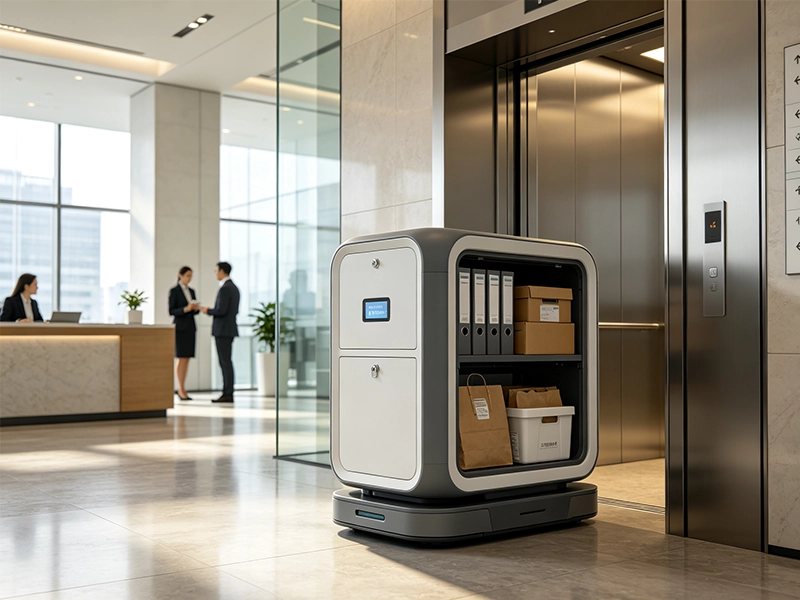
Office and Building Transport
Robots move documents, parcels, mail, and supplies between departments or floors, helping reduce repetitive internal courier tasks in large buildings.
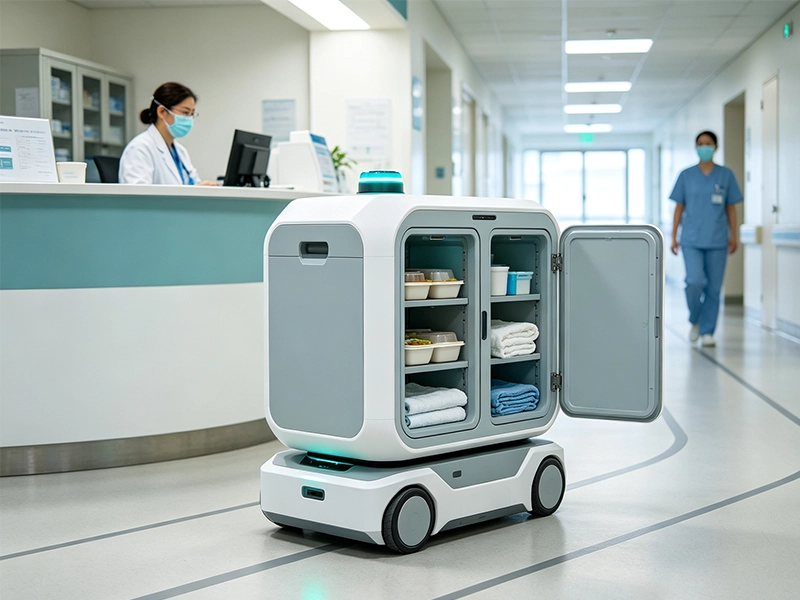
Medical and Care Facility Delivery
Some robots transport non-urgent supplies, meals, or linens in medical facilities, subject to application suitability, compliance, and facility requirements.
How a Typical Delivery Workflow Operates
Step 1. Loading
Items are securely loaded onto trays or into the cabin, within the robot’s payload capacity.
Step 2. Task Assignment
Tasks are assigned via POS, call buttons, mobile apps, or manual interfaces, with destination and access requirements.
Step 3. Navigation and Transport
The robot autonomously follows mapped routes, avoids obstacles, and supports elevator or door integration where available.
Step 4. Arrival and Notification
Upon arrival, the robot alerts recipients via screen, voice, phone, or app for item pickup.
Step 5. Item Collection and Return
After delivery, the robot can return, continue to the next task, or perform bussing and return operations.
Step 6. Charging and Standby
The robot returns to a charging dock or standby position between tasks, depending on its battery configuration.
Which Robot Type Fits the Task?
Choose the right robot based on venue, load, distance, and integration needs. Different delivery needs require different robot configurations, with selection based on venue, load, distance, and integration requirements.
| Robot Type | Common Uses | Typical Configuration | Important Selection Conditions |
| Open-Tray Delivery Robot | Restaurant food delivery, bussing, multi-plate transport | Multiple open trays, optional screen for display | Tray count, payload per tray, stability, venue layout, navigation method |
| Enclosed-Cabin Robot | Hotel room service, secure item transport, privacy-sensitive deliver | Locked or enclosed compartment, access verification | Cabin size, payload, access method, notification system, privacy requirements |
Important Note:
Multi-floor capability is a project configuration, not a separate robot type. Both open-tray and enclosed-cabin robots may support elevator integration depending on the model. For cross-floor delivery, elevator compatibility should be confirmed during evaluation.Additional configurations, such as bussing modules, multi-tray setups, or towing attachments, may be available depending on the selected model and venue requirements.
Recommended Robot Categories
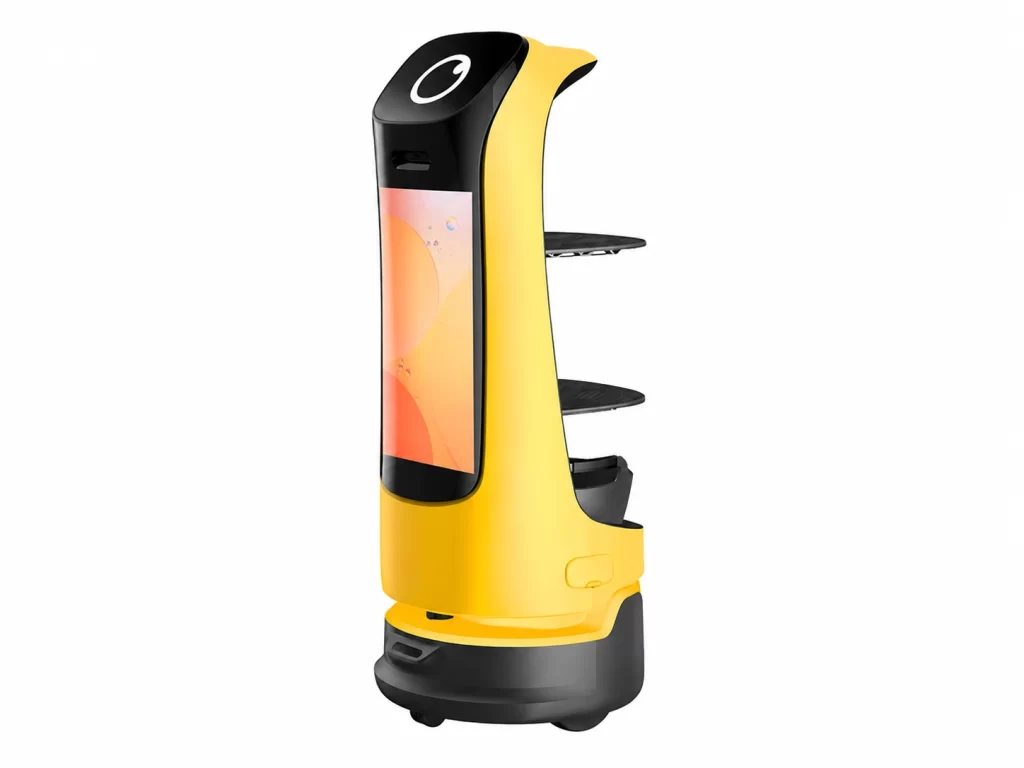
Open-Tray Delivery Robot
Suitable for restaurant food delivery, table bussing, and multi-item transport in dining and event venues. Selection depends on tray count, payload, stability, and venue layout.
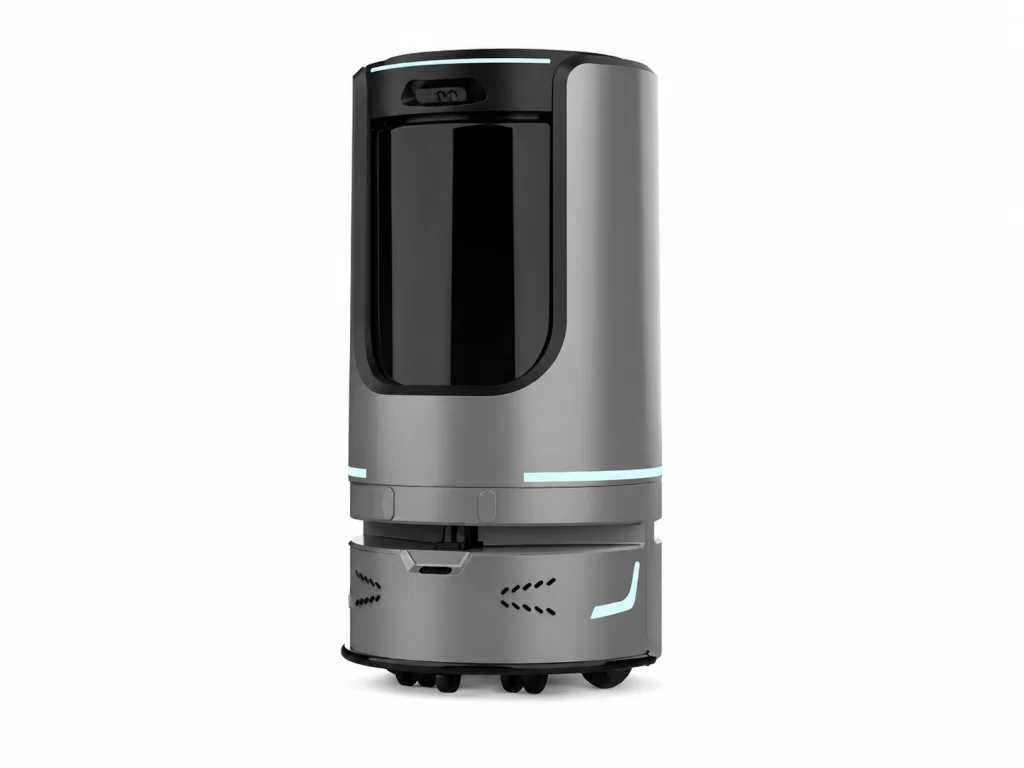
Enclosed-Cabin Delivery Robots
Designed for hotel room service, secure transport, and privacy-sensitive deliveries. Selection depends on cabin size, access method, and notification system.
Site Readiness Checklist
Check your venue’s key requirements before selecting a delivery robot.

Venue & Layout
Infrastructure & Integration

Delivery Operations

Mobility & Navigation
Hygiene and Daily Cleaning
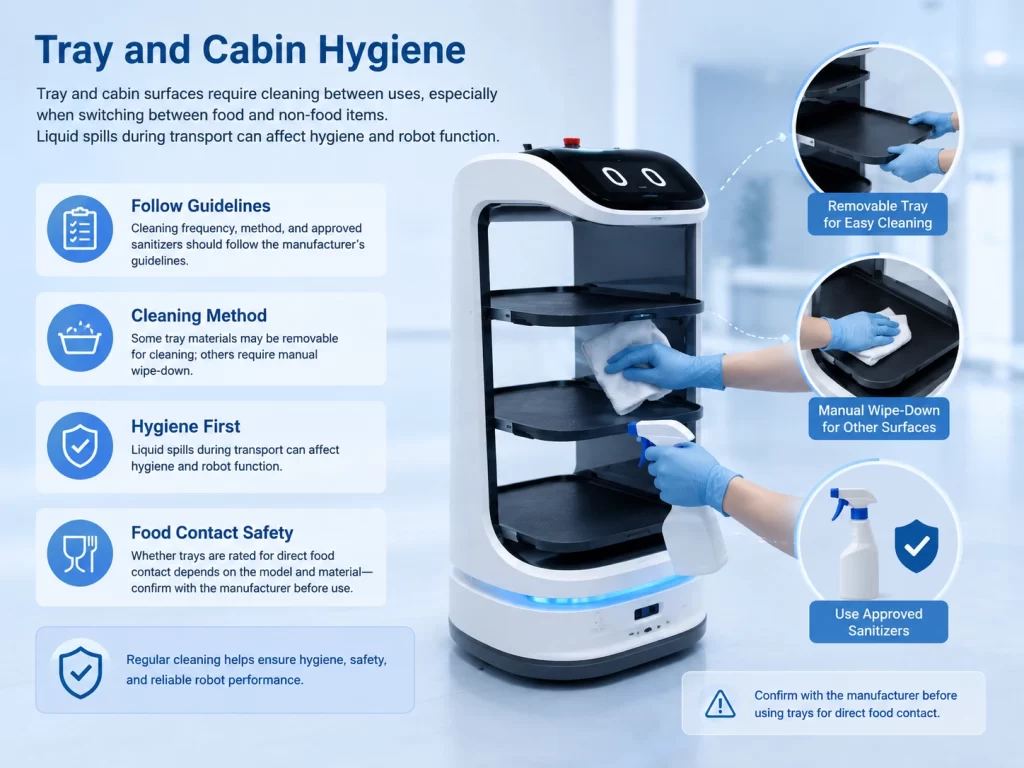
Tray and Cabin Hygiene
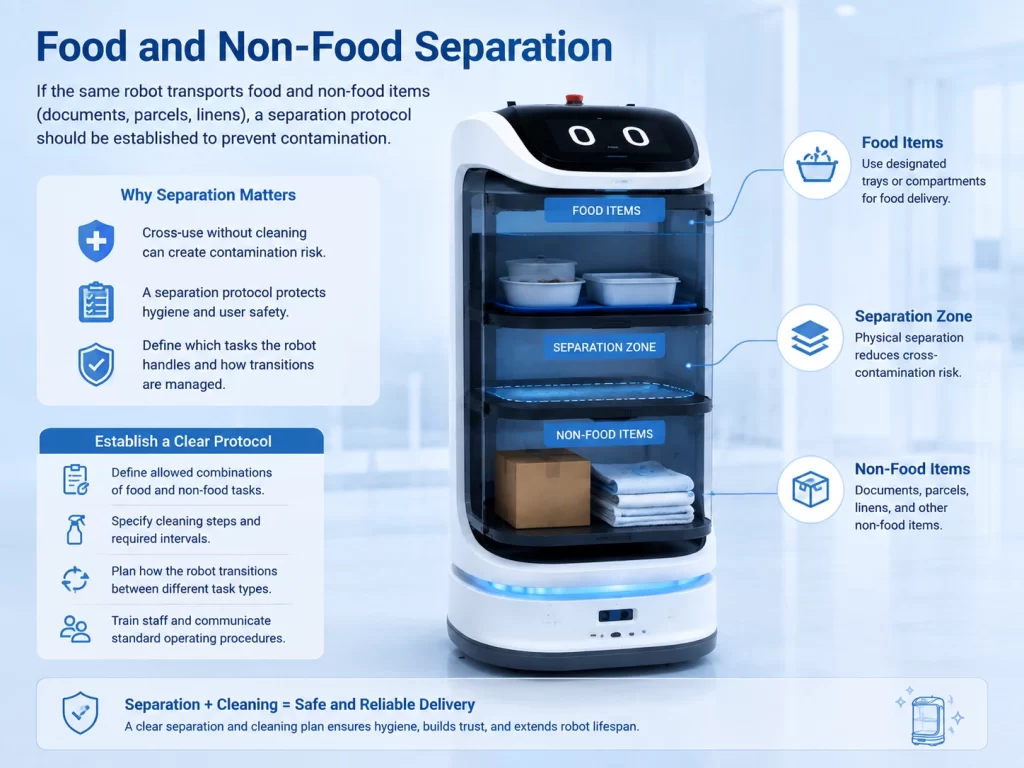
Clean trays and cabins between food and non-food transport to avoid contamination and robot faults. Adhere to manufacturer cleaning instructions and confirm whether trays support direct food contact.
Food and Non-Food Separation
Robots used for both food and non-food deliveries require clear separation protocols. Uncleaned cross-task usage may cause contamination, so standardized cleaning and task transition rules must be defined.
Disinfection Considerations
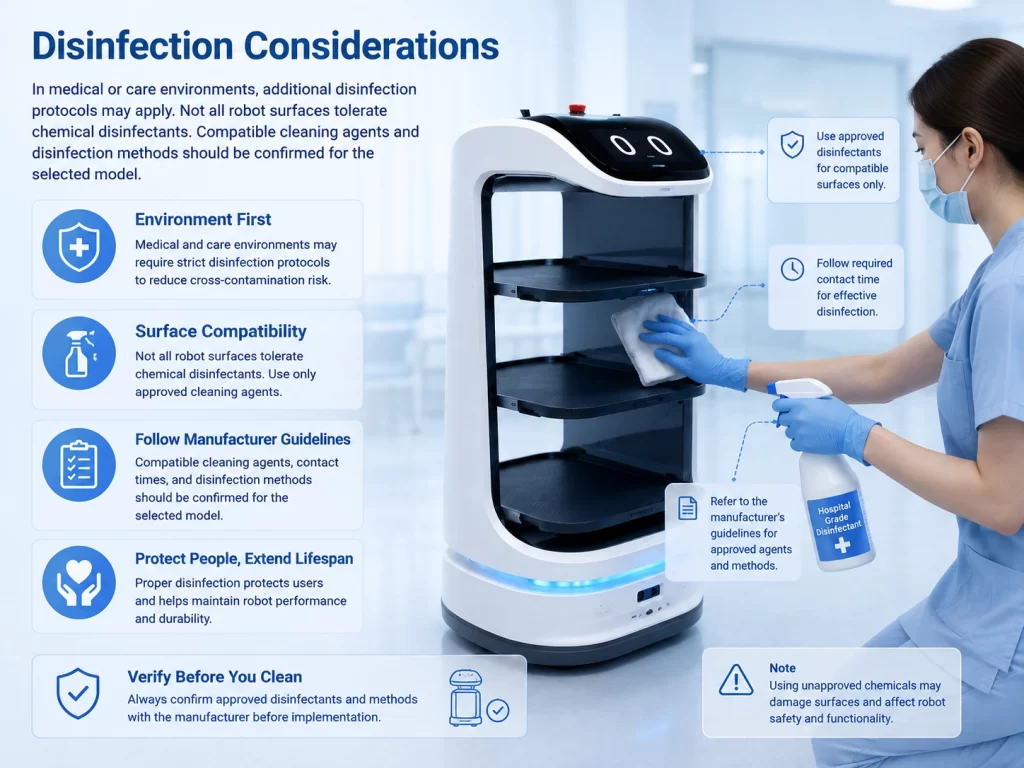
Medical and care facility deployments require extra disinfection protocols. Robot models vary in chemical resistance, so only compatible disinfectants and cleaning methods should be adopted after professional confirmation.
Service Area and Hand off Considerations
Define how items are handed off, collected, and returned.
Pickup and Handoff Method
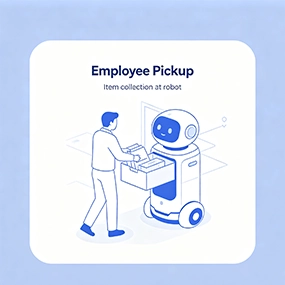
Open Tray / Locked Cabin / Remote Release / Staffing and Security
Wait & Delivery
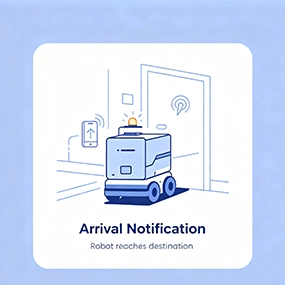
Scheduled Wait Unattended Delivery
Wait / Retry Service Standard
Return Trip Utilization
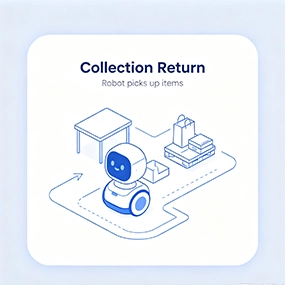
Deliver → Collect → Next Task
How AIsirRobot Supports Your Project
Venue and Delivery Evaluation
We assess your venue, delivery needs, payload, navigation, elevator access, and service requirements to identify suitable robot configurations.
Model Comparison
We compare suitable models and shortlist the best options based on your venue and delivery requirements.
Configuration Coordination
We coordinate hardware, software, and integration requirements with selected suppliers to ensure the right configuration for your delivery needs.
Documentation and International Delivery
We coordinate documentation, export, packaging, and international delivery, with on-site services arranged through relevant partners when available.
AIsirRobot is a robot product and application solution provider. We focus on model selection, supplier and configuration coordination, documentation, international delivery, and after-sales coordination. On-site integration, installation, and maintenance are handled by relevant partners when included in the confirmed project scope.
Frequently Asked Questions
Discuss Your Delivery Scenario
Tell us what needs to move through your venue and where it needs to go. Share the delivery routes, load details, peak demand, and building interfaces so we can evaluate suitable robot configurations.
What to Send
- Venue type and floor plan
- Items to transport, dimensions, and total load
- Pickup and delivery points
- Peak deliveries per hour and operating schedule
- Corridor widths, thresholds, doors, and elevators
- POS, call-button, notification, or access-control interfaces
- Charging location and network availability
- Site photos or videos