

 Contact Us

 Home /

Robot Selection Support
Not sure which robot fits your task? Tell us your requirements. We’ll compare suitable models, clarify key differences, and help you shortlist the right option.
Many buyers know what they need the robot to do but have not yet determined whether a collaborative arm, a mobile platform, a delivery robot, or a cleaning robot is the right architecture. AIsirRobot helps you collect the right requirements, compare available models from selected supplier partners, and produce a shortlist with clear trade-offs — before you commit to a purchase.
Who This Service Is For

Buyers Evaluating Robot Options
You have a task in mind — welding, material transport, food delivery, floor cleaning, visitor reception — but have not yet selected a robot type or model. You need a structured comparison before reaching out to suppliers.

Teams New to Robot Automation
Your organization has limited experience with robots. You need help understanding which parameters matter, what questions to ask, and how to compare options without becoming an expert in every model.

Distributors and Integrators Building a Product Line
You want to offer robots to your local market but need to identify which models match your customers’ typical applications, budgets, and site conditions.
Common Problems Buyers Face
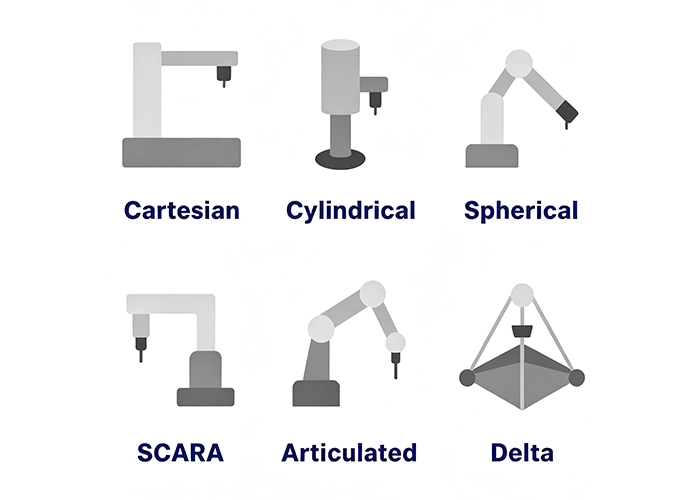
Too Many Options, Not Enough Clarity
Robot types and models are numerous. Each robot has different payloads, reaches, navigation methods, and integration requirements. Without a structured comparison, it is difficult to narrow down.
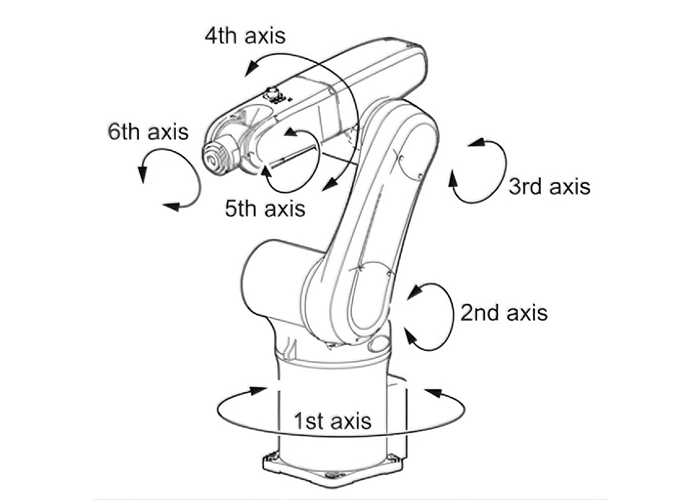
Parameter Confusion
Payload does not equal workpiece weight. Reach does not guarantee access in all postures. Repeatability is not the same as accuracy. These distinctions matter when selecting a robot, but they are not always clearly explained in product catalogs.
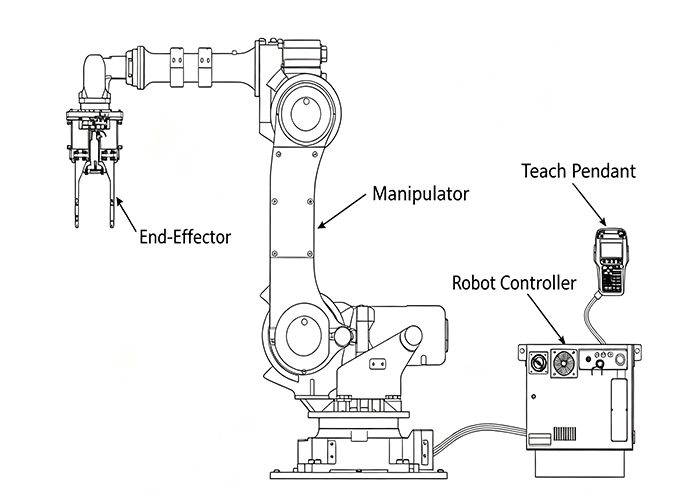
Unclear Total Configuration
A working robot solution needs more than the robot arm or mobile base. End-effectors, top modules, charging equipment, software, safety measures, and system interfaces may all be required. Buyers who compare only robot specifications may miss the full configuration picture.

Budget vs. Capability Gaps
The robot that fits the task may exceed the budget, and the robot that fits the budget may not fully cover the task. Understanding trade-offs early helps avoid costly mismatches.
What We Help Coordinate

01 Requirement Collection
We collect your task description, workpiece or load details, site conditions, cycle time or throughput targets, existing equipment, and budget range. This forms the basis for model comparison.

02 Model Comparison
We compare available models from selected supplier partners against your task profile. The comparison covers robot type, payload, reach or working range, navigation method, programming flexibility, safety configuration, and key integration requirements.

03 Configuration Questions
We identify what additional equipment, software, or interfaces the selected models may need — end-effectors, top modules, charging docks, fleet software, elevator interfaces — and flag items that require manufacturer or integrator confirmation.

04 Trade-off Summary
We prepare a shortlist showing the main differences, conditions, and trade-offs between candidate models. You receive a structured comparison — not a product catalog.
How the Process Works
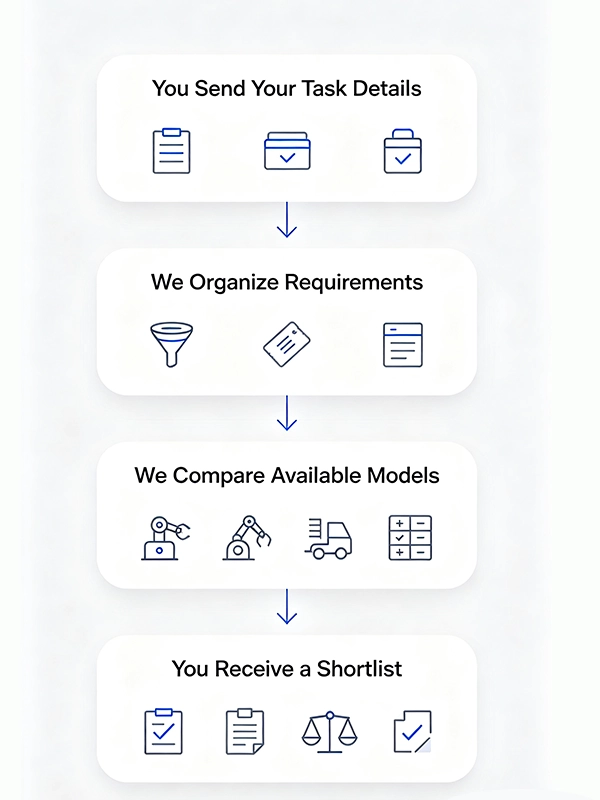
01 You Send Your Task Details
Share what the robot needs to do, what it handles, where it operates, and what systems it needs to work with. Photos, videos, drawings, or layout sketches all help.
02 We Organize Requirements
We translate your task description into robot selection parameters — payload, reach, navigation, cycle time, environment, and integration needs.
03 We Compare Available Models
We review models from selected supplier partners that may fit your profile. We check payload, reach, navigation method, safety configuration, programming options, and available accessories.
04 You Receive a Shortlist
We provide a comparison table or shortlist showing the main differences, conditions, and trade-offs. We also list open questions that need manufacturer or integrator confirmation.
Information We Need From You
| Factor | What to Provide |
|---|---|
| Task description | What the robot should do — weld, transport, deliver, clean, receive, or assist |
| Workpiece or load | Dimensions, weight, material, surface, and handling method |
| Site conditions | Floor area, aisle width, doorways, elevators, surface type, temperature, dust, noise |
| Cycle time or throughput | Required speed, tasks per hour, shifts, and peak volume |
| Existing equipment | Machines, conveyors, PLCs, WMS, MES, POS, or other systems to connect |
| Budget range | Approximate budget range, if available |
| Destination country | Where the robot will be deployed |
| Timeline | Expected project start and delivery timeframe |
Typical Deliverables:
Deliverables depend on the information provided and the availability of matching models from supplier partners.
Scope Boundaries
What AIsirRobot Does
What Requires the Manufacturer or Integrator
What We Do Not Provide
Frequently Asked Questions

Send Your Task and Site Details &What to Send
-
 Task or process description
-
Workpiece, load, or item details
-
Site layout or photos
-
Target cycle time or throughput
-
Existing equipment and systems
-
Destination country and timeline