

 Contact Us


01- Mapping and Planning
Define cleaning zones, no-go areas, and charging station locations.
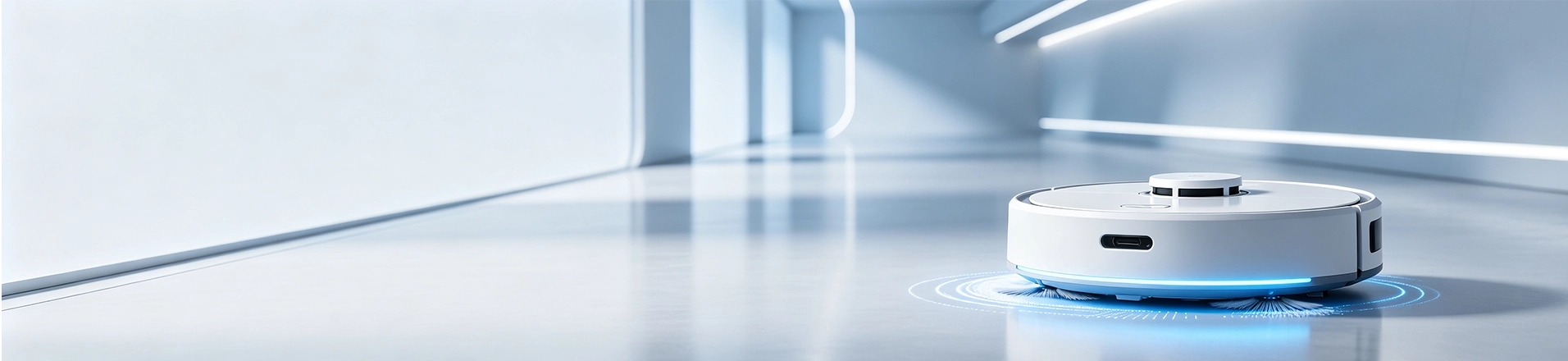
Smart Cleaning. Matched to Your Needs.Automate scrubbing, sweeping, vacuuming, and dust mopping with robot solutions tailored to your floor type, area, traffic, and cleaning schedule. AIsirRobot assesses your site and connects you with the right robot models and configurations from selected supplier partners.
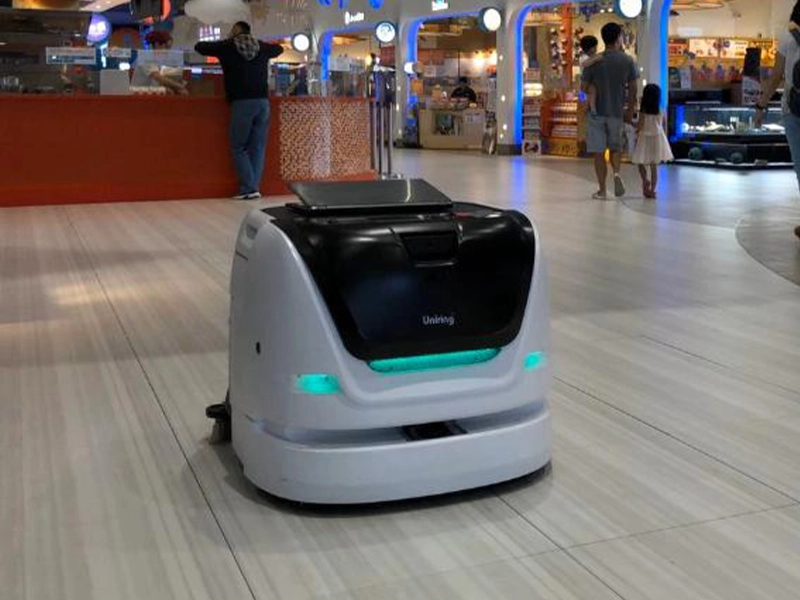
Robot scrubber-dryers apply water or cleaning solution, scrub the floor with brushes or pads, and recover the dirty water in a single pass. This is suitable for hard floors in retail, warehouse, factory, and institutional environments. The cleaning width, brush pressure, and water recovery capacity affect coverage rate and cleaning quality.
Robot scrubber-dryers apply water or cleaning solution, scrub the floor with brushes or pads, and recover the dirty water in a single pass. This is suitable for hard floors in retail, warehouse, factory, and institutional environments. The cleaning width, brush pressure, and water recovery capacity affect coverage rate and cleaning quality.
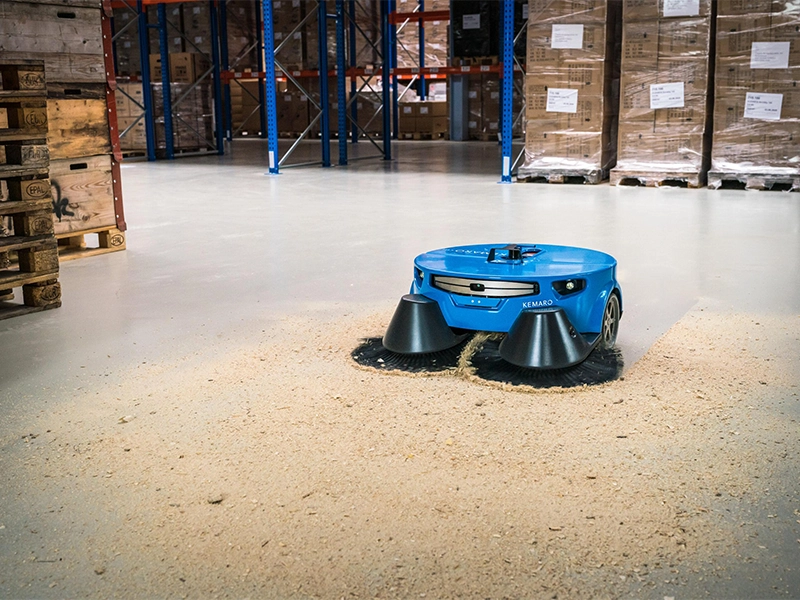
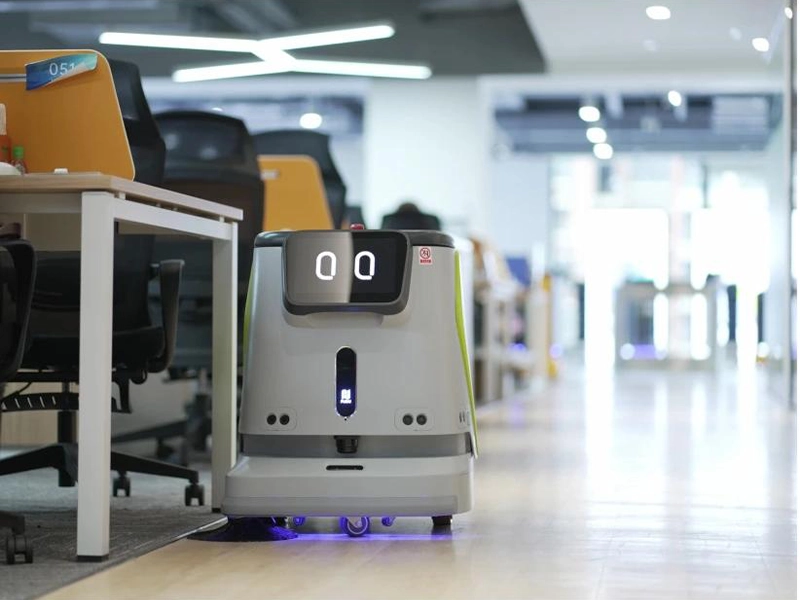
Robots equipped with mop or pad attachments perform light dust removal on smooth hard floors. This is typically used for daily maintenance in low-soil environments such as lobbies, corridors, and office areas.
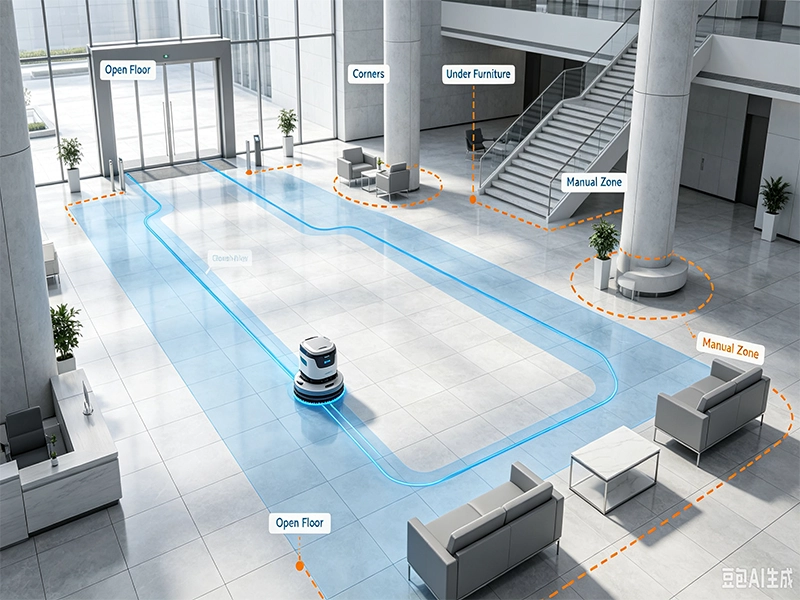
Robots may handle open floor areas well, but edges, corners, under-furniture areas, and tight spaces often require manual attention. A cleaning plan should define which areas the robot covers and which areas need manual follow-up.
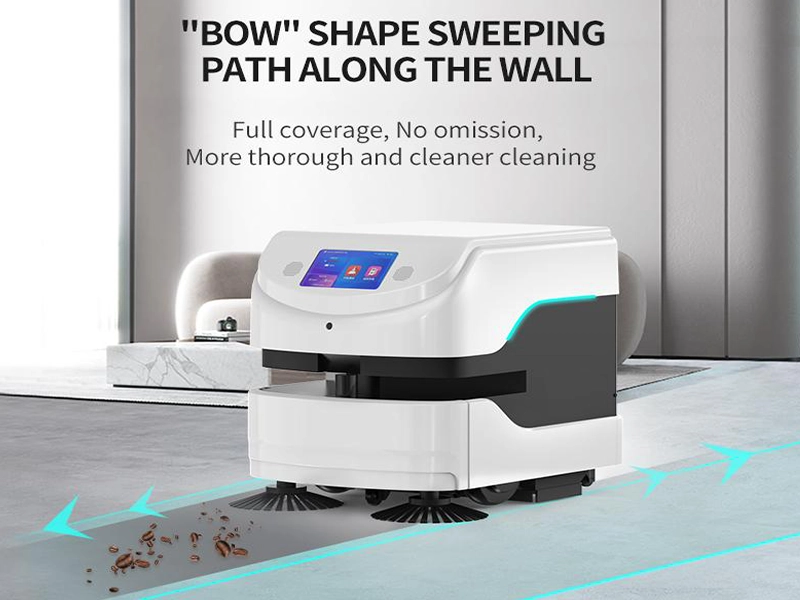
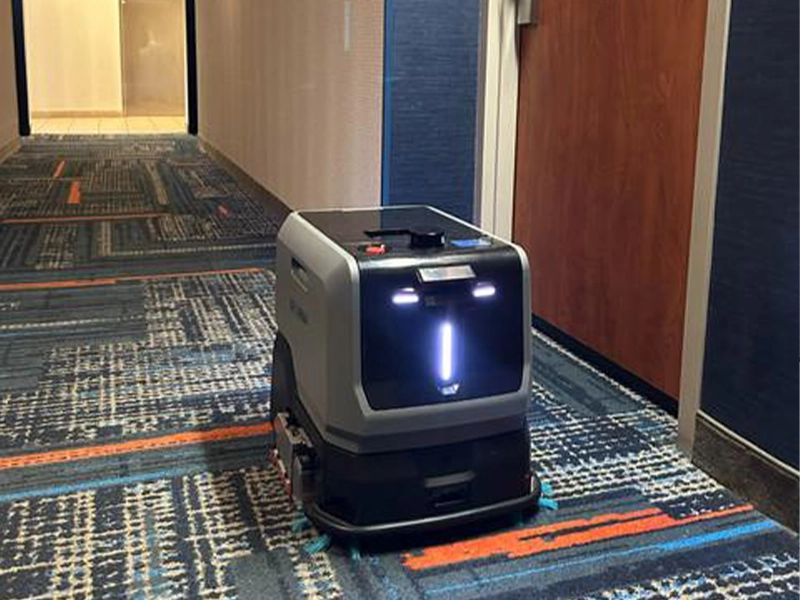
Facilities with mixed flooring — tile to carpet, concrete to epoxy — may require robots that can adjust cleaning mode or skip certain zones. Transition capability depends on the robot model, sensor configuration, and floor plan mapping.
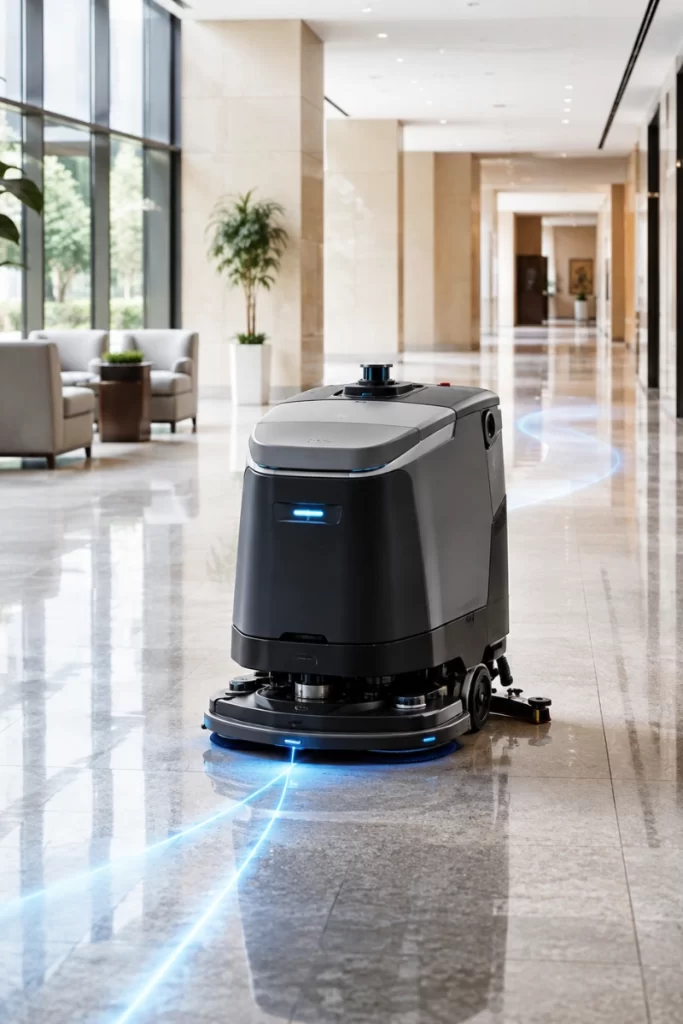
Define cleaning zones, no-go areas, and charging station locations.
Assign cleaning tasks based on time, zone, or soil level.
Follow the planned route and perform the configured cleaning task.
Refill clean water and discharge recovered water when required.
Return to the charging dock or designated standby position.
Generate task reports and complete routine maintenance.
Different cleaning tasks and environments call for different robot configurations. The comparison below is a starting point; final selection depends on the floor area, surface type, soil level, and site infrastructure.
| Robot Type | Common Uses | Typical Configuration | Important Selection Conditions |
| Scrubber-Dryer Robot | Wet scrubbing and drying on hard floors | Brush or pad system, water tank, squeegee, recovery tank | Cleaning width, tank capacity, coverage rate, floor type, water access |
| Sweeper-Vacuum Robot | Dry debris collection on hard floors | Side brush, main brush or vacuum, dustbin | Debris type, particle size, floor surface, dust control, bin capacity |
| Multi-Function Cleaning Robot | Combined sweeping, scrubbing, and mopping | Multiple cleaning modules in one unit | Floor area, soil variety, transition surfaces, maintenance complexity |
| Dust Mopping Robot | Light daily dust removal on smooth floors | Mop or pad attachment, spray system | Floor material, soil level, area size, pad replacement frequency |
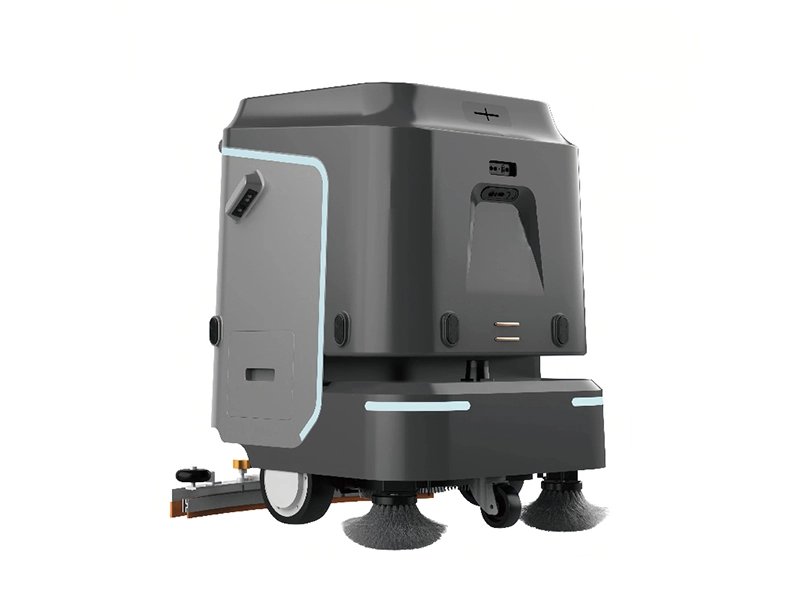
Designed for wet cleaning on hard floors in retail, warehouse, factory, and institutional environments. Selection depends on cleaning width, tank capacity, coverage rate, and water refill access.
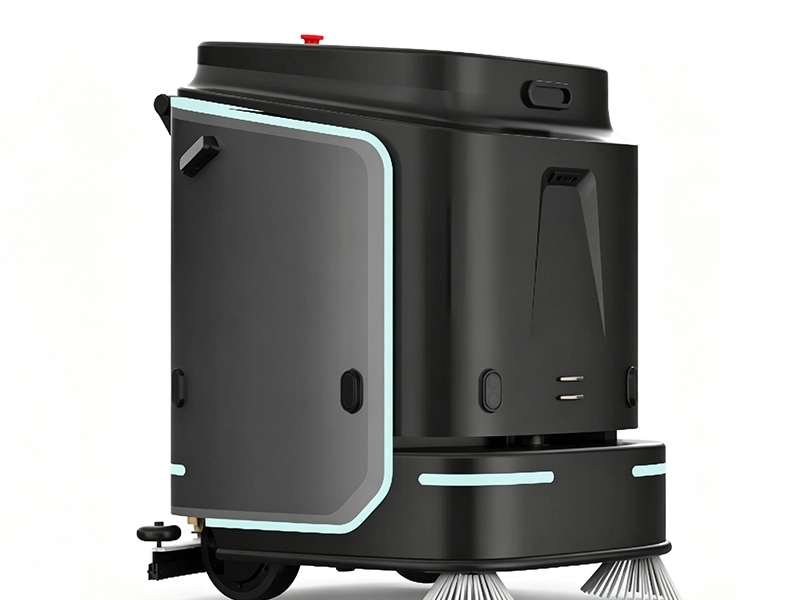
Suitable for dry debris collection in warehouses, parking structures, and large open areas. Selection depends on debris type, floor surface, and dust control requirements.
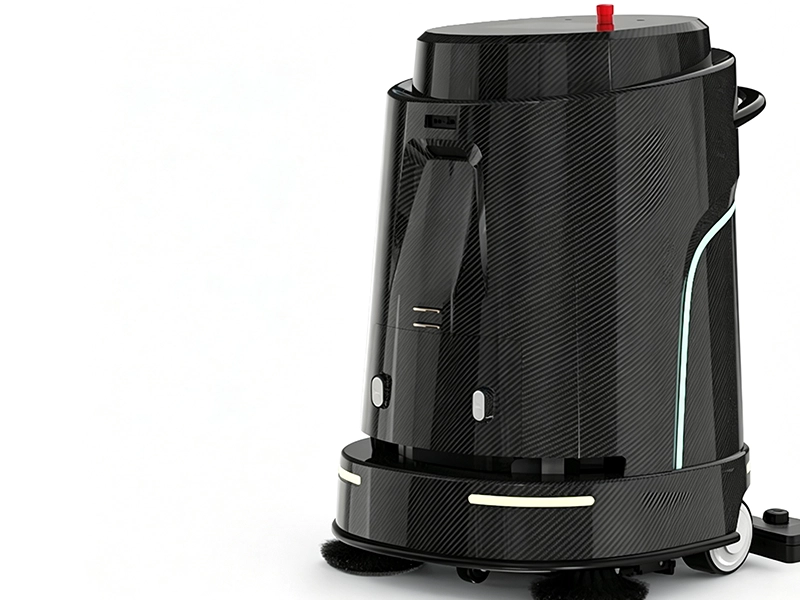
Configured for facilities with mixed cleaning needs. May combine sweeping, scrubbing, and mopping in a single unit. Module availability and maintenance complexity should be confirmed per model.
Before selecting a cleaning robot, evaluate the following conditions. They help determine which models and configurations are viable.
PRACTICAL COVERAGE
Robots are effective for open floor areas, but full │
│ automation is unlikely in most facilities.
✓ Robot-covered areas
✓ Manual follow-up areas
Edges · Corners · Under furniture · Stairs · Tight spaces
After deployment, cleaning robots require routine attention to consumables, water management, and sensor/component upkeep.
01-Consumables and Supplies
Brush pads · Squeegee blades · Filters · Cleaning solution
02- Water Management
Clean water supply · Dirty water discharge · Water stations
03-Sensor & Component Upkeep
Brushes · Pads · Squeegees · Sensors
We help organize robot selection, configuration,supplier coordination, documentation, and delivery.
Share your site, surfaces, cleaning area, and schedule. We assess key factors such as runtime, tank capacity, water access, noise limits, and edge coverage.
We compare suitable models by cleaning width, coverage rate, runtime, climbing ability, surface compatibility, and software features to clarify key differences and trade-offs.
We coordinate cleaning modules, water stations, charging docks, software, and consumables, including compatibility, station placement, scheduling, and available coverage reporting.
We coordinate product documents, export information, packaging, and delivery. Installation, training, maintenance, and other on-site services are confirmed separately when required.
AIsirRobot is a robot product and application solution provider. We focus on model selection, supplier and configuration coordination, documentation, international delivery, and after-sales coordination. On-site integration, installation, and maintenance are handled by relevant partners when included in the confirmed project scope.
Tell us about the floors you need to clean — the area, surface, soil, and schedule. The more we know about your facility, the faster we can evaluate suitable robot configurations.