

 Contact Us

 Home /

Robots for Airports & Transportation Hubs
AIsirRobot helps transportation hub operators evaluate suitable robot options, compare models from supplier partners, and coordinate configuration, documentation, delivery, and after-sales support.
An airport operations manager walking through a terminal before the first wave of departures sees coffee cups and wrappers across the seating area from a delayed flight. The cleaning crew finished hours ago, but the floor needs to be clean before passengers arrive. The crew has already moved to another terminal.
Airports, rail stations, and bus terminals are among the most demanding environments for service robots. High passenger volumes, continuous operation, multi-language needs, security zones, and complex building layouts all shape what robots can and cannot do. The standard service robot categories covered on this page may support public-area cleaning, passenger information, wayfinding, and selected internal transport. Specialized airport systems for security screening, border control, baggage handling, and emergency management are outside the scope of this page.
What Hub Operations Teams Face
Common Robot Applications
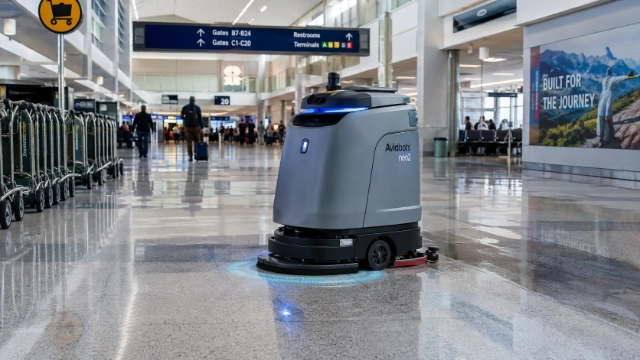
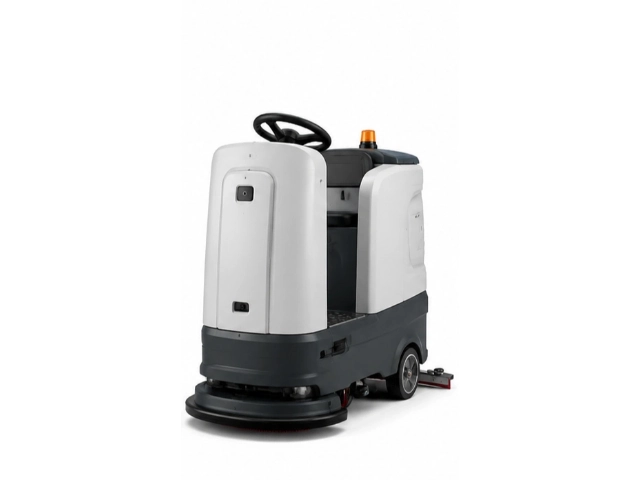
Commercial Cleaning
Autonomous scrubber-dryers clean and dry large floor surfaces. Key factors: coverage area per charge, obstacle avoidance in luggage-cart environments, floor-type compatibility, and coverage reporting.
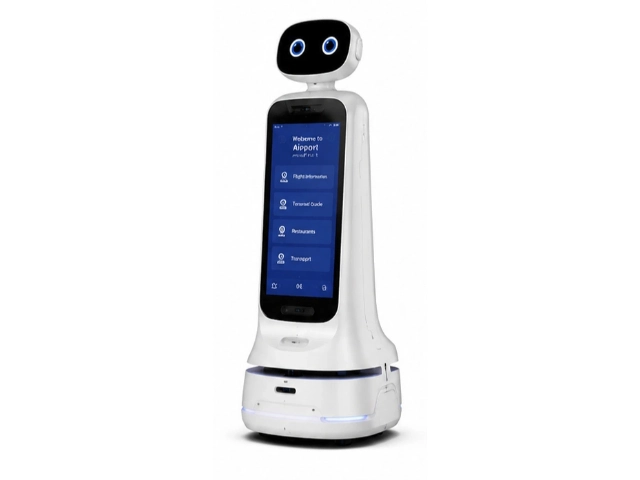
Passenger Information and Wayfinding
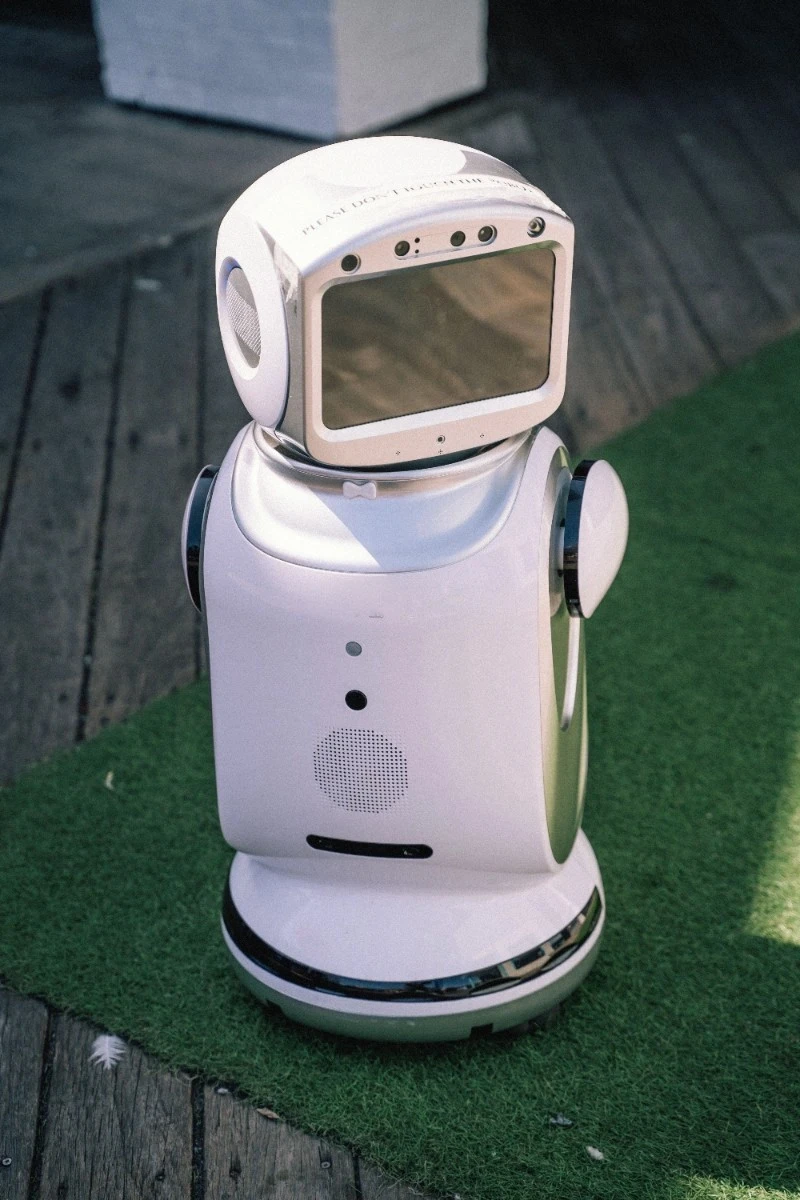
Guide robots provide directions and answer common questions. Real-time flight or train information requires system integration — this depends on the robot model and the hub’s information systems.
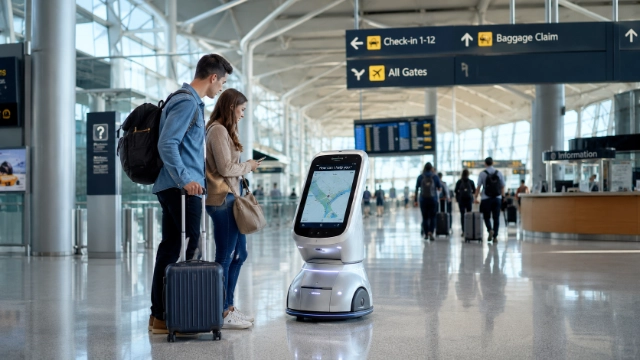
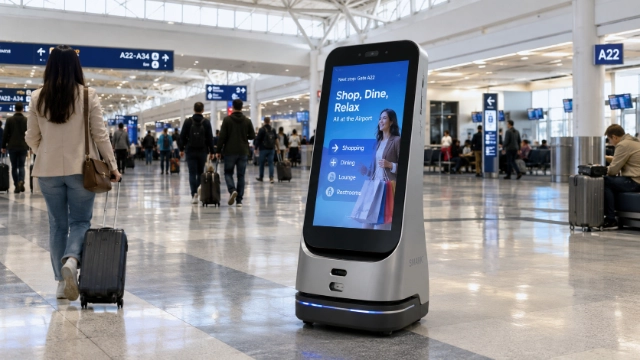
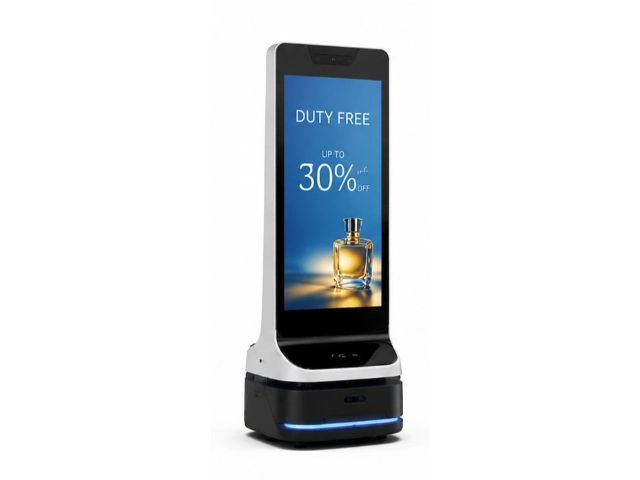
Mobile Content and Promotion
Robots with screens can display wayfinding maps, promotional content, or service information. Content management, screen visibility under bright terminal lighting, and remote update capability are key factors.
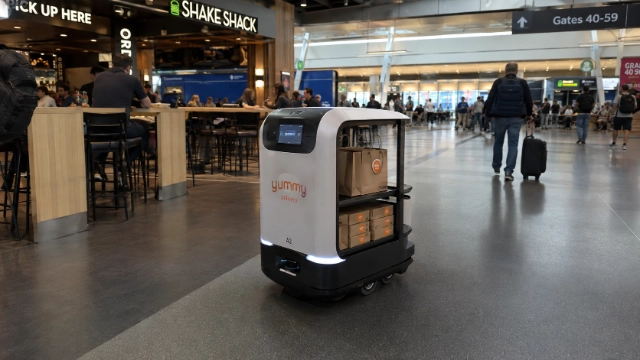
Foodservice or Retail Delivery
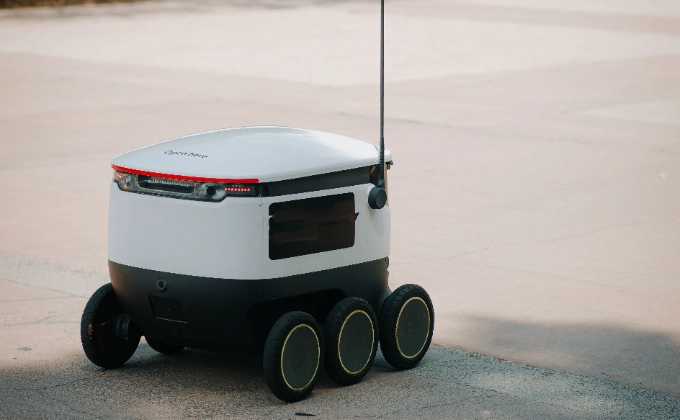
In food court or retail areas, delivery robots can transport food or items. These tasks are limited to routes and zones approved by the operator, and depend on traffic conditions and site layout.
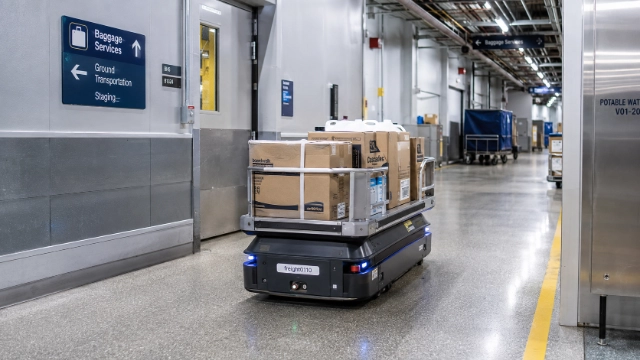
Selected Internal Material Transport
Transport robots can move supplies in approved back-of-house corridors. This is limited to non-restricted routes and non-regulated items.
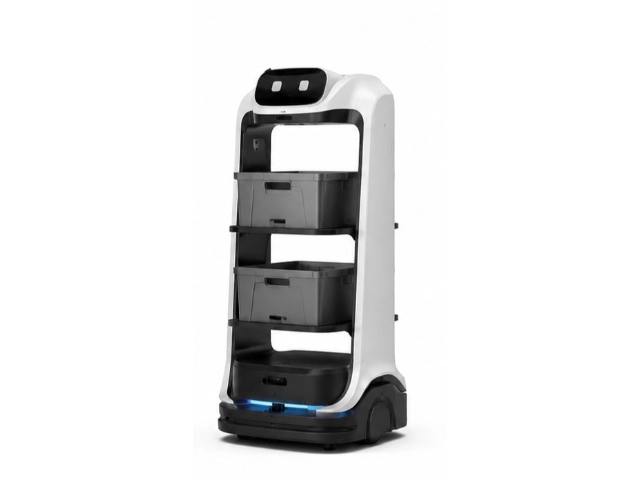
Robot Categories Commonly Considered
A Typical Hub Deployment Process
Transportation Hub Site Readiness Checklist
| Factor | What to Check |
| Facility type | Airport, rail station, bus terminal, or mixed hub |
| Operating zones | Public, commercial, back‑of‑house, restricted — and boundaries |
| Passenger volume | Daily traffic, peak periods, seasonal variation |
| Obstacles | Luggage carts, strollers, queues, temporary barriers, seating |
| Floor surfaces | Tile, concrete, terrazzo, carpet — mixed surfaces need compatible models |
| Elevators and doors | Brand, control system, access control, availability for robot use |
| Network | Wi‑Fi or mobile coverage in all operating areas |
| Information systems | Flight or train data source, integration method, update frequency |
| Charging | Available locations, distance from operating routes, 24‑hour power |
| Noise | Terminal acoustics, announcement interference, passenger sensitivity |
| Privacy | Cameras, microphones, data storage, public‑space privacy policies |
Public Safety, Security, and Operational Boundaries
Security Screening and Restricted Areas
Robots do not perform security screening, identity verification, or border control. They do not enter security-restricted areas, airside zones, platform edges, track areas, or staff-only zones without explicit approval from facility authorities.
Emergency Routes and Operational Continuity
Robots must not block emergency exits, fire routes, or evacuation paths. Emergency behavior, manual intervention, and recovery procedures should be defined and validated based on the specific model, building systems, and site emergency plans.
Crowd and Luggage-Cart Interaction
Robots in high-traffic terminal areas must navigate around luggage carts, strollers, queues, and unpredictable passenger movement. Sensor quality, speed limits, and behavior in dense crowds must be confirmed for the selected model.
Information Accuracy and System Dependency
If a robot provides flight or train information, accuracy depends on real-time data integration. Without confirmed system interfaces, robots should not display schedule information — stale or incorrect data in a transport hub creates operational confusion and service risk.
Privacy and Data Handling
Robots with cameras or microphones in public transport spaces may collect or process data from passengers. Data collection, storage, and access must comply with applicable privacy regulations. The facility operator is responsible for privacy compliance.
How AIsirRobot Supports Transportation-Hub Projects
- Area and workflow requirement review
- Cleaning, guide, display, and transport model comparison
- Security-zone, content, network, door and elevator, and operating-window coordination
- Documentation, international delivery, and after-sales coordination
- On-site setup and training handled by confirmed partners when included in the project scope
- Security and operational approvals are the responsibility of the facility operator and relevant authorities

Share your terminal areas, target tasks, operating windows, passenger traffic, and access restrictions so we can evaluate suitable robot options.
-
 Terminal type and target operating areas
-
Proposed tasks and operating windows
-
Passenger traffic and shared-route conditions
-
Security zones, doors, elevators, and access restrictions
-
Network, charging, and utility availability
-
Integration requirements and approval constraints
-
Site plans, photos, or videos