

 Contact Us

 Home /
 How to Choose a Palletizing Robot System for Cartons, Bags, and Mixed Loads


Vacuum Grippers for Porous Cartons: Airflow, Leakage, and Box Variability
Oct 10, 2026

Reusable Pallets for Autonomous Handling: Repair, Replace, or Standardize the Carrier Fleet?
Oct 10, 2026
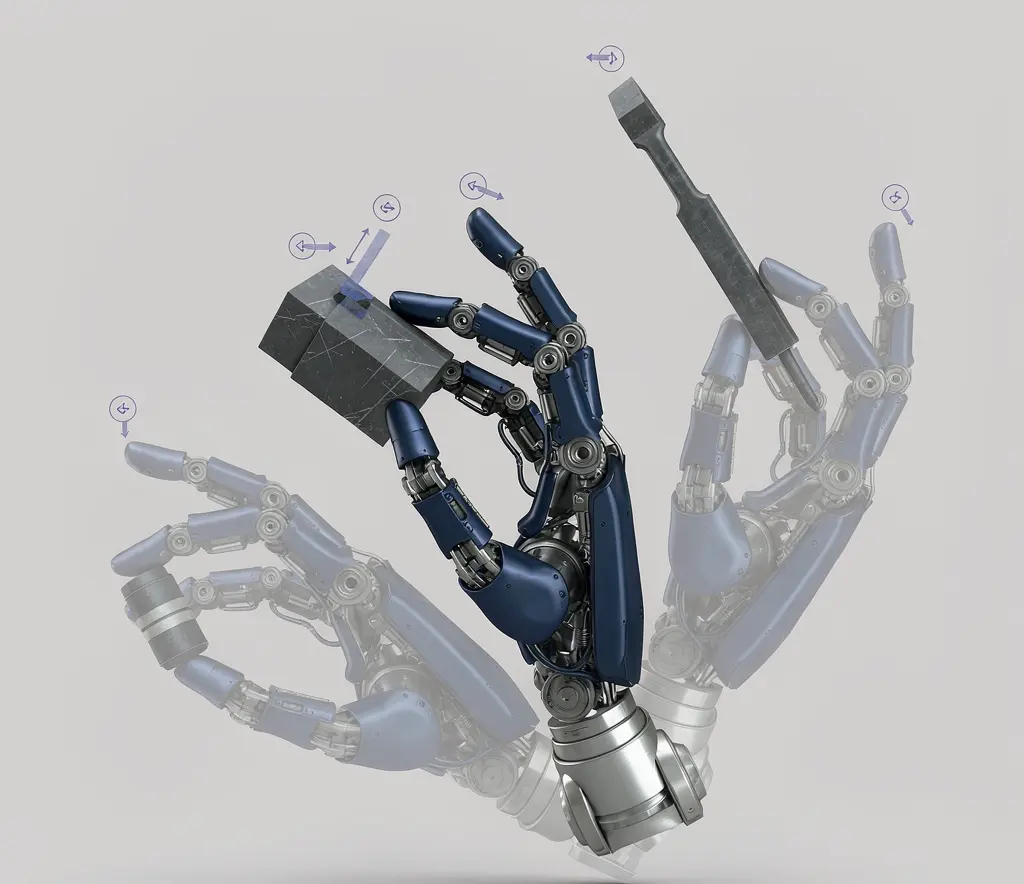
Humanoid Robot Hand Dexterity Verification: Grasp Set, Tool Use, Force Control, and Recovery
Oct 08, 2026

Industrial Exoskeleton Fit and Sizing: Anthropometry, Adjustment Time, PPE, and Shared-Device Programs
Oct 08, 2026
A Palletizing Robot System is not just a robot arm placed at the end of a production line. A complete palletizing solution combines the robot, end-of-arm tooling (EOAT), conveyors, pallet stations, safety systems, control software and optional vision or barcode systems.
Selecting a palletizing robot based only on payload and reach often leads to poor performance because actual production depends on:
- Product type
- Packaging characteristics
- Stacking pattern
- Gripper design
- Throughput requirements
- Factory layout
A successful palletizing system requires every component to work together. The robot provides movement, the gripper provides product handling, the conveyor supplies products, the pallet station defines placement and the software manages stacking patterns.
What Is Included in a Palletizing Robot System?
A complete palletizing cell usually includes:
| Component | Function | Selection Factors |
|---|---|---|
| Robot Arm | Picks products from conveyor and places them on pallets | Payload, reach, speed and robot axes |
| Base / Lifting Column | Extends vertical reach for tall stacks | Maximum pallet height and robot working range |
| End-of-Arm Tooling (EOAT) | Holds, lifts and releases products | Product type, weight, surface condition |
| Conveyor System | Delivers products to picking position | Line speed, orientation and buffer capacity |
| Pallet Station | Holds pallets during stacking | Pallet size, single or dual station design |
| Safety System | Protects operators and equipment | Risk assessment, fencing, scanners and access control |
| Control Software | Stores stacking recipes and manages SKU changes | Pattern complexity and product variation |
| Vision / Barcode System | Identifies mixed products | SKU quantity and sorting requirements |
A robot arm alone cannot complete palletizing automation. The entire system must be designed around the production process.
Product Type Determines Gripper Selection
Different products require different handling methods. A gripper designed for cartons may fail when handling flexible bags or heavy containers.
Cartons and Corrugated Boxes
Cartons usually have:
- Flat surfaces
- Stable shapes
- Predictable dimensions
Common solutions:
- Vacuum suction grippers
- Multi-cup vacuum systems
- Vacuum area grippers
However, suction performance depends on:
- Surface coating
- Printed graphics
- Tape seams
- Porosity
- Dust conditions
A carton that works in a demonstration may fail in production if the surface condition changes.
Bags
Bags are more challenging because they are:
- Flexible
- Deformable
- Sometimes porous
- Unstable during lifting
Common solutions:
- Side clamp grippers
- Bottom-support grippers
- Specialized bag tooling
Vacuum gripping may fail because air leakage prevents sufficient suction force.
Bag handling requires testing under actual acceleration and movement conditions.
Pails, Drums and Cylindrical Containers
Rigid containers create different challenges:
- High center of gravity
- Cylindrical shape
- Potential tipping during acceleration
Common solutions:
- Radial clamp grippers
- Rim gripping
- Handle gripping
- Vacuum gripping on suitable flat surfaces
Grip force must balance stability and product protection.
Mixed or Irregular Products
Mixed product lines require more flexible systems.
Possible solutions:
- Combination vacuum + clamp grippers
- Quick-change tooling
- Vision-guided handling
Mixed loads require additional testing because no single gripper works perfectly for all products.
Payload and Reach: Two Critical Selection Factors
Effective Payload Calculation
Robot rated payload does not equal product weight.
The real payload includes:
Effective Payload = Product Weight + Gripper Weight + Connection Hardware + Multi-Pick Load
For multi-pick applications, the combined weight of all products and tooling must remain within robot limits at the worst-case position.
Important factors include:
- Maximum reach point
- Highest pallet layer
- Tool weight
- Center-of-gravity offset
A robot that handles the load near its base may not maintain the same capability at maximum extension.
Reach and Maximum Stack Height
Robot reach must cover:
- Conveyor pickup position
- Farthest pallet corner
- Top layer placement
- Safe approach and withdrawal paths
Tall pallet stacks often require:
- Longer-reach robots
- Lifting columns
- Extended vertical axes
The key question is:
Can the robot place the heaviest product on the highest pallet position while maintaining stable operation?
This must be verified during layout planning.
Cycle Rate and Real Throughput
Robot cycle time is not the same as production throughput.
Actual palletizing speed depends on:
| Factor | Impact |
|---|---|
| Single vs multi-pick | Multi-pick improves speed but increases payload requirements |
| Stacking pattern | Complex patterns require more robot movement |
| Conveyor speed | Slow product supply limits robot utilization |
| Pallet replacement | Manual pallet changes reduce productivity |
| Gripper operation | Vacuum or clamp response affects cycle time |
The robot may not be the production bottleneck. Conveyor supply and pallet handling often determine the real output.
Choosing the Right End-of-Arm Tooling
| Gripper Type | Suitable Products | Limitations |
|---|---|---|
| Vacuum suction | Cartons, sealed boxes, trays | Sensitive to dust, coatings and porous surfaces |
| Vacuum area gripper | Different carton sizes | Adds weight and reduces payload margin |
| Mechanical clamp | Bags, drums, irregular products | Requires correct force adjustment |
| Fork-style gripper | Heavy bags and unstable loads | Requires product access underneath |
| Combination gripper | Mixed product lines | Higher complexity and payload demand |
Before final selection, grippers should be tested with real production samples at actual speed and acceleration conditions.
Single-SKU vs Mixed-SKU Palletizing
| Factor | Single-SKU | Mixed-SKU |
|---|---|---|
| Product Identification | Usually unnecessary | Requires barcode, vision or verification systems |
| Programming | Fixed stacking recipes | Multiple dynamic patterns |
| Conveyor Design | Simple product flow | Requires sorting and buffering |
| System Complexity | Lower | Higher investment |
Mixed-SKU palletizing is possible, but it requires:
- Product identification
- Software management
- More advanced conveyors
- Pattern adjustment capability
It should not be treated as a standard palletizing package.
Collaborative vs Traditional Palletizing Robots
| Factor | Collaborative Palletizing | Traditional Industrial Palletizing |
|---|---|---|
| Speed | Suitable for moderate throughput | Higher-speed production lines |
| Payload | Usually lighter loads | Heavy products and high payloads |
| Space | Smaller footprint | Larger dedicated cells |
| Safety | Flexible access with risk assessment | Usually fenced cells |
| Changeover | Easier programming and recipe changes | Requires more integration |
| Application | Light products and frequent changes | 24/7 high-volume production |
Collaborative palletizing works well for:
- Light products
- Flexible production
- Frequent changeovers
Traditional palletizing is better for:
- Heavy loads
- High throughput
- Continuous production lines
Layout, Conveyor and Safety Planning
A palletizing cell layout must consider:
- Conveyor direction
- Pallet position
- Operator access
- Safety zones
- Maintenance space
- Floor area
Safety design may include:
- Fencing
- Light curtains
- Area scanners
- Reduced-speed zones
Collaborative operation does not automatically eliminate safety evaluation. The complete application determines the required protection method.
Information Needed Before Selecting a Palletizing Robot
Before requesting a palletizing solution comparison, buyers should prepare:
| Information | Purpose |
|---|---|
| Product dimensions and weight | Determines gripper and payload |
| Package type | Determines tooling selection |
| Required cases per minute | Defines throughput requirements |
| Pallet size | Determines reach and layout |
| Stacking pattern | Affects programming and cycle time |
| Maximum stack height | Determines need for lifting column |
| SKU type | Defines vision and software requirements |
| Conveyor layout | Determines robot placement |
| Available floor space | Limits system design |
Common Palletizing Robot Selection Mistakes
| Mistake | Better Approach |
|---|---|
| Selecting robot only by payload | Calculate effective payload at worst-case position |
| Using theoretical cycle rate | Evaluate real production conditions |
| Skipping product testing | Validate gripper with actual samples |
| Ignoring stack height | Confirm reach at maximum pallet height |
| Assuming mixed-SKU needs no extra equipment | Plan vision, software and conveyor upgrades |
Conclusion
Choosing a Palletizing Robot System requires evaluating the complete automation process rather than selecting a robot arm by specifications alone.
The right solution depends on:
- Product characteristics
- Gripper design
- Payload requirements
- Reach and stack height
- Throughput targets
- Conveyor layout
- Safety requirements
AIsirRobot helps buyers evaluate palletizing requirements and compare suitable robot, gripper and system configurations based on actual production conditions.
Share on Social:


- PREV: Not PREV
- NEXT: Robotic Welding vs Manual Welding: Cost, Quality, Flexibility, and ROI
Contact Us
In This Article
Vacuum Grippers for Porous Cartons: Airflow, Leakage, and Box Variability
Oct 10, 2026
Reusable Pallets for Autonomous Handling: Repair, Replace, or Standardize the Carrier Fleet?
Oct 10, 2026
Humanoid Robot Hand Dexterity Verification: Grasp Set, Tool Use, Force Control, and Recovery
Oct 08, 2026
Industrial Exoskeleton Fit and Sizing: Anthropometry, Adjustment Time, PPE, and Shared-Device Programs
Oct 08, 2026