

 Contact Us

 Home /
 Multi-Site Robot Standardization: What Should Be Standardized—and What Must Stay Site-Specific
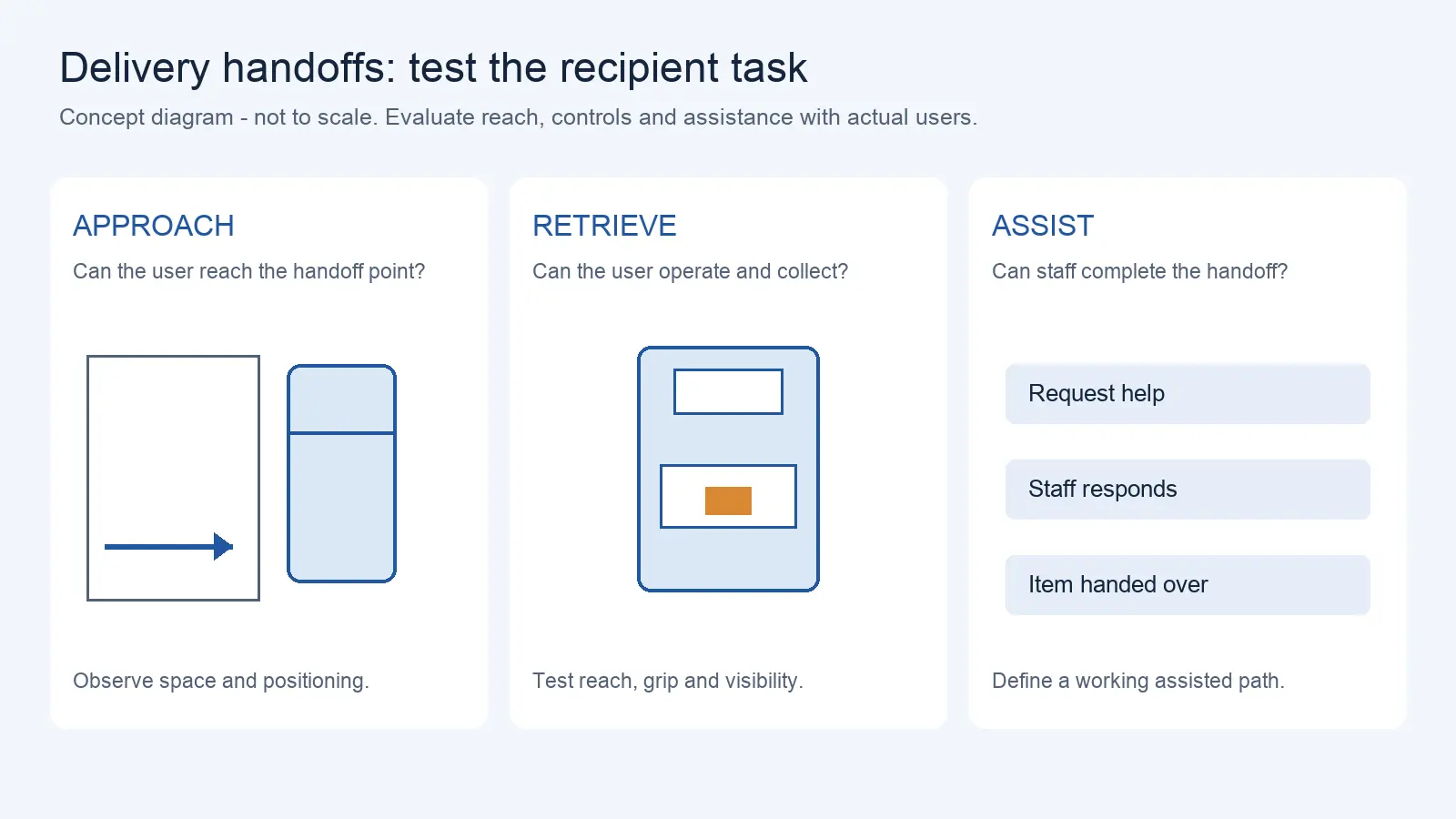
Delivery Robot Accessibility: Tray Reach, Controls, and Assisted Handoffs
Oct 12, 2026
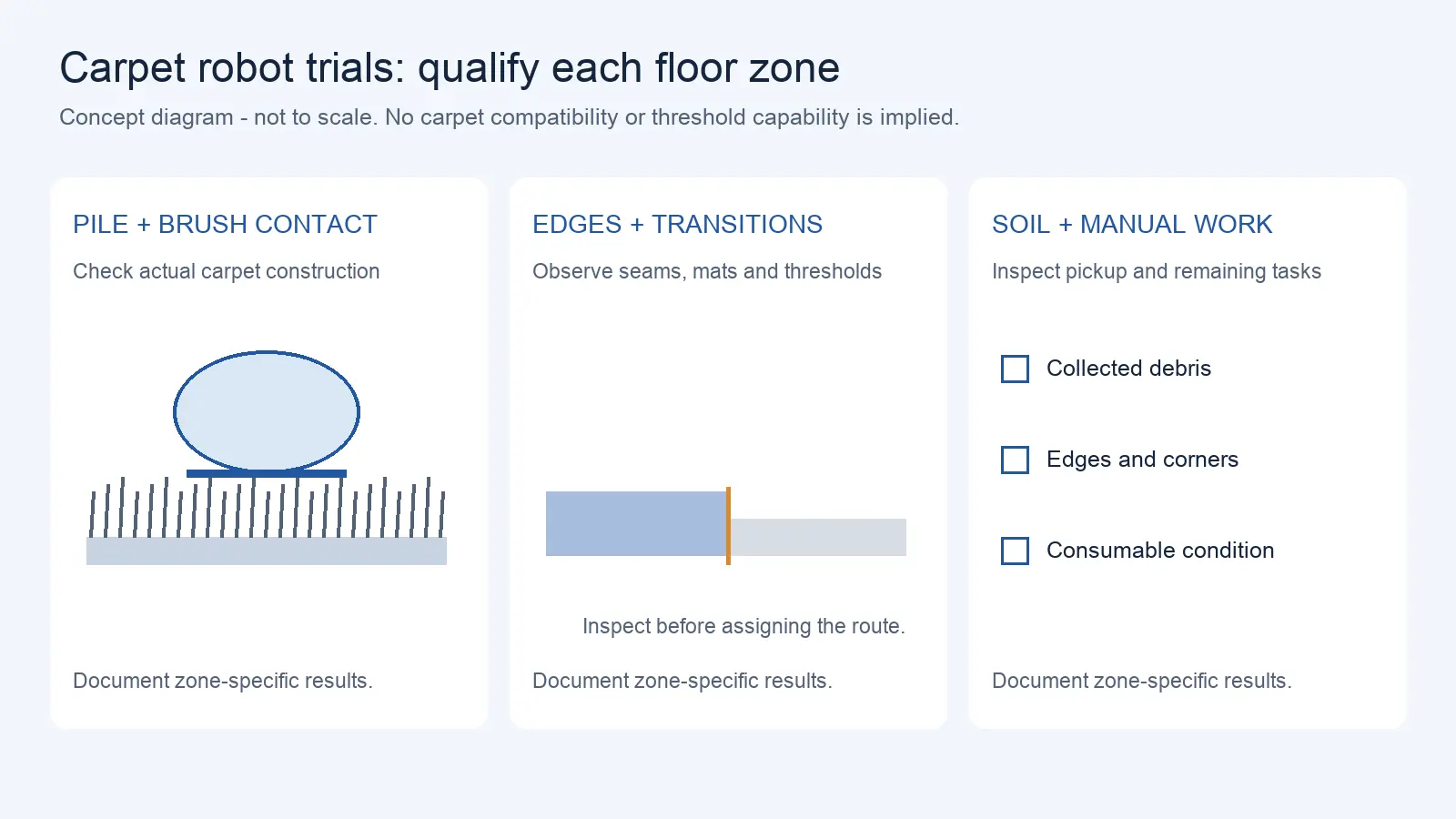
Commercial Carpet-Vacuuming Robots: Pile, Edge Transitions, and Maintenance Limits
Oct 12, 2026
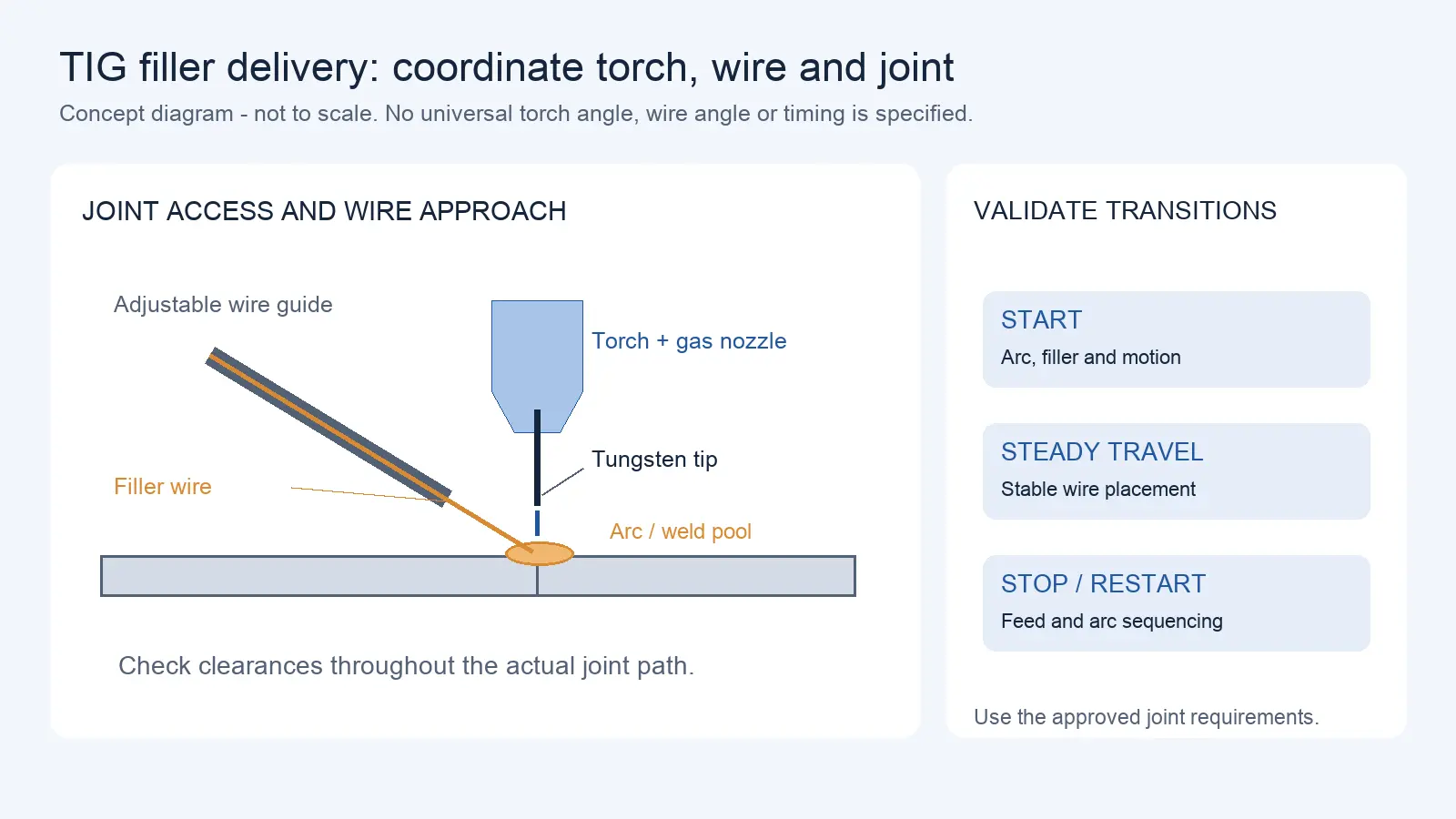
Robotic TIG Filler-Wire Delivery: Feed Angle, Arc Access, and Stop-Start Quality
Oct 12, 2026
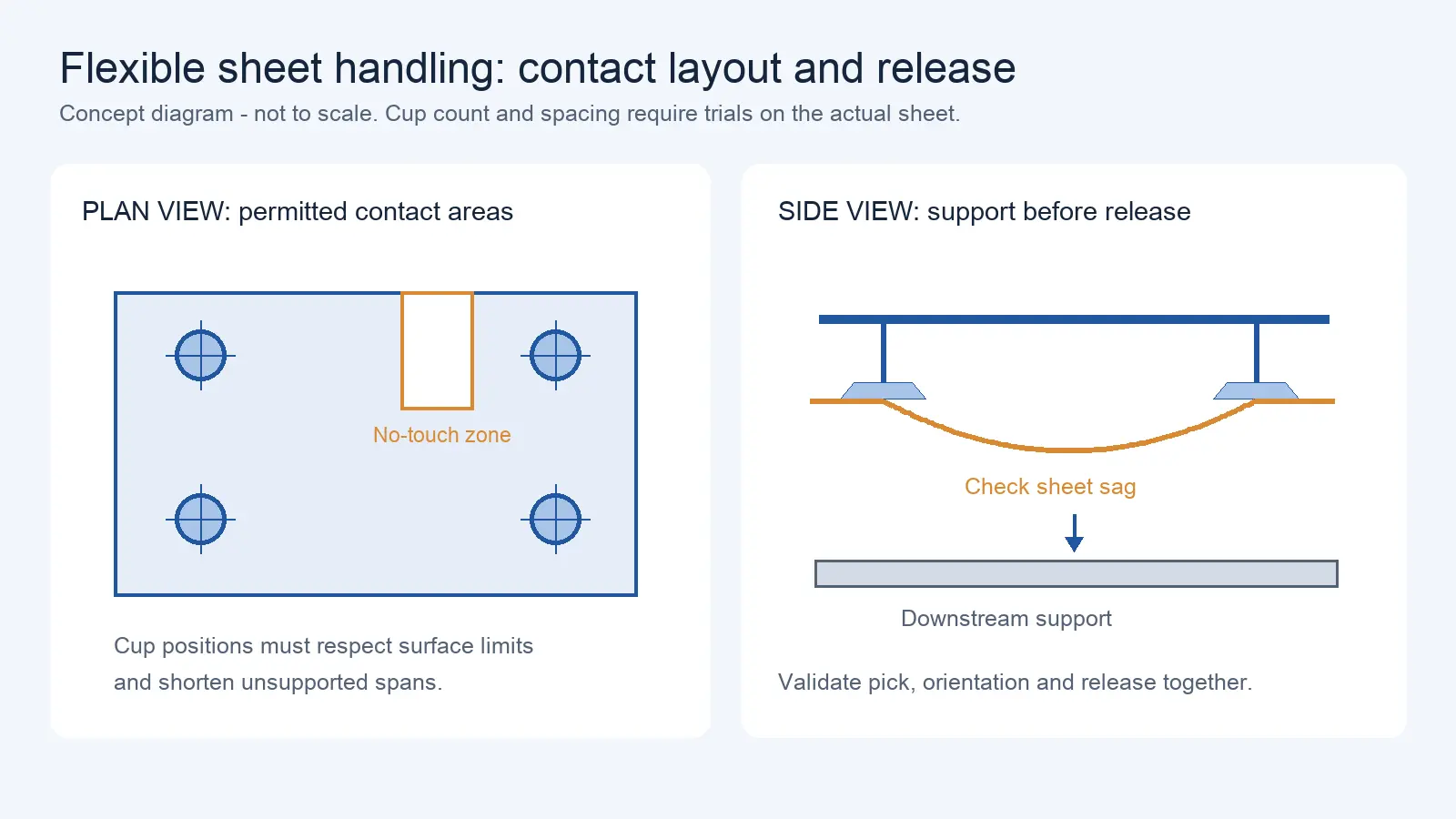
Suction Cup Layout for Flexible Sheets: Sag, Local Stress, and Controlled Release
Oct 12, 2026
Enterprises deploying robots across multiple sites face a central tension: standardize too much, and deployments fail because site-specific conditions are ignored; standardize too little, and support costs spiral out of control as each site becomes a unique engineering project. This article explains where standardization creates value, where it creates risk, and how to build a standardization framework that balances consistency with adaptability.
Why Enterprises Want Standardization—and Where It Breaks
Standardization promises lower costs, faster deployments, and simpler support. When every site uses the same robot model, the same spare parts, the same training materials, and the same SOPs, the enterprise benefits from economies of scale, predictable operations, and a support model that does not require a unique expert for each site.
In practice, standardization breaks when it ignores site-specific conditions that genuinely affect robot performance. A robot that works perfectly in a warehouse with polished concrete floors and wide aisles may struggle in a site with epoxy flooring, narrow corridors, and a different elevator brand. Forcing the same configuration onto both sites does not create standardization—it creates a failed deployment that requires expensive remediation.
The root cause of most standardization failures is not the decision to standardize, but the failure to distinguish between what should be standardized and what must remain site-specific. When everything is forced into a single template, the template breaks. When nothing is standardized, the enterprise loses the cost and efficiency benefits that motivated the multi-site deployment in the first place.
What Can Usually Be Standardized: Core Platform, Interfaces, Spares, Training and Reporting
The following elements are strong candidates for standardization because they do not depend on site-specific physical or operational conditions:
| Standardized Element | Why It Works Across Sites |
| Robot model and payload class | Simplifies spare parts, training, and support; performance is not site-dependent |
| Controller software version | Ensures consistent behavior, compatibility, and predictable updates |
| Fleet management platform | Enables multi-site visibility, centralized reporting, and configuration management |
| Communication protocol standards | Reduces IT/OT review burden; Profinet, OPC UA, REST API are site-agnostic |
| Safety configuration approach | The approach (risk assessment method, safety zone design principles, E-stop circuit architecture) can be standardized even if specific zones differ per site |
| Training curriculum | All operators receive the same foundation; site-specific modules are added as supplements |
| Reporting format | Enables cross-site performance comparison and benchmarking |
| Spare parts list (per site category) | Centralized procurement and stocking; reduces parts variety |
| SOP structure | Consistent exception handling framework; site-specific details are parameters within the structure |
| Integration protocol standards | API specifications, data formats, and error-handling rules can be standardized even if the connected systems differ |
These elements form the “fixed core” of the deployment—the parts that should be the same at every site to enable scale benefits.
What Often Stays Site-Specific: Layout, Traffic, Elevators, Floors, Utilities and Local Rules
The following elements typically cannot be standardized because they depend on physical, operational, or regulatory conditions that differ by site:
| Site-Specific Element | Why It Cannot Be Standardized |
| Site layout and robot map | Every site has a different floor plan, obstacle configuration, and traffic pattern |
| Traffic routes and speed zones | Routes depend on layout, pedestrian traffic, forklift routes, and operational flow |
| Elevator and door integration | Different sites may have different elevator brands, door controllers, and fire alarm systems |
| Network configuration | IP ranges, Wi-Fi coverage, firewall rules, and VLAN structures vary by site |
| Floor surface and condition | Different floor materials affect traction, cleaning performance, and navigation accuracy |
| Shift structure and operating hours | Sites may have different shift patterns, peak hours, and maintenance windows |
| Local safety regulations | Different countries or regions may have different safety standards and inspection requirements |
| Staff language and training delivery | Training materials may need translation; delivery format may vary by site culture |
| Utility availability | Power capacity, water supply, drainage, and compressed air vary by site |
| Local climate and environmental conditions | Temperature, humidity, and dust levels affect robot performance and maintenance schedules |
These elements form the “adaptable periphery”—the parts that must be configured for each site during site preparation and commissioning.
Global Standard vs Regional Standard vs Site Exception
Not all standardization decisions are binary. A three-tier framework allows enterprises to manage standardization with more granularity:
Tier 1: Global Standard (applies to all sites)
These are the non-negotiable standards that apply everywhere. Examples:
- Robot model family (e.g., all sites use robots from the same payload class)
- Fleet management platform (all sites use the same software)
- Safety approach (all sites follow the same risk assessment methodology)
- Training curriculum structure (all sites use the same training framework)
- Spare parts catalog (all sites stock from the same approved parts list)
- Reporting format (all sites report using the same KPI definitions)
Tier 2: Regional Standard (applies to sites in a geographic region)
These are standards that apply within a region but may differ across regions. Examples:
- Documentation language and HMI language (may vary by country and region)
- Applicable safety standards and regulatory conformity requirements (may vary by country and region—identify applicable requirements by product type, configuration, and target market)
- Electrical supply specifications (may vary by country and region—verify local voltage, phase, and frequency requirements)
- Service provider (regional service partner with local language support)
- Spare parts hub location (regional warehouse serving sites within a delivery radius)
Note: documentation language, electrical supply, conformity requirements, safety standards, and service arrangements may vary by country, region, and specific application. These should be managed as controlled regional/site-specific requirements, not assumed from a generic global table. Verify actual requirements for each deployment location.
Tier 3: Site Exception (applies to a single site)
These are configuration decisions that are specific to one site and documented as exceptions. Examples:
- Elevator brand and interface protocol
- Floor map and traffic zones
- Network IP scheme and Wi-Fi access point layout
- Shift schedule and cleaning/delivery windows
- Local utility connections (power circuit, water line, drainage point)
This three-tier framework allows the enterprise to capture most of the benefits of global standardization while accommodating regional and site-specific realities.
How Too Many Variants Increase Support and Spare-Part Cost
When site exceptions proliferate, the cost and complexity of supporting the fleet increases. Variant proliferation increases configuration, training, and support complexity—the more unique configurations, the harder it becomes to maintain standardized processes.
Spare Parts Proliferation
If each site uses a different robot model, different end-effector, or different battery type, the spare parts catalog grows significantly. Each part must be sourced, stocked, tracked, and replenished. The procurement effort multiplies, and the risk of stocking the wrong part increases.
Training Complexity
If each site has a different SOP, training materials must be customized for each site. New operators transferring between sites need retraining. The training team cannot standardize on a single curriculum, and the quality of training varies by site.
Support Escalation
When a support engineer answers a call, the first question is often “which site is this, and what configuration do they have?” If the configuration is unique, the engineer must look up the site-specific details before troubleshooting. With standardized configurations, the engineer can begin troubleshooting immediately because they know the robot model, software version, and SOP structure.
Software and Configuration Management
Each site variant may require a different software configuration file, map file, and integration configuration. Version management becomes complex: an update that works on 15 sites may break on 5 sites with different configurations. Testing each update against all variants is time-consuming and error-prone.
How Over-Standardization Creates Deployment Failures
The opposite problem—forcing a single configuration onto sites where it does not fit—is equally damaging. Over-standardization failures typically occur in one of three patterns:
Pattern 1: Floor and Navigation Mismatch
A robot standardized for polished concrete encounters carpet, expansion joints, or sloped surfaces at a new site. The navigation system degrades, the robot loses position accuracy, and the site team concludes “the robot doesn’t work here.” In reality, the configuration was wrong for the floor type—but because the configuration was standardized, no one reviewed the floor condition before deployment.
Pattern 2: Building System Incompatibility
A robot standardized with one elevator interface protocol is deployed at a site with a different elevator brand. The interface fails, the robot cannot move between floors, and the deployment stalls until a custom interface is developed. Consider the following illustrative scenario: a hotel group that pilots a delivery robot at a flagship property with Elevator Brand A, standardizes the interface protocol, and then deploys to a second property with Elevator Brand B. The robot arrives, passes the first-floor tests, and then cannot call the elevator. The project team discovers that Brand B uses a different controller and does not support the same API. A third-party interface module must be sourced, the elevator manufacturer must approve the installation, and the site team waits for the interface to be developed and installed. During that time, the robot sits idle on the ground floor, and the site team begins to question whether the robot works at all. The standardization decision assumed all sites had the same elevator system—a false assumption that cost weeks of delay and significant custom engineering expense.
Pattern 3: Operational Mismatch
A robot standardized for a night-shift cleaning window is deployed at a site where the cleaning window is during business hours due to different operational requirements. The robot’s speed, noise, and safety configuration are wrong for a populated environment, creating safety concerns and operator complaints.
The solution in all three cases is not to abandon standardization, but to include site-specific assessment as part of the standardization framework. The configuration standard should define what is fixed and what must be assessed per site—before deployment, not after failure.
Change Control for New Robot Models and New Sites
Standardization is not a one-time decision; it requires ongoing governance. As the fleet grows and technology evolves, the enterprise needs a change control process that manages:
New Robot Model Introduction
- When should a new robot model be added to the approved list?
- What testing is required before a new model is deployed at scale?
- How does the new model affect spare parts, training, and support?
- Can the new model coexist with existing models in the same fleet?
New Site Onboarding
- What site readiness criteria must be met before a site joins the fleet?
- Who reviews the site-specific configuration against the standard?
- What exceptions are allowed, and who approves them?
- How is the site configuration documented and version-controlled?
Configuration Changes
- Who can request a configuration change?
- What is the approval process for changes that affect multiple sites?
- How are changes tested before being pushed to production sites?
- How are changes documented and communicated to all affected teams?
Version Management
- How are software, firmware, and configuration file versions tracked across sites?
- What is the rollback process if an update causes issues?
- How often are versions reviewed and updated?
- Who is responsible for maintaining the version inventory?
A Standardization Matrix for Multi-Site Buyers
The standardization matrix is the tool that ties all of these decisions together. It defines, for each dimension of the robot deployment, the level of standardization and the responsible party.
| Standardization Dimension | Global Standard | Regional Standard | Site Exception | Owner |
| Robot model and payload class | Yes | Fleet admin | ||
| Controller software version | Yes | IT/OT | ||
| End-effector type | Within site category | Engineering | ||
| Fleet management platform | Yes | IT/OT | ||
| Communication protocols | Yes | IT/OT | ||
| Site layout and map | Yes | Site lead | ||
| Traffic routes and zones | Yes | Site lead + Safety | ||
| Elevator/door integration | Yes | Engineering | ||
| Network configuration | Yes (regional template) | Yes (site-specific IP, Wi-Fi) | IT/OT | |
| Floor surface | Yes (assessed, not standardized) | Facilities | ||
| Safety approach | Yes (methodology) | Yes (regulatory standard) | Yes (zone layout) | Safety/EHS |
| Training curriculum | Yes (structure) | Yes (language) | Yes (site-specific modules) | Operations |
| SOP structure | Yes | Yes (site-specific parameters) | Operations | |
| Reporting format | Yes | Fleet admin | ||
| Spare parts catalog | Yes (per site category) | Procurement | ||
| Shift schedule | Yes | Site lead | ||
| Service provider | Yes | Procurement | ||
| Climate/environmental conditions | Yes (assessed) | Facilities |
How to Use This Matrix
- Review the matrix at the start of the deployment program and update it as the fleet grows
- Any item marked “Site Exception” should have a defined assessment process that is completed before deployment
- Any item marked “Global Standard” should have a change control process that prevents unauthorized deviations
- The “Owner” column ensures every dimension has a named role accountable for maintaining the standard
The matrix is not static. As the fleet matures, some items may move from “Site Exception” to “Regional Standard” or “Global Standard” as patterns emerge. Conversely, an item that was standardized globally may need to become a regional standard if regional differences prove to be more significant than expected.
Request a Quote or Technical Evaluation
Tell us what you need the robot to do. Even if some technical details are not yet confirmed, our team can help evaluate suitable options.
Please share, if available: application, key requirements, site and integration conditions, quantity, destination, and target timeline.
Send Your RequirementsShare on Social:


Contact Us
In This Article
Delivery Robot Accessibility: Tray Reach, Controls, and Assisted Handoffs
Oct 12, 2026
Commercial Carpet-Vacuuming Robots: Pile, Edge Transitions, and Maintenance Limits
Oct 12, 2026
Robotic TIG Filler-Wire Delivery: Feed Angle, Arc Access, and Stop-Start Quality
Oct 12, 2026
Suction Cup Layout for Flexible Sheets: Sag, Local Stress, and Controlled Release
Oct 12, 2026