

 Contact Us

 Home /
 Palletizing Automation for Multi-Line Plants: One Robot Cell or Multiple Cells?
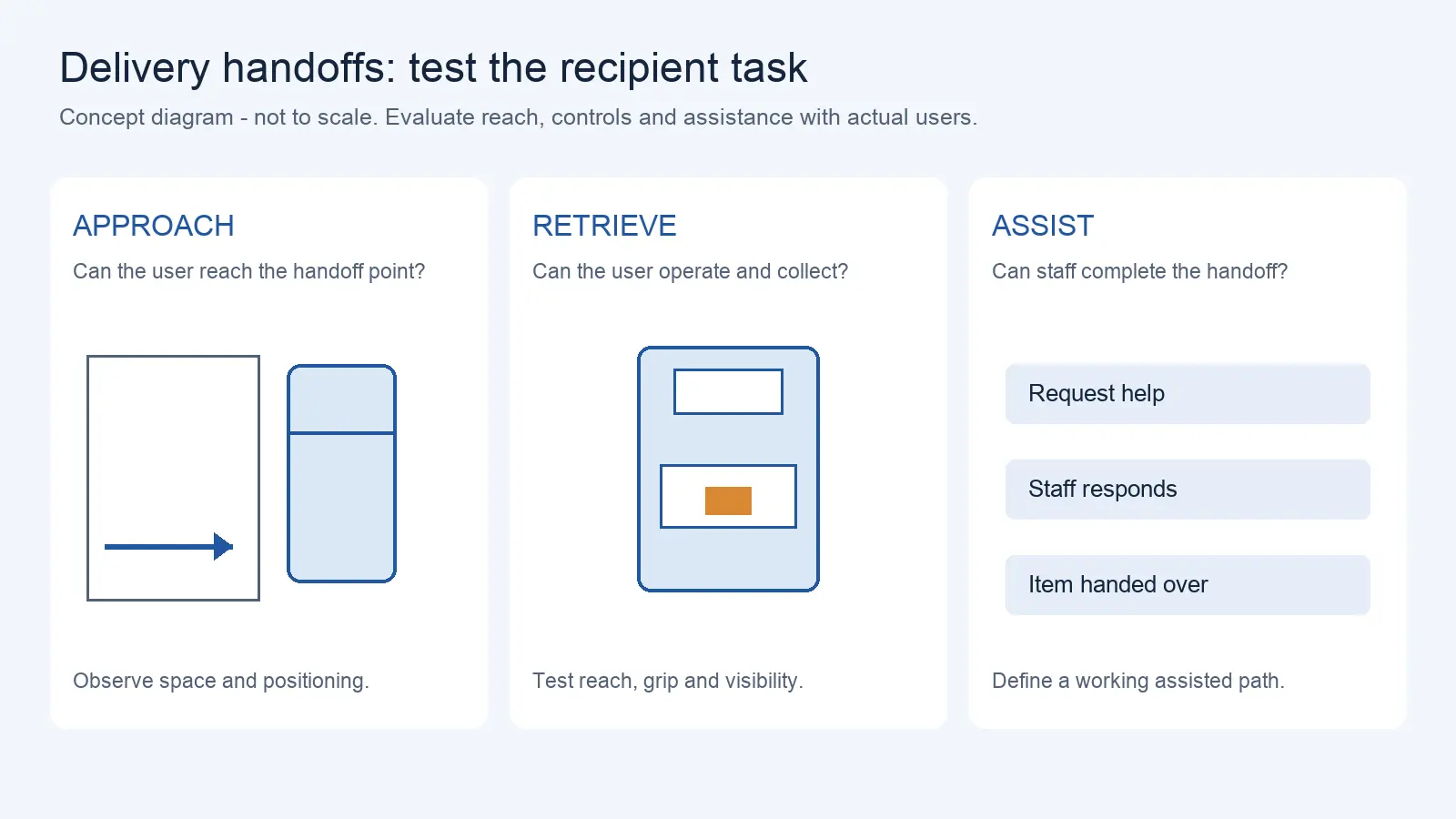
Delivery Robot Accessibility: Tray Reach, Controls, and Assisted Handoffs
Oct 12, 2026
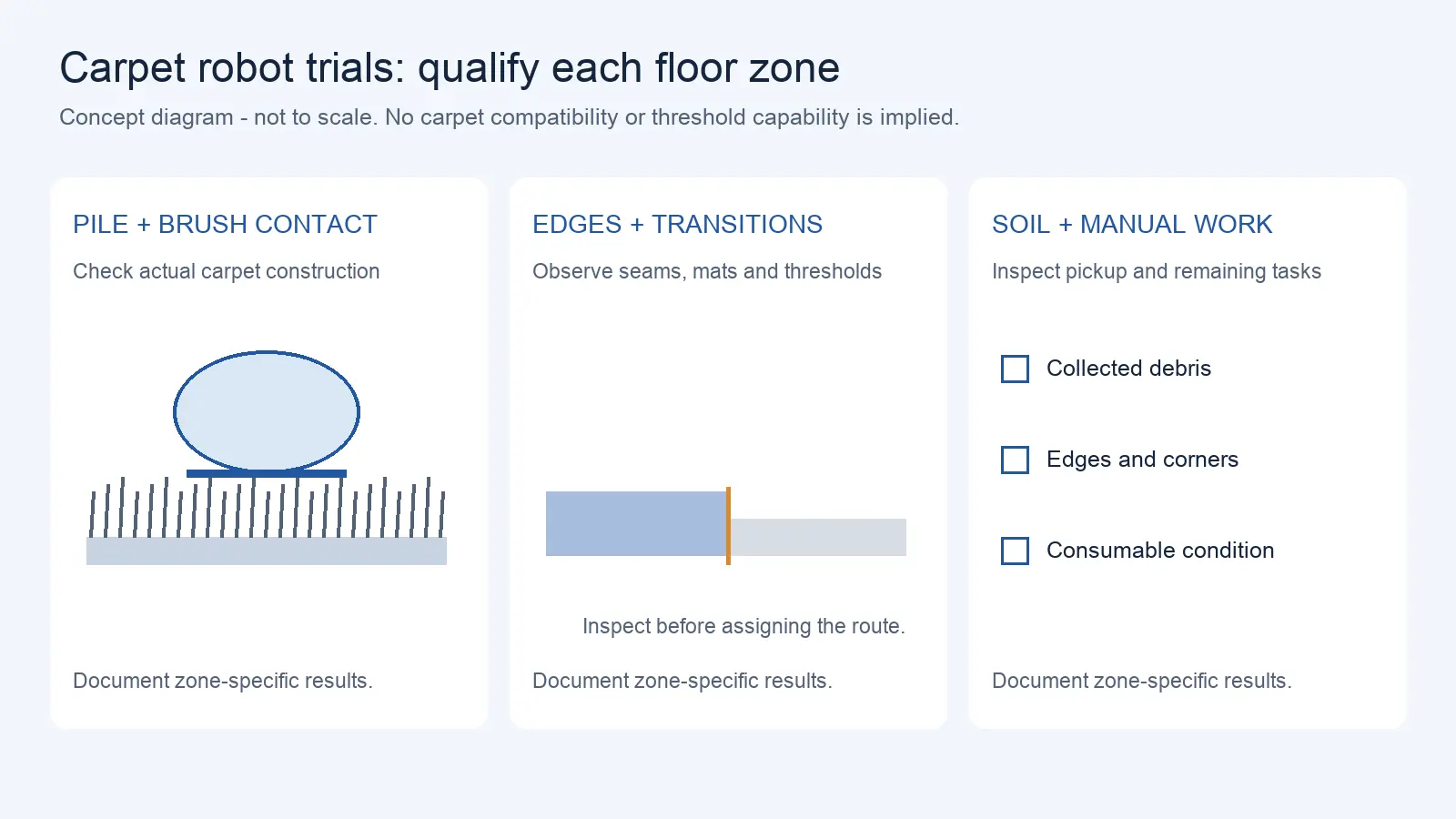
Commercial Carpet-Vacuuming Robots: Pile, Edge Transitions, and Maintenance Limits
Oct 12, 2026
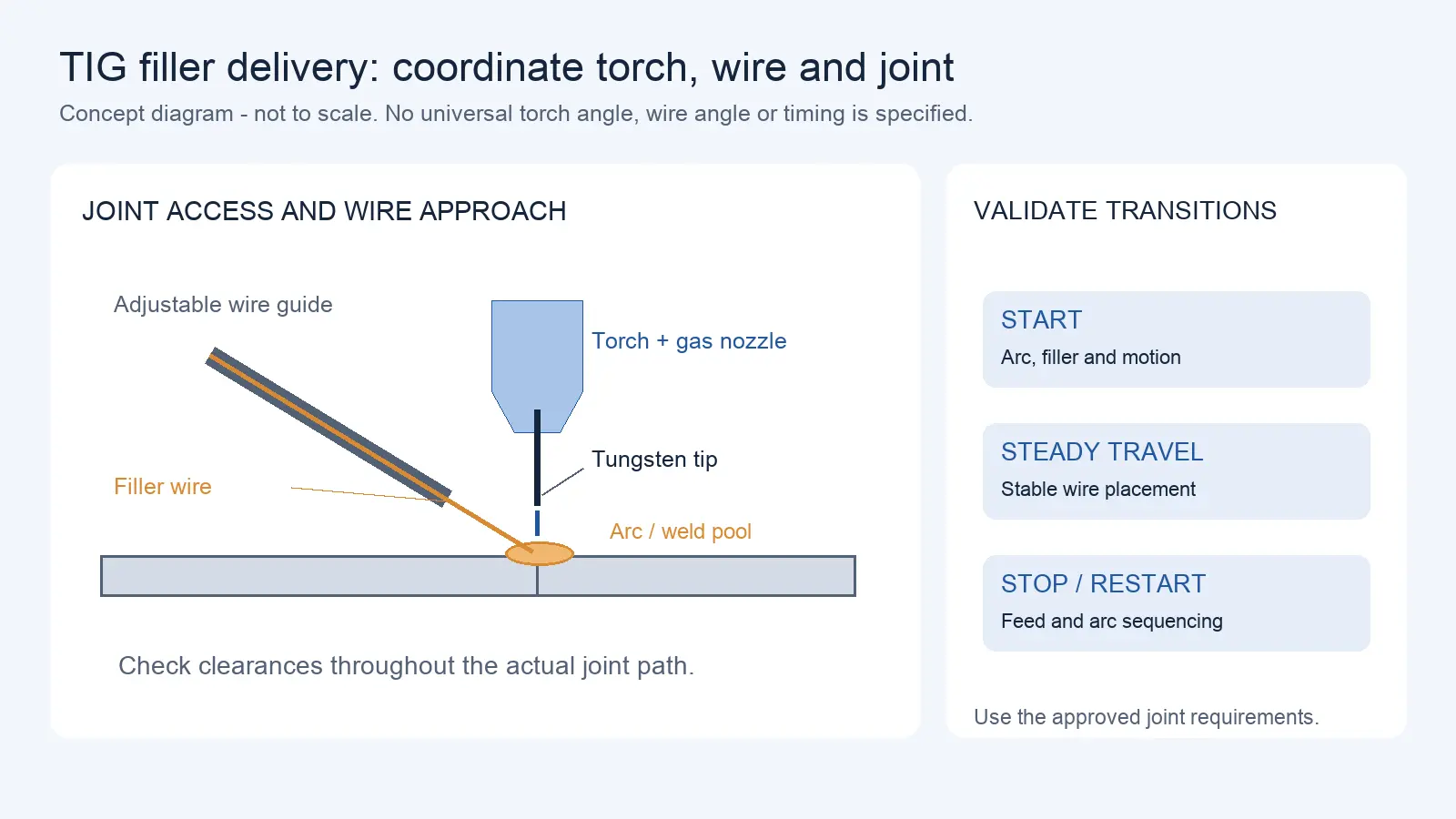
Robotic TIG Filler-Wire Delivery: Feed Angle, Arc Access, and Stop-Start Quality
Oct 12, 2026
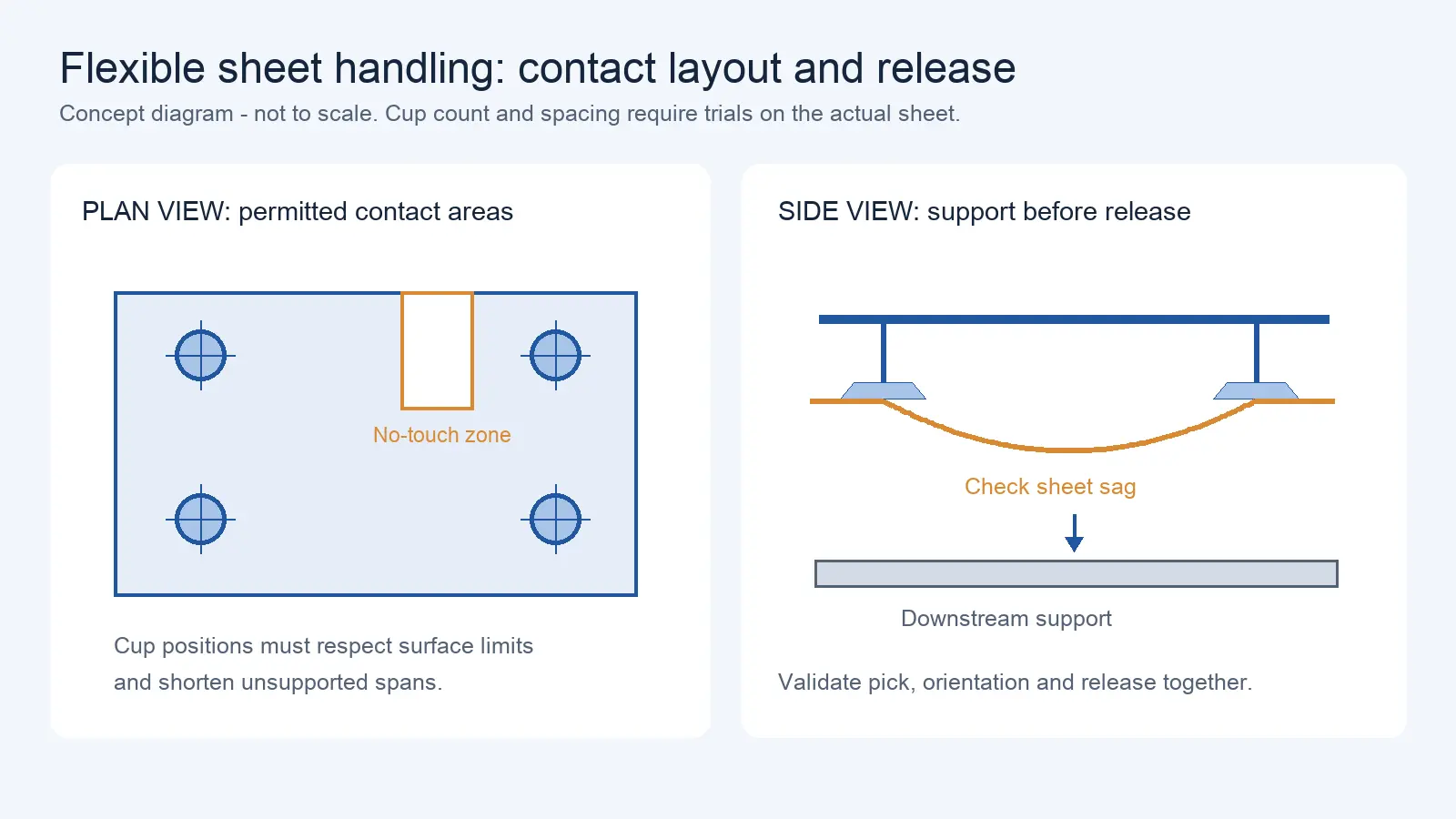
Suction Cup Layout for Flexible Sheets: Sag, Local Stress, and Controlled Release
Oct 12, 2026
A plant with three production lines that each need palletizing faces a fundamental architecture question: should it invest in one high-speed robot cell that serves all three lines, or multiple smaller cells that each serve one line? The answer is rarely obvious, because the two approaches differ in throughput, flexibility, downtime risk, space requirements, and cost. This article explains the decision factors that determine which architecture is right for a multi-line palletizing application.
Why One High-Speed Cell Is Not Always Better Than Several Smaller Cells
The instinct to centralize is understandable: one high-speed robot cell seems more efficient, easier to maintain, and cheaper than multiple separate cells. In some cases, this is true. In many cases, it is not.
A single centralized cell works well when:
- All lines produce similar products at similar rates
- Lines are physically close together, allowing short conveyor runs to the central cell
- SKU mix is low (few different pallet patterns)
- Downtime on one cell is acceptable because all lines can pause
A single centralized cell may be less suitable when:
- Lines produce different products at different rates, requiring frequent changeovers
- Lines are physically separated, requiring long conveyor runs that add cost and complexity
- SKU mix is high, requiring the robot to switch patterns frequently
- One line’s downtime should not affect other lines
The decision is not “centralized is better” or “distributed is better.” It is a trade-off analysis that depends on the specific plant’s production characteristics.
Compare Line Throughput and SKU Mix
The first step is to understand what each line produces and how that affects palletizing requirements:
| Parameter | What to Measure | How It Affects Architecture |
| Line throughput (cases/min or units/hr) | Rate of each line at peak production | Determines whether one robot can keep up with all lines combined |
| Product dimensions | Case size, weight, and shape per line | Determines pallet pattern and gripper requirements |
| Pallet pattern | Number of layers, cases per layer, pattern complexity | Determines cycle time per pallet |
| SKU mix | Number of different products/patterns per line | Determines changeover frequency and complexity |
| Changeover time | Time to switch between patterns | Affects throughput during mixed production |
| Line scheduling | Do lines run simultaneously or in staggered shifts? | Affects peak demand on the palletizing cell |
Throughput Sizing Approach
Palletizing cell sizing should be calculated based on the actual pick-and-place cycle, not on a simplified pallets-per-minute figure. The key variables are:
- Cases per minute arriving at the palletizing point (per line and combined)
- Cases per pick (how many cases the gripper handles per robot cycle)
- Picks per minute the robot can execute (based on robot speed, reach, gripper strategy, and pallet pattern)
- Pallet change time (time to swap a full pallet for an empty one)
- Changeover time between different pallet patterns (if applicable)
Illustrative scenario (all figures are hypothetical for calculation demonstration):
- Line 1: 120 cases/min
- Line 2: 80 cases/min
- Line 3: 60 cases/min
- Combined demand: 260 cases/min
- Cases per pick: 1 (single-case gripper)
- Robot pick rate: 12 picks/min (based on robot model, reach, gripper, and pallet pattern)
- Pallet change time: 20 seconds per pallet (accounted for in average cycle)
In this scenario, one robot at 12 picks/min cannot serve 260 cases/min. The buyer must either:
- Use a multi-case gripper (e.g., 2 cases per pick = 24 cases/min per robot)
- Use multiple robots in one cell
- Use distributed cells (one per line)
If the gripper handles 2 cases per pick, one robot can handle 24 cases/min. With 3 robots, the cell handles 72 cases/min—still insufficient for 260 cases/min combined. The point is that the calculation must be done with actual pick-rate data from the robot supplier, not assumed from a generic “pallets per minute” figure.
If lines run in staggered shifts (not simultaneously), the peak demand may be lower, and a single cell may suffice. But the calculation must use the actual peak, not an assumed average.
Conveyor Routing and Accumulation Between Lines
The conveyor system that feeds the palletizing cell is a major cost and complexity factor:
Centralized Cell Conveyor Requirements
- Conveyor runs from each line to the central cell
- Merge system to combine flows from multiple lines
- Accumulation buffer to handle rate differences between lines
- Line identification system (vision or barcode) to route each case to the correct pallet
- Floor space for conveyor runs, merge points, and accumulation
Distributed Cell Conveyor Requirements
- Short conveyor from each line to its dedicated cell
- No merge system needed
- Minimal accumulation needed (each cell matches its line’s rate)
- No line identification system needed (each cell handles only one line’s products)
Cost Comparison
| Conveyor Element | Centralized Cell | Distributed Cells |
| Conveyor length | Long (multiple runs to central point) | Short (each line to nearby cell) |
| Merge system | Required | Not required |
| Accumulation | Required (large buffer) | Minimal |
| Line identification | Required (vision/barcode) | Not required |
| Control complexity | High (merge, routing, accumulation control) | Low (one-to-one) |
The conveyor cost for a centralized cell can exceed the savings from buying one robot instead of multiple robots. This is a factor to model, not a universal conclusion—the actual cost depends on the plant layout, conveyor length, and system complexity.
Changeovers, Mixed Loads and Pallet Availability
Changeover Frequency
If each line produces a different product, the centralized cell must switch pallet patterns when switching between lines. Each changeover involves:
- Robot program change
- Gripper adjustment (if products differ in size)
- Pallet change (if pallet sizes differ)
- Pallet pattern update
If changeovers are frequent, the centralized cell loses throughput to changeover time. Distributed cells, each dedicated to one line, do not require changeovers.
Mixed Loads
Some applications require mixed pallets (multiple SKUs on one pallet). Mixed palletizing requires:
- Vision system to identify incoming cases
- Dynamic pallet pattern calculation (not a fixed pattern)
- More complex gripper (may need to handle different case sizes)
- Slower cycle time (positioning precision is more critical)
Mixed palletizing may be better suited to a dedicated cell, not a shared centralized cell—but this is a factor to evaluate, not a universal rule.
Pallet Supply
- Centralized cell: one pallet dispenser serves all lines, but pallet types may differ by line
- Distributed cells: each cell has its own pallet dispenser, configured for that line’s pallet type
| Parameter | Centralized Cell | Distributed Cells |
| Robot type | High-speed, large reach (to cover multiple conveyor infeeds and pallet positions) | Standard-speed, moderate reach (to cover one conveyor infeed and one pallet position) |
| Payload | Higher (may need to handle heavier products from any line) | Matched to the specific line’s product weight |
| Gripper | Universal or quick-change (to handle different case sizes) | Dedicated (optimized for one case size) |
| Cycle time | Must be fast enough to serve all lines | Matched to one line’s rate |
Shared Equipment
A centralized cell may share:
- One pallet dispenser (serving multiple pallet positions)
- One stretch wrapper (post-palletizing)
- One label printer
- One safety perimeter
Distributed cells each need their own equipment, which increases capital cost but reduces dependency—if one cell’s pallet dispenser fails, the other cells continue operating.
Downtime Risk: One Central Cell vs Distributed Cells
Downtime risk is one of the strongest arguments for distributed architecture:
| Scenario | Centralized Cell | Distributed Cells |
| Robot failure | All lines stop (no palletizing capacity) | One line stops; other lines continue |
| Conveyor failure | All lines stop (merge or main conveyor blocked) | One line stops; other lines have independent conveyors |
| Maintenance | All lines must pause during scheduled maintenance | Maintenance can be staggered across cells |
| Software/firmware update | All lines affected during update | Update one cell at a time; other cells continue |
Risk Mitigation for Centralized Cell
If a centralized cell is selected, the plant should mitigate downtime risk:
- Maintain a manual palletizing backup procedure (with adequate staff and space)
- Keep critical spare parts on hand (robot controller, motor, gripper)
- Schedule maintenance during non-production hours
- Consider a backup robot or quick-swap capability
Floor Space, Safety and Maintenance Access
| Dimension | Centralized Cell | Distributed Cells |
| Floor space | Concentrated in one area (large footprint) | Distributed across the plant (smaller footprints, but total may be larger) |
| Safety perimeter | One perimeter (design per risk assessment) | Multiple perimeters (each designed per risk assessment) |
| Maintenance access | One location (easier for technician) | Multiple locations (technician must travel) |
| Operator staffing | One operator can monitor one cell | May need one operator per cell, or a roaming operator |
| Utilities | One power drop, one air drop | Multiple utility drops needed |
Note: Safety perimeter design (guarding, light curtains, area scanners) must be based on a risk assessment for the specific cell configuration—not on whether the cell is centralized or distributed.
Decision Matrix for Centralized vs Distributed Palletizing
| Factor | Favors Centralized | Favors Distributed |
| Number of lines | Few lines | Many lines |
| Line products | Similar (same case size, pattern) | Different (varying case sizes, patterns) |
| Line rates | Low combined rate | High combined rate (exceeds single robot capacity) |
| Line scheduling | Staggered shifts (peak demand is lower) | Simultaneous operation (peak demand is higher) |
| Physical layout | Lines close together | Lines far apart |
| SKU mix | Low (few patterns) | High (many patterns, frequent changeover) |
| Mixed loads | Not required | Required |
| Downtime tolerance | All lines can pause together | Lines must operate independently |
| Conveyor cost | Short runs to central point | Long runs would be needed for centralization |
| Floor space | Available in one area | Better suited to distributed placement |
| Maintenance | Prefer centralized maintenance | Can manage distributed maintenance |
| Budget | Lower capital cost preferred | Higher capital cost acceptable for operational resilience |
How to Use This Matrix
Score the project against each row. If the majority of factors favor centralized, a single high-speed cell may be the right choice. If the majority favor distributed, multiple smaller cells may be better. Mixed results indicate that a hybrid approach (e.g., two cells serving three lines) may be optimal.
The matrix is a decision support tool, not a formula. The final decision should consider the plant’s specific constraints, budget, and operational priorities.
Request a Quote or Technical Evaluation
Tell us what you need the robot to do. Even if some technical details are not yet confirmed, our team can help evaluate suitable options.
Please share, if available: application, key requirements, site and integration conditions, quantity, destination, and target timeline.
Send Your RequirementsShare on Social:


- PREV: Not PREV
- NEXT: Drag Teaching vs Offline Programming: Choosing the Right Robot Programming Method
Contact Us
In This Article
Delivery Robot Accessibility: Tray Reach, Controls, and Assisted Handoffs
Oct 12, 2026
Commercial Carpet-Vacuuming Robots: Pile, Edge Transitions, and Maintenance Limits
Oct 12, 2026
Robotic TIG Filler-Wire Delivery: Feed Angle, Arc Access, and Stop-Start Quality
Oct 12, 2026
Suction Cup Layout for Flexible Sheets: Sag, Local Stress, and Controlled Release
Oct 12, 2026