

 Contact Us

 Home /
 Commercial Cleaning Robots: Types, Navigation, Floor Coverage, and Deployment Requirements

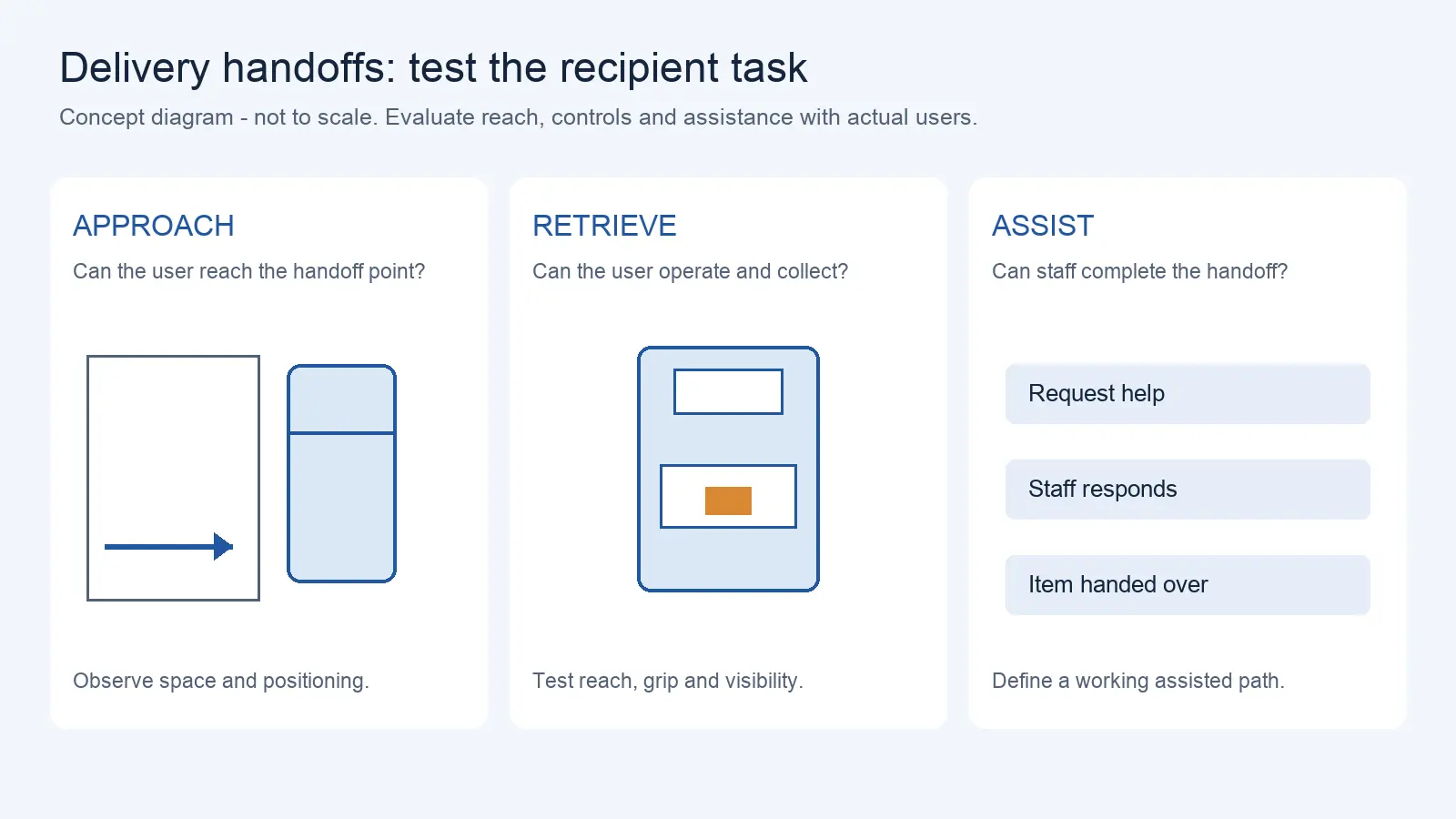
Delivery Robot Accessibility: Tray Reach, Controls, and Assisted Handoffs
Oct 12, 2026
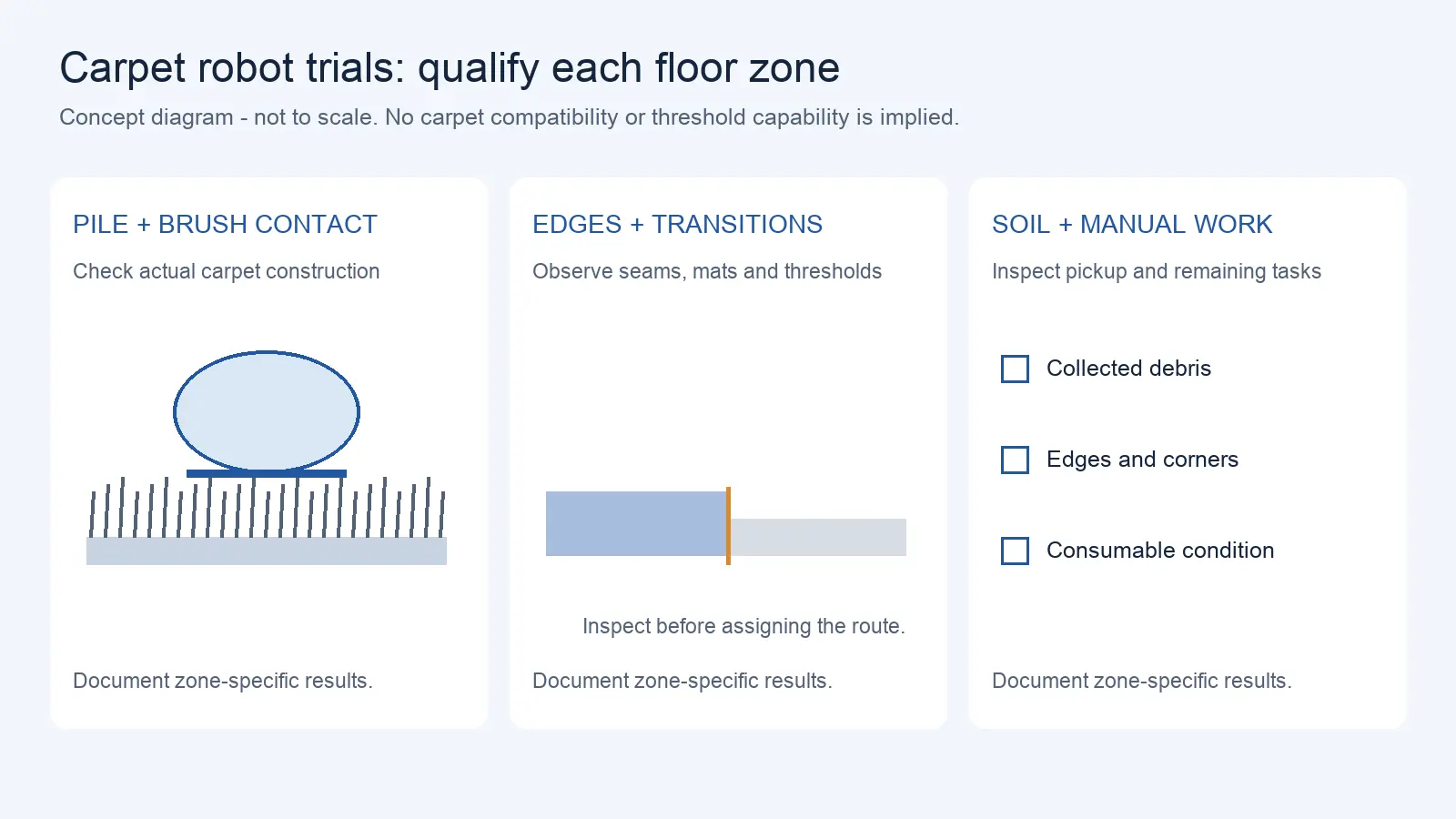
Commercial Carpet-Vacuuming Robots: Pile, Edge Transitions, and Maintenance Limits
Oct 12, 2026
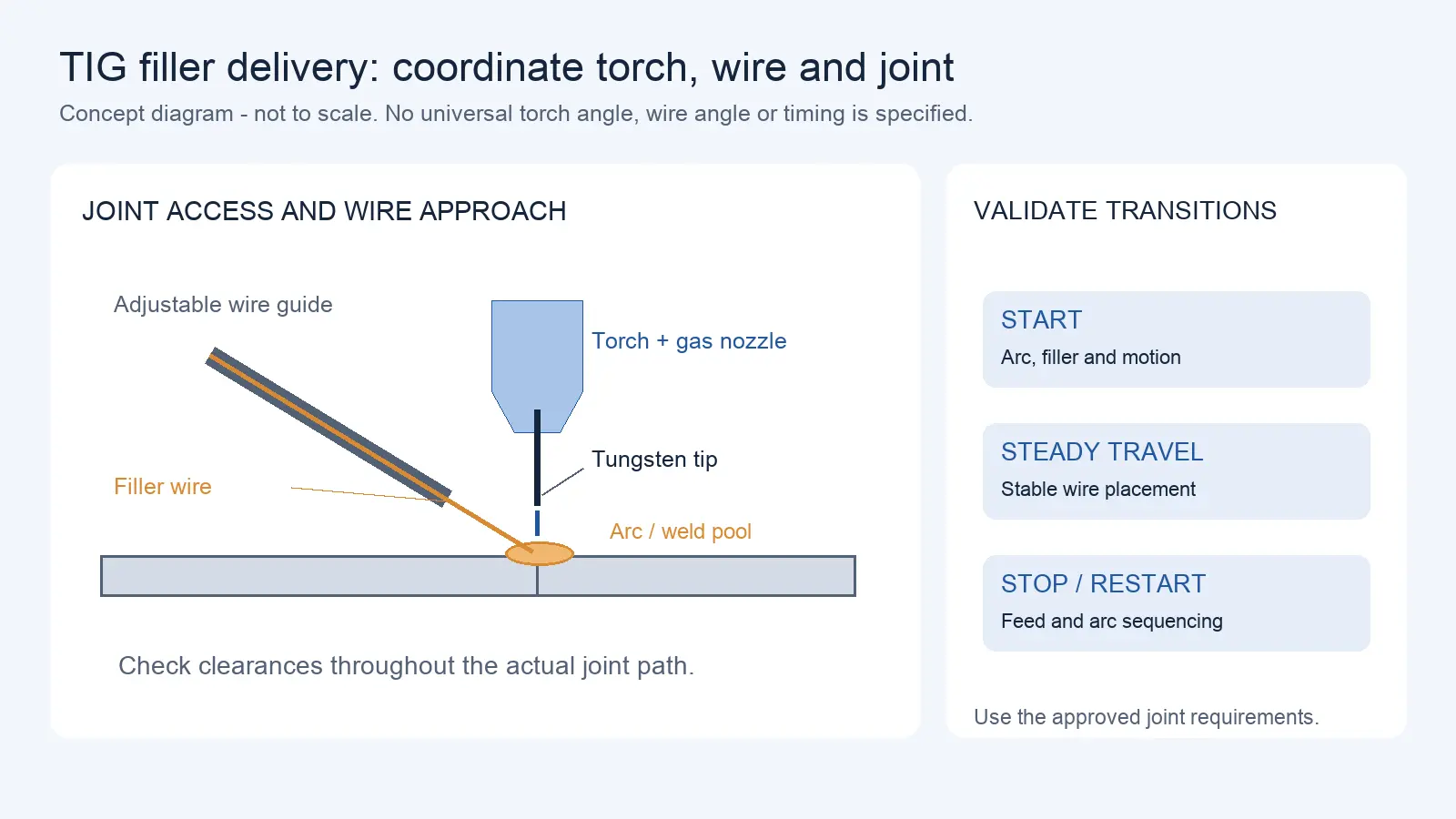
Robotic TIG Filler-Wire Delivery: Feed Angle, Arc Access, and Stop-Start Quality
Oct 12, 2026
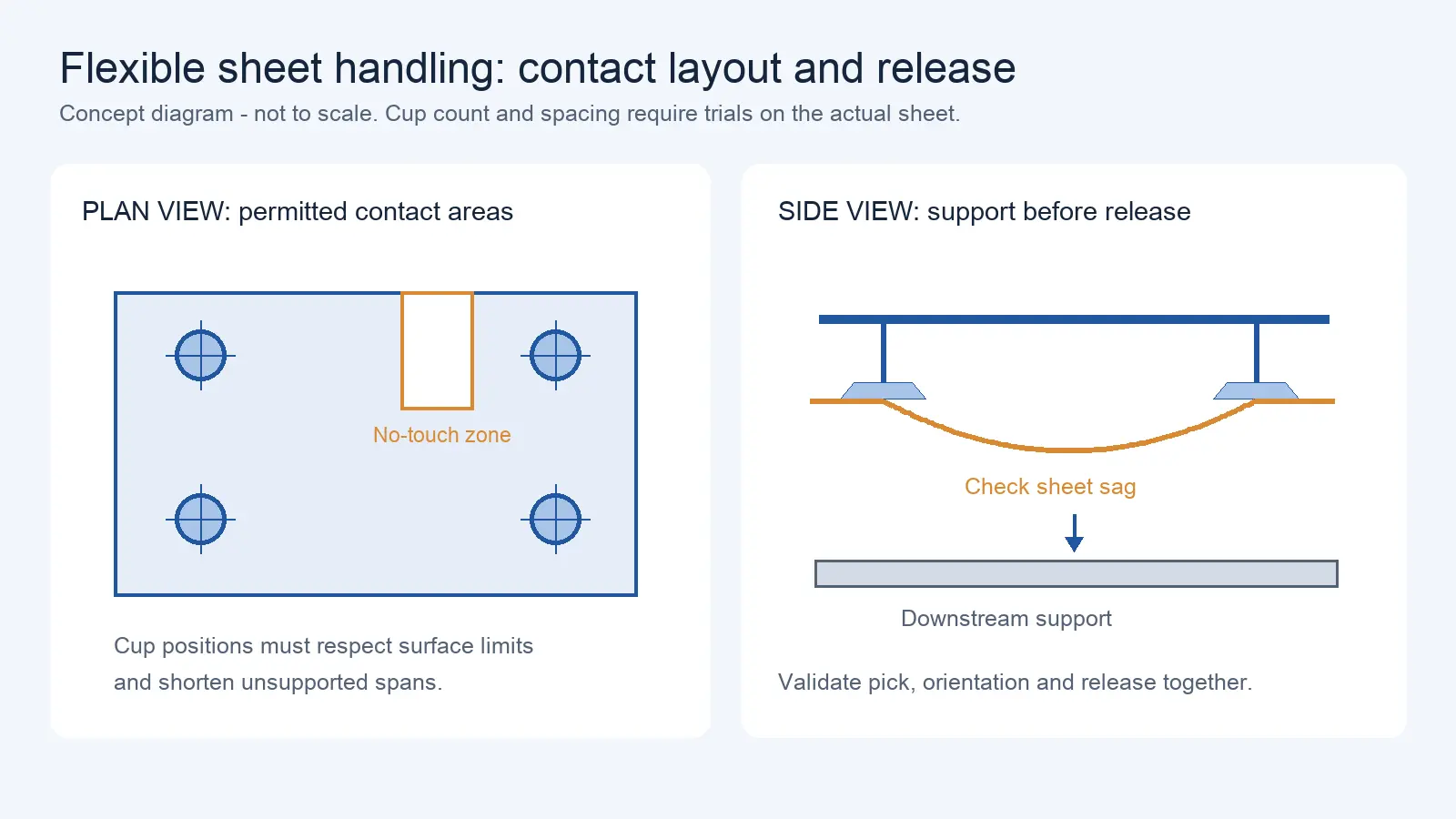
Suction Cup Layout for Flexible Sheets: Sag, Local Stress, and Controlled Release
Oct 12, 2026
A Commercial Cleaning Robot is not simply a larger version of a household vacuum robot. Commercial cleaning robots are designed for complex environments such as shopping malls, hospitals, airports, offices and industrial facilities, where they must operate around pedestrians, carts, fixtures, changing layouts and different contamination levels.
Compared with household models, commercial systems require stronger cleaning modules, larger water tanks, advanced navigation, durable components and fleet management software.
Choosing the right Commercial Cleaning Robot requires evaluating more than advertised cleaning speed. Real performance depends on floor conditions, cleaning mode, navigation reliability, docking infrastructure, operating schedule and actual coverage per shift.
This guide explains commercial cleaning robot types, cleaning technologies, navigation requirements and key factors buyers should consider before deployment.
Commercial Cleaning Robots vs Household Cleaning Robots
Commercial and household cleaning robots serve completely different environments.
| Factor | Household Cleaning Robot | Commercial Cleaning Robot |
|---|---|---|
| Operating Environment | Homes with predictable layouts and limited obstacles | Public facilities with pedestrians, carts, fixtures and temporary obstacles |
| Cleaning Area | Usually 50–200 m² per session | 1,000–10,000+ m² per shift depending on configuration |
| Contamination Level | Light dust, pet hair and occasional spills | Heavy foot traffic soil, oil, grease, liquid spills and industrial residue |
| Tank Capacity | Small dust bins or limited water capacity | Separate clean and dirty water tanks, commonly 10–30 L |
| Navigation | Designed for known home layouts | Multi-zone mapping, obstacle avoidance and fleet scheduling |
| Durability | Light-duty operation | Designed for daily commercial operation over multiple years |
| Fleet Management | Usually single-unit operation | Multi-robot scheduling, reporting and maintenance management |
A commercial facility requires a robot designed around:
- Larger operating areas
- Continuous operation
- Variable contamination
- Public safety requirements
- Professional maintenance workflows
A household robot cannot simply replace a commercial cleaning robot because the operating requirements are fundamentally different.
Cleaning Modes: Scrubbing, Vacuuming, Sweeping and Dust Mopping
Not every cleaning mode is suitable for every floor type. A robot advertising multiple cleaning functions does not necessarily provide equal performance in every mode.
The correct selection depends on the relationship between:
- Floor material
- Contaminant type
- Required cleaning result
| Cleaning Mode | Best Application | Main Limitation |
|---|---|---|
| Scrubbing | Tile, epoxy, concrete, vinyl and polished stone floors with soil or liquid contamination | Not suitable for carpet; performance depends on water recovery and floor flatness |
| Vacuuming | Dry debris, dust and particles on hard floors or low-pile carpet | Cannot remove liquid spills |
| Sweeping | Dry debris collection and pre-cleaning before scrubbing | Does not remove stains, grease or liquids |
| Dust Mopping | Fine dust removal on smooth hard floors | Not effective for heavy contamination |
| Combined Cleaning | Facilities with mixed contamination types | Each cleaning function must still be evaluated separately |
For example:
- Oil and liquid contamination on concrete requires scrubbing with recovery, not vacuuming alone.
- Light dust on polished stone may require dust mopping instead of aggressive scrubbing.
- Mixed facilities may require combined cleaning modes.
Theoretical Efficiency vs Actual Floor Coverage
One of the biggest misunderstandings when evaluating a Commercial Cleaning Robot is confusing theoretical efficiency with real cleaning coverage.
Manufacturers may provide values such as:
- m²/h cleaning efficiency
- 5,000–8,000 m² operation range
However, these numbers do not always represent actual cleaned area during a working shift.
Why Actual Coverage Is Lower
| Factor | Impact on Cleaning Coverage |
|---|---|
| Turning overlap | Robots overlap previous paths to avoid missed areas, reducing effective progress |
| Obstacles | Chairs, displays, carts and columns create detours |
| Edge cleaning | Corners and wall edges may require additional cleaning |
| Water refill | Empty tanks interrupt operation |
| Charging | Battery charging pauses cleaning |
| Pedestrian avoidance | Public traffic slows or stops the robot |
| Floor transitions | Ramps, thresholds and mixed flooring affect movement |
A robot rated at high theoretical efficiency may achieve significantly lower real-world coverage after considering:
- Navigation delays
- Obstacles
- Refill frequency
- Human traffic
- Edge limitations
Therefore, buyers should evaluate:
Actual cleaned area per shift
rather than only published m²/h values.
Many cleaning robots advertise:
- LiDAR navigation
- Multiple sensors
- AI obstacle avoidance
However, hardware specifications alone do not determine navigation quality.
Commercial environments require evaluation of:
| Navigation Factor | Importance |
|---|---|
| Localization accuracy | Ensures the robot returns to correct positions and docking points |
| Obstacle avoidance | Allows operation around pedestrians, carts and moving objects |
| Restricted zones | Prevents entry into prohibited areas |
| Narrow passage handling | Enables movement through corridors and tight spaces |
| Map management | Allows updates when layouts change |
Dynamic environments are the real challenge.
A robot that performs well in an empty building may behave differently during business hours when:
- Customers move through aisles
- Staff push carts
- Temporary displays appear
Navigation performance should be tested during actual operating conditions.
Docking Stations: Charging, Water and Drainage
The docking station determines how independently a robot can operate.
| Docking Level | Function | Site Requirement |
|---|---|---|
| Return-to-charge | Battery charging only | Power connection |
| Charge + manual water service | Charging with easier manual refill | Power + nearby water access |
| Fully automated docking | Charging, water refill, wastewater discharge and tank cleaning | Power + water supply + drainage |
A fully automated docking station cannot operate without:
- Power
- Water supply
- Drainage connection
- Installation space
Before selecting a docking solution, buyers should confirm site infrastructure availability.
Floor Materials and Cleaning Mode Selection
Different floor materials require different cleaning strategies.
| Floor Material | Recommended Cleaning Approach |
|---|---|
| Ceramic / porcelain tile | Scrubbing, vacuuming, sweeping, dust mopping |
| Epoxy concrete | Scrubbing, sweeping, dust mopping |
| Polished stone | Dust mopping or gentle scrubbing |
| Vinyl flooring | Suitable pads and controlled scrubbing |
| Low-pile carpet | Vacuuming only |
| Mixed flooring | Zone-based cleaning mode selection |
Aggressive cleaning settings may damage sensitive surfaces.
The cleaning mode must match:
- Floor material
- Contamination type
- Required cleaning frequency
Battery, Charging and Shift Planning
Battery capacity alone does not determine productivity.
Actual coverage depends on:
| Factor | Impact |
|---|---|
| Battery capacity | Starting operation capability |
| Pedestrian traffic | Reduces movement efficiency |
| Water tank capacity | May require refill before battery depletion |
| Charging strategy | Determines continuous operation ability |
| Battery aging | Reduces long-term coverage |
A robot with several hours of runtime may still require frequent service if:
- The water tank is too small
- Contamination requires additional passes
- Operating conditions are complex
Pilot testing is recommended to verify actual coverage per charge.
Software and Fleet Management
For large facilities, software capability becomes increasingly important.
| Function | Purpose |
|---|---|
| Zone scheduling | Assigns cleaning tasks by area and time |
| Task assignment | Coordinates multiple robots |
| Traffic management | Prevents robot congestion |
| Coverage reporting | Provides cleaning records and audit data |
| Remote monitoring | Tracks battery, tasks and faults |
| Maintenance alerts | Supports preventive maintenance |
Fleet management allows companies to operate multiple cleaning robots more efficiently.
Safety Requirements for Commercial Cleaning Robots
Commercial cleaning robots operate around people, so safety must be verified.
Key considerations include:
- Pedestrian detection
- Emergency stop access
- Wet floor warnings
- Chemical handling
- Restricted area avoidance
- Noise control
For example, scrubbing robots may leave wet surfaces, requiring appropriate warning procedures depending on facility regulations.
Commercial Cleaning Robot Pilot Test Checklist
Before full deployment, buyers should evaluate:
| Test Item | Evaluation Goal |
|---|---|
| Coverage completeness | Verify actual cleaned area per shift |
| Peak-hour navigation | Confirm obstacle handling with pedestrians |
| Battery and water endurance | Confirm operational cycle |
| Edge cleaning | Check wall and corner performance |
| Cleaning mode performance | Validate each mode on actual floors |
| Docking reliability | Verify autonomous return and restart |
| Noise level | Confirm suitability during business hours |
| Map updates | Test layout change handling |
| Fault recovery | Confirm recovery without frequent manual intervention |
Common Buying Mistakes
| Mistake | Better Approach |
|---|---|
| Selecting only by theoretical m²/h | Calculate real coverage based on facility conditions |
| Assuming all floors support scrubbing | Match cleaning mode to floor material |
| Choosing automated docking without checking infrastructure | Verify water and drainage availability |
| Skipping peak-hour testing | Test under real pedestrian conditions |
| Assuming all cleaning modes perform equally | Evaluate each mode separately |
Conclusion
Selecting a Commercial Cleaning Robot requires more than comparing cleaning speed or sensor specifications.
A successful deployment depends on:
- Floor type
- Contamination level
- Navigation capability
- Docking infrastructure
- Operating schedule
- Safety requirements
- Real coverage performance
AIsirRobot helps buyers evaluate commercial cleaning robot configurations based on actual facility conditions, helping identify suitable automation solutions and pilot testing requirements.
Share on Social:


Contact Us
In This Article
Delivery Robot Accessibility: Tray Reach, Controls, and Assisted Handoffs
Oct 12, 2026
Commercial Carpet-Vacuuming Robots: Pile, Edge Transitions, and Maintenance Limits
Oct 12, 2026
Robotic TIG Filler-Wire Delivery: Feed Angle, Arc Access, and Stop-Start Quality
Oct 12, 2026
Suction Cup Layout for Flexible Sheets: Sag, Local Stress, and Controlled Release
Oct 12, 2026