

 Contact Us

 Home /
 Collaborative Welding Robot Buyer’s Guide: Applications, Configuration, and Selection

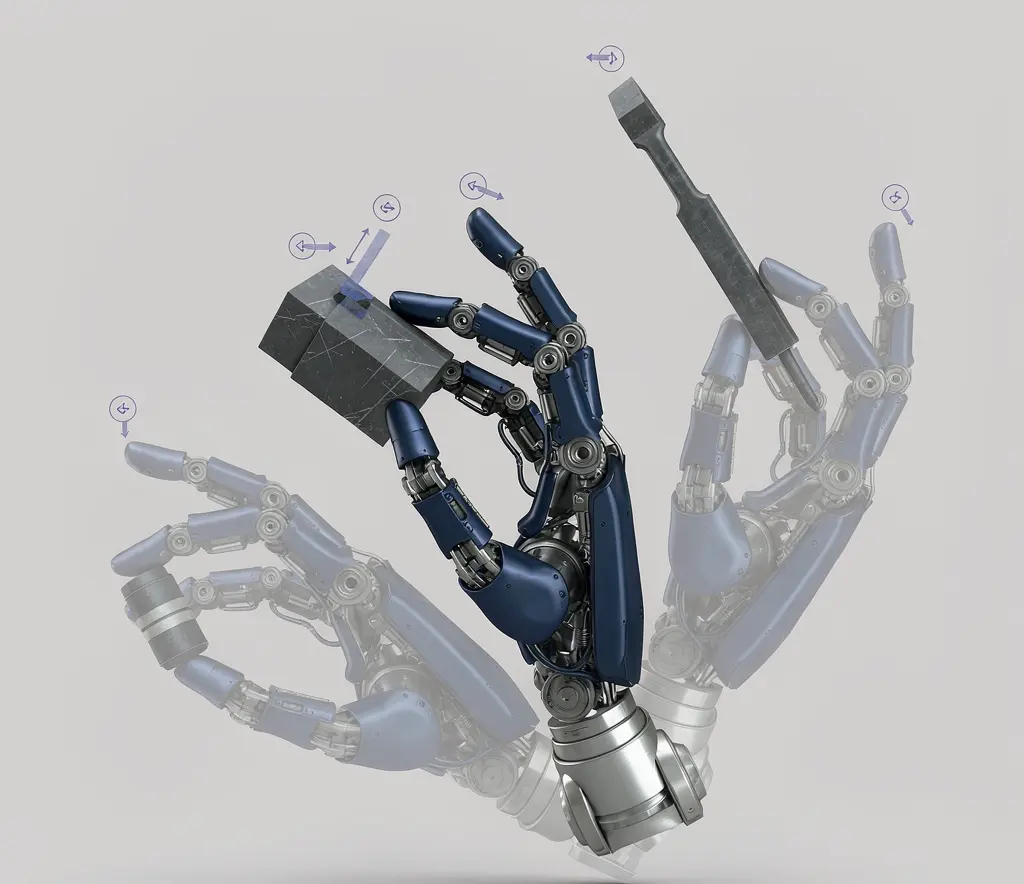
Humanoid Robot Hand Dexterity Verification: Grasp Set, Tool Use, Force Control, and Recovery
Oct 08, 2026

Industrial Exoskeleton Fit and Sizing: Anthropometry, Adjustment Time, PPE, and Shared-Device Programs
Oct 08, 2026

Robot Duty Cycle and Thermal Limits: Why Rated Payload and Speed Do Not Guarantee Continuous Operation
Oct 08, 2026

Robot IP Ratings Explained: What IP54, IP65, and IP67 Do — and Do Not — Prove
Oct 08, 2026
A Collaborative Welding Robot is not simply a robotic arm equipped with a welding torch. It is a complete welding automation system that combines a cobot arm, welding power source, wire feeder, torch, fixture, sensing technology, safety system and programming software.
The performance of a Cobot Welding Robot depends on how these components work together with the specific workpiece, welding process and production requirements.
For manufacturers evaluating Robot Welding Automation, the key considerations are not only robot payload and reach, but also welding process compatibility, fixture design, programming method, safety requirements and production workflow.
This guide explains how to select a suitable Collaborative Welding Robot System and what factors should be evaluated before comparing configurations.
What Is a Collaborative Welding Robot System?
A Collaborative Welding Robot System is a welding cell where a cobot performs welding operations while operating under application-specific safety conditions.
The robot arm provides:
- Torch movement
- Weld path positioning
- Motion control
The welding system provides:
- Arc generation
- Welding current and voltage control
- Wire feeding
- Shielding gas delivery
The fixture and positioner provide:
- Workpiece positioning
- Stable welding access
- Repeatable production conditions
A robot arm alone cannot complete welding automation. A successful system requires integration between:
- Robot arm
- Welding equipment
- Tooling
- Workholding system
- Safety system
- Programming software
Main Components of a Cobot Welding Cell
| Component | Function | Selection Factors |
|---|---|---|
| Cobot Arm | Moves welding torch along programmed path | Payload, reach, repeatability, mounting method |
| Welding Power Source | Controls arc current, voltage and welding process | MIG/MAG, TIG or laser compatibility, communication protocol |
| Wire Feeder | Supplies filler wire | Wire type, welding process, mounting position |
| Welding Torch | Delivers arc, wire and shielding gas | Torch type, cooling method, weight and accessibility |
| Fixture / Positioner | Holds and rotates workpiece | Part geometry, welding angle and production volume |
| Seam Tracking System | Compensates for part variation | Touch sensing, laser or vision tracking |
| Safety System | Protects operators and equipment | Risk assessment, monitoring and guarding requirements |
| Programming Interface | Creates welding paths | Drag teaching, graphical programming or offline programming |
Which Welding Applications Are Suitable for Cobots?
Not every welding task is suitable for collaborative automation.
The best candidates usually have:
- Stable workpieces
- Repeatable weld paths
- Consistent material conditions
- Medium to high production volume
| Application Type | Characteristics | Examples |
|---|---|---|
| Well suited | Stable parts, consistent seams, repeatable production | Frames, tanks, pipes and long straight welds |
| Possible with additional equipment | Some variation, complex angles or multi-pass welding | Positioner-assisted welding, seam tracking applications |
| Less suitable initially | Highly variable parts and unpredictable conditions | Field repair, one-off structures and extreme distortion |
Key Factors Affecting Welding Automation Feasibility
Part Consistency
Robots follow programmed paths. Large variations in:
- Part dimensions
- Welding gap
- Joint location
may require:
- Better fixtures
- Seam tracking
- Additional sensing systems
Fixture Quality
A welding robot can only achieve consistent results when the workpiece is positioned accurately.
Poor fixtures may cause:
- Incorrect torch positioning
- Reduced robot reach
- Unstable weld quality
Welding Process Complexity
Different welding processes require different robot configurations.
- MIG/MAG is commonly used for cobot welding because of its relatively simple process requirements.
- TIG requires higher path accuracy and arc control.
- Laser welding requires specialized safety protection and precise positioning.
MIG/MAG, TIG and Laser Welding: Process Selection
A robot that supports welding does not automatically support every welding process.
| Process | Typical Application | Requirements |
|---|---|---|
| MIG/MAG Welding | Steel fabrication, medium-to-thick materials, high deposition | Compatible welding source, wire feeder, gas system and torch mounting |
| TIG Welding | Stainless steel, aluminum, thin materials and precision joints | Accurate path control, stable arc control and precise torch positioning |
| Laser Welding | Automotive and precision manufacturing | Laser source, beam protection enclosure and high positioning accuracy |
Process selection affects:
- Robot configuration
- Tooling
- Safety design
- Programming requirements
Key Robot Specifications for Welding
Payload
A cobot rated for 10 kg payload does not mean it can carry a 10 kg welding assembly.
Robot payload is often misunderstood in welding applications.
The actual payload includes:
Effective Payload = Welding Torch + Cable + Sensors + Accessories
Typical welding tooling may include:
- MIG torch
- Cable bundle
- Gas hose
- Tracking sensor
A heavy torch or extended neck can reduce usable payload because of center-of-gravity offset.
Reach
Robot reach must cover:
- Maximum weld location
- Fixture area
- Positioner rotation range
- Required torch angles
A longer reach does not always mean better performance.
The actual workspace depends on:
- Robot mounting position
- Tool length
- Joint limits
- Workpiece geometry
Repeatability
Repeatability describes how consistently the robot returns to the same programmed position.
For example:
A robot with ±0.05 mm repeatability can repeatedly return close to the same position.
However, repeatability does not guarantee weld quality.
Weld quality also depends on:
- Fixture accuracy
- Welding parameters
- Seam tracking
- Material consistency
- Programming quality
Speed, Axes and Mounting Selection
Speed and Cycle Time
Maximum robot speed is usually measured under ideal conditions.
Actual welding speed depends on:
- Welding process
- Material
- Weld quality requirements
- Acceleration settings
- Safety limitations
For MIG/MAG welding, typical travel speeds may be controlled by welding requirements rather than the robot’s maximum movement speed.
Robot Axes
Most welding cobots use six axes because welding often requires flexible torch orientation.
| Axis Configuration | Application |
|---|---|
| 4-axis / 5-axis | Simple handling or limited welding paths |
| 6-axis | Complex weld angles and multi-direction welding |
Mounting Options
| Mounting Method | Suitable Application |
|---|---|
| Floor/Table | General welding automation |
| Wall | Limited floor space |
| Ceiling/Inverted | Overhead access |
| Mobile Base | Multiple workstation applications |
Mounting affects:
- Reach
- Safety area
- Fixture arrangement
Programming and Changeover
Cobot welding is often promoted as easy programming, but different methods suit different production needs.
| Programming Method | Suitable For | Limitation |
|---|---|---|
| Drag Teaching | Simple weld paths and first-time users | Limited process control |
| Graphical Programming | Medium complexity welding tasks | Requires welding knowledge |
| Offline Programming | Complex parts and high-mix production | Requires CAD data and simulation skills |
| CAD-to-Path | Repetitive production with digital models | Real welding conditions may require adjustment |
For high-mix production, programming flexibility becomes an important selection factor.
Fixtures, Positioners and Seam Tracking
Fixtures
Fixtures are critical for welding consistency.
Common types:
- Manual fixtures
- Pneumatic fixtures
- Modular fixtures
A good fixture improves:
- Repeatability
- Torch accessibility
- Production efficiency
Positioners
Positioners rotate or tilt workpieces to achieve better welding positions.
Benefits:
- Improved weld quality
- Reduced difficult welding angles
- Higher productivity
Types include:
- Single-axis positioners
- Two-axis positioners
- Dual robot positioning systems
Seam Tracking Technology
| Technology | Function | Limitation |
|---|---|---|
| TouchSense | Finds initial weld location | Does not track changes during welding |
| WireSense | Detects small offsets before welding | Limited real-time correction |
| Laser/Vision Tracking | Adjusts path during welding | Higher cost and integration complexity |
| Arc Sensing | Detects seam position during welding | Requires active welding conditions |
Safety Requirements for Collaborative Welding Robots
Collaborative does not mean welding hazards disappear.
Welding introduces additional risks:
Arc Radiation
Requires:
- Welding screens
- Curtains
- Enclosures when necessary
Welding Fumes
Requires:
- Local exhaust ventilation
- Proper extraction design
Hot Metal and Spatter
Requires:
- Protective barriers
- Cooling considerations
Electrical Hazards
Requires:
- Proper grounding
- Emergency stops
- Cell safety design
Safety evaluation must consider the complete welding cell:
- Robot
- Torch
- Welding equipment
- Workpiece
- Operator interaction
- Environment
Information Needed Before Selecting a Welding Robot
Before requesting a configuration comparison, buyers should prepare:
| Information | Why It Matters |
|---|---|
| Workpiece drawings/photos | Determines weld access and robot reach |
| Material and thickness | Determines welding process and parameters |
| Seam type | Affects torch angle and programming |
| Welding process | MIG/MAG, TIG or laser requirements |
| Production volume | Determines fixture and automation level |
| Target cycle time | Defines speed requirements |
| Current fixtures | Determines integration needs |
| Factory layout | Affects robot placement |
| Destination country | Determines certification requirements |
Common Buying Mistakes
| Mistake | Better Approach |
|---|---|
| Comparing only robot arm price | Evaluate complete welding cell cost |
| Treating repeatability as weld accuracy | Test actual weld quality |
| Assuming all cobots are fence-free | Perform full safety assessment |
| Ignoring welding power source compatibility | Verify communication protocols |
| Skipping fixture planning | Design workholding before programming |
Conclusion
Selecting a Collaborative Welding Robot requires evaluating the entire welding system rather than only the robot arm.
The right solution depends on:
- Welding process
- Workpiece characteristics
- Robot payload
- Reach requirements
- Tooling compatibility
- Fixture design
- Safety conditions
A properly configured Cobot Welding Robot System can improve welding consistency, reduce repetitive manual work and provide flexible automation for suitable production environments.
AIsirRobot helps buyers organize welding requirements and compare suitable robot and welding system configurations based on real application conditions.
Share on Social:


Contact Us
In This Article
Humanoid Robot Hand Dexterity Verification: Grasp Set, Tool Use, Force Control, and Recovery
Oct 08, 2026
Industrial Exoskeleton Fit and Sizing: Anthropometry, Adjustment Time, PPE, and Shared-Device Programs
Oct 08, 2026
Robot Duty Cycle and Thermal Limits: Why Rated Payload and Speed Do Not Guarantee Continuous Operation
Oct 08, 2026
Robot IP Ratings Explained: What IP54, IP65, and IP67 Do — and Do Not — Prove
Oct 08, 2026