

 Contact Us

 Home /
 Cleanroom AMR: Beyond “ISO Class 5” — Particles, ESD, Materials, Lubrication, and Interface Requirements
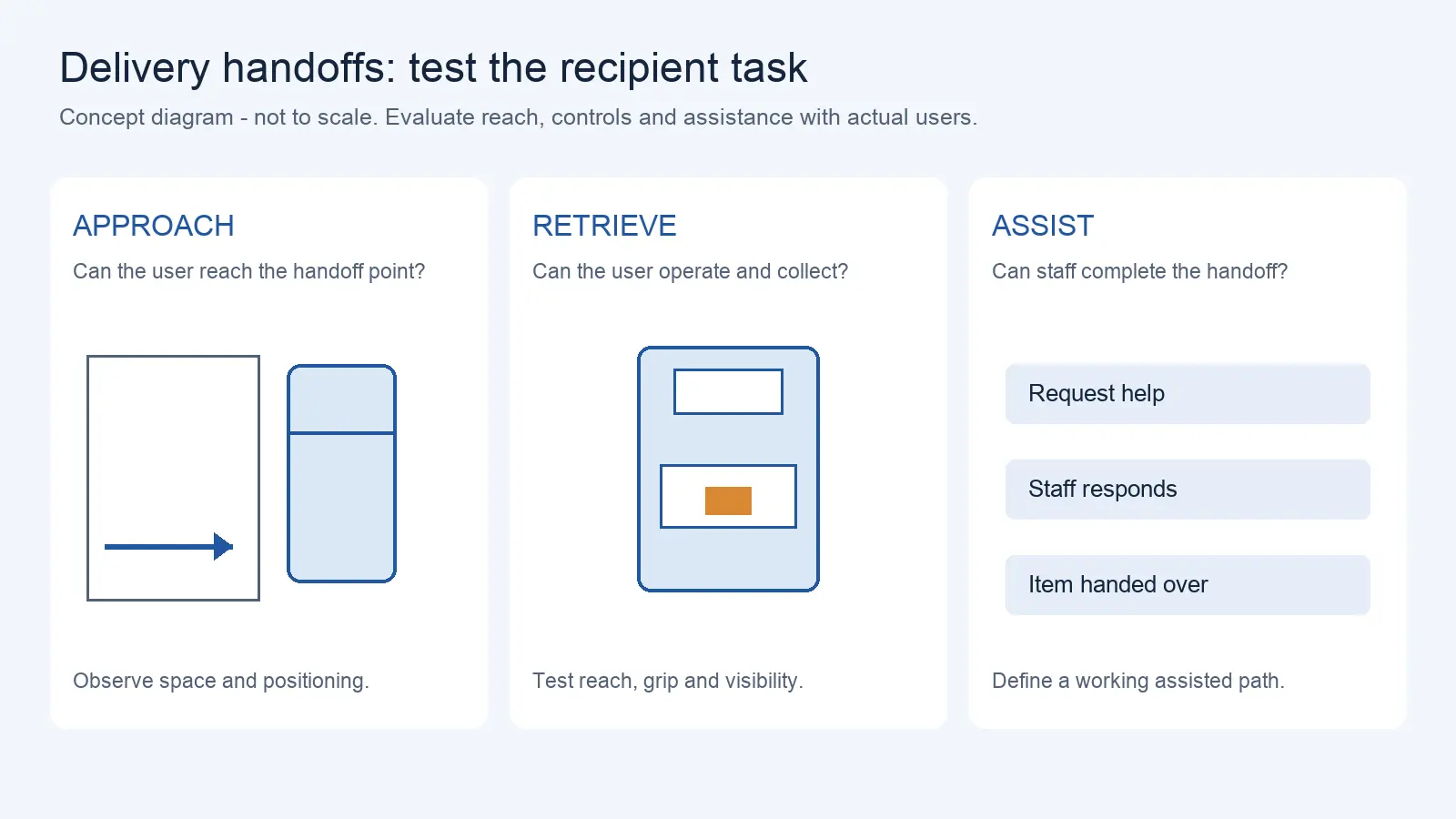
Delivery Robot Accessibility: Tray Reach, Controls, and Assisted Handoffs
Oct 12, 2026
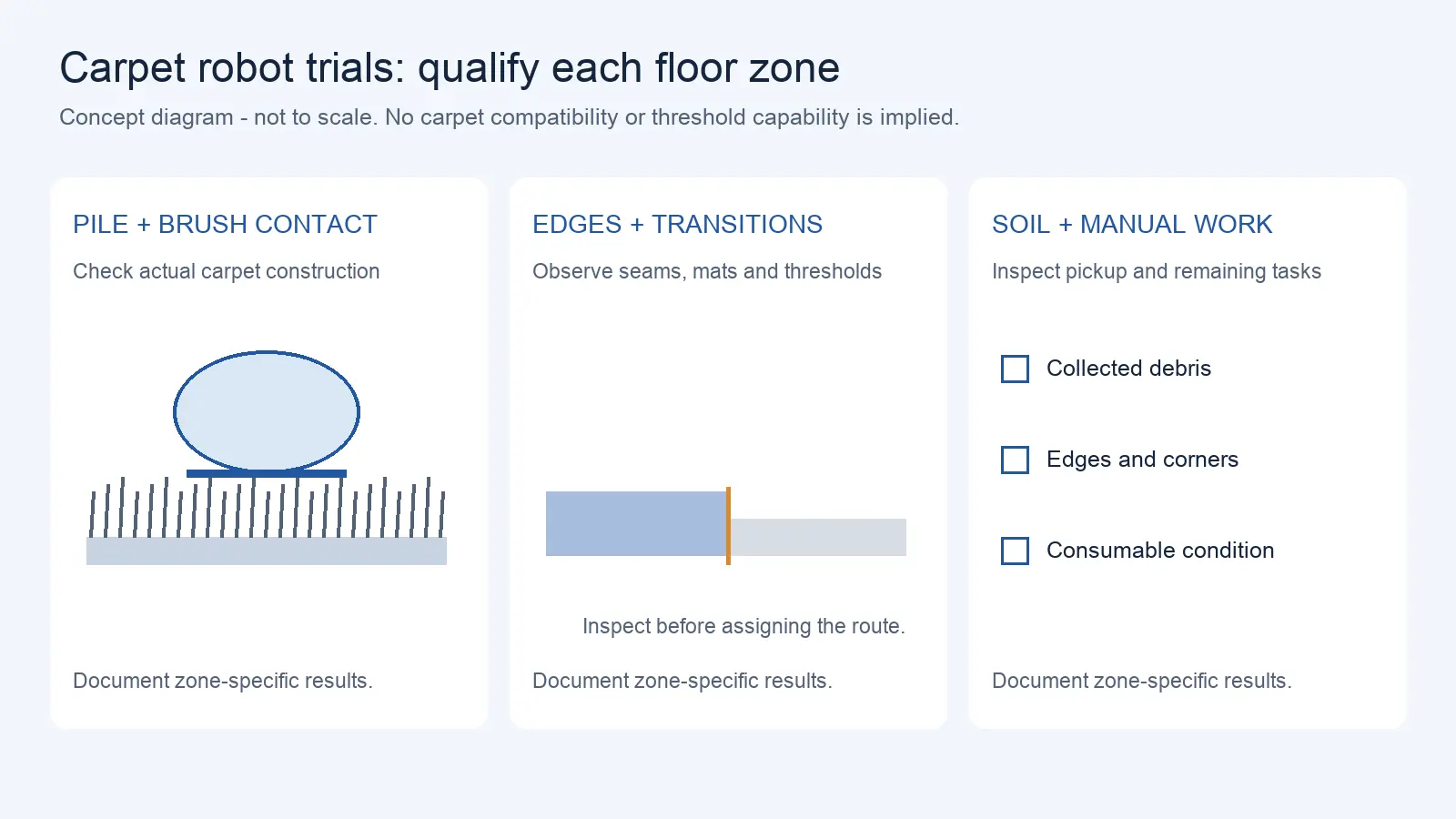
Commercial Carpet-Vacuuming Robots: Pile, Edge Transitions, and Maintenance Limits
Oct 12, 2026
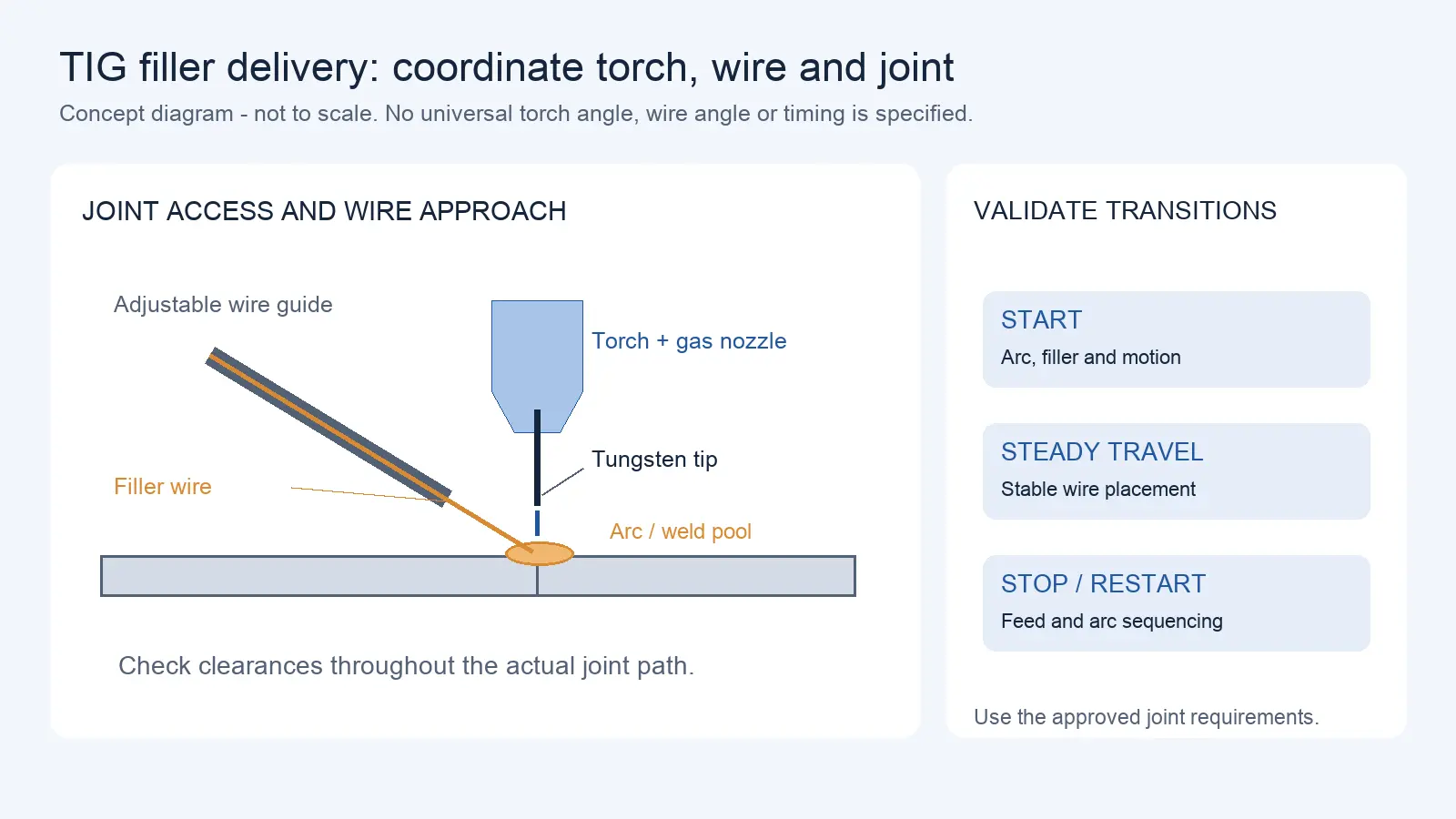
Robotic TIG Filler-Wire Delivery: Feed Angle, Arc Access, and Stop-Start Quality
Oct 12, 2026
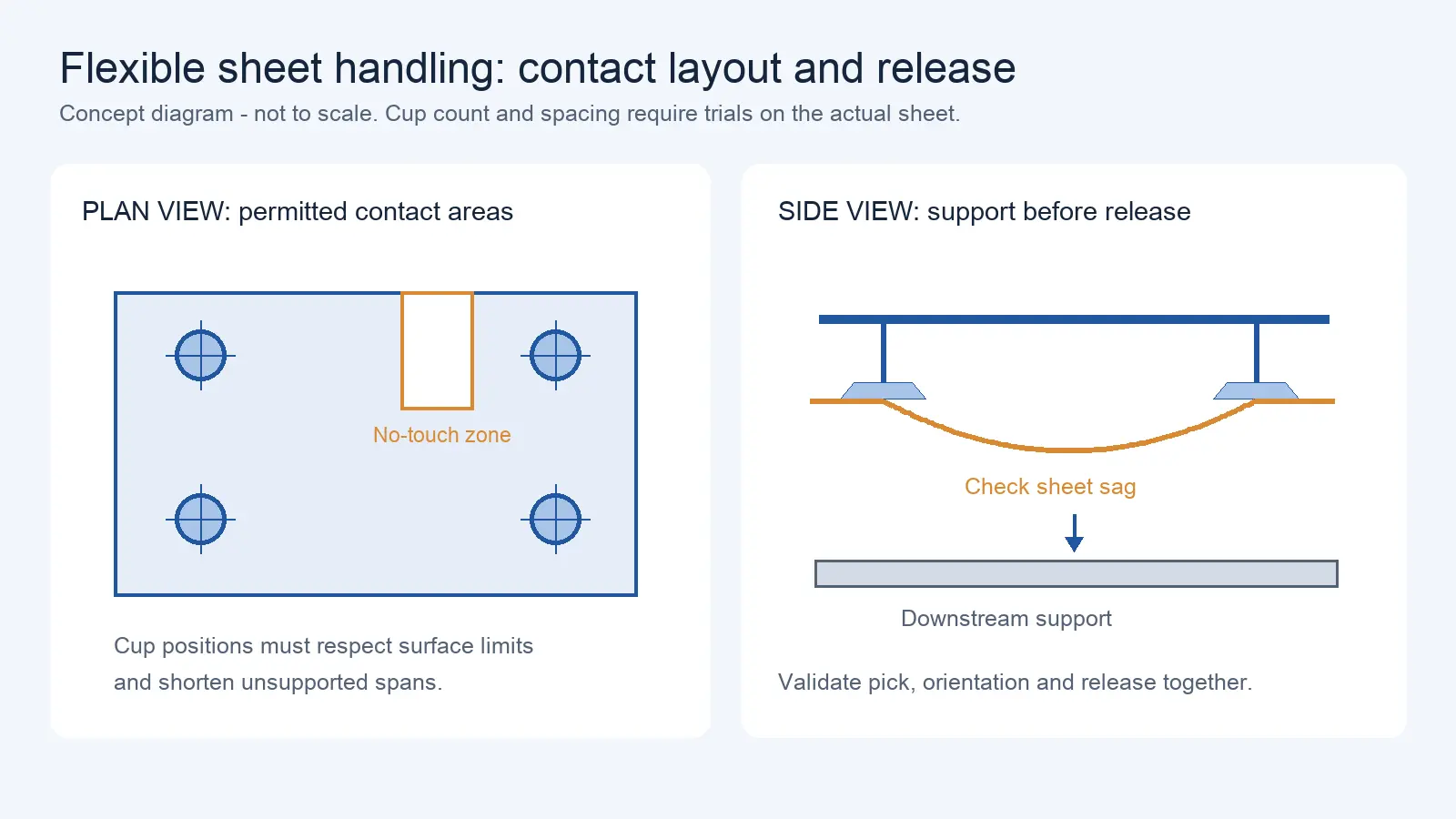
Suction Cup Layout for Flexible Sheets: Sag, Local Stress, and Controlled Release
Oct 12, 2026
ISO Cleanliness Class Is Not a Complete Robot Specification
“Can this AMR be used in an ISO Class 5 cleanroom?” — this is the most common question in procurement, and the most incomplete one.
ISO 14644-1 cleanliness class defines the maximum allowable concentration of airborne particles per cubic meter (refer to ISO 14644-1 for specific particle size ranges and concentration limits). It describes an environmental target, not an equipment specification.
An AMR labeled “suitable for ISO Class 5” may only mean: under standard test conditions, this robot’s particle generation will not cause the cleanroom’s particle count to exceed the Class 5 limit. But behind that conclusion are a series of preconditions — what tires, what lubricants, what surface materials, what cleaning frequency, what payload and speed, what ventilation conditions — change any one, and the conclusion may no longer hold.
The right procurement question is not “can it be used in Class 5?” but: under your cleanroom conditions (area, ventilation, air change rate, process, personnel), what is the actual particle generation rate? What materials are used? How is it cleaned? What is the ESD performance? How does it interface with your process?
Particle Generation from Tires, Fans, and Moving Parts
An AMR running in a cleanroom is itself a particle source. Main generation sources:
| Particle source | Mechanism | Influencing factors | Control method |
| Tires | Friction wear produces particles | Tire material, payload, speed, floor material | Use low-particle cleanroom tires |
| Drive fan | Motor cooling fan stirs airflow | Fan speed, sealing design | Fanless design or sealed cooling |
| Moving part friction | Lift mechanism, steering friction | Lubricant type, sealing design | Cleanroom grease, sealed covers |
| Brake wear | Brake pad wear produces dust | Brake frequency, payload | Request particle generation / venting / cleanability / material compatibility evidence under agreed conditions |
| Battery venting | Some batteries vent during charge/discharge | Battery type, charge/discharge rate | Request particle generation / venting / cleanability / material compatibility evidence under agreed conditions |
| Surface shedding | Coating, labels, tape aging | Material quality, cleaning agent compatibility | Use cleanroom-compatible materials and labels |
Ask the supplier for particle generation test data — under what test conditions (payload, speed, floor, air change rate) was it measured? Does the test method comply with ISO 14644 or relevant cleanroom standards? If the supplier has only a “suitable for Class 5” claim without test data, the claim’s credibility is limited.
Materials, Lubricants, and Outgassing
Cleanroom AMR material selection directly affects long-term particle generation and chemical contamination.
Tire materials: Standard industrial AMR tires are typically polyurethane or rubber, producing particles during wear. Cleanroom tires use special low-particle formulations, but load capacity and wear resistance may be lower — confirm tire life under full load.
Lubricants: Moving parts (bearings, gears, rails) need lubrication, but standard lubricants may volatilize or outgas under heat or friction, producing organic contamination. Cleanroom AMRs need low-outgassing grease — confirm VOC content and outgassing test data.
Surface materials:
- Coatings and paint: Standard industrial paint may outgas — need cleanroom-compatible coating.
- Labels and tape: Standard label adhesive may outgas — need cleanroom-specific labels.
- Plastic parts: Some plastics outgas over time (plasticizer evaporation).
Metal parts: Stainless steel is typically used in cleanrooms, but different grades have different corrosion resistance. If the cleanroom uses corrosive cleaning agents (peracetic acid, isopropyl alcohol), confirm metal corrosion resistance.
ESD Control and Conductive Paths
In semiconductor and electronics manufacturing cleanrooms, ESD (electrostatic discharge) is a core risk. Mobile robots can become part of the ESD path.
Static accumulation sources:
- Tire-to-floor friction generates static.
- Robot movement through air generates static.
- Payload (electronic components, wafer carriers) may be charged.
ESD control requirements:
- Tires: Use conductive or dissipative tires to route static through the tire-floor path.
- Chassis grounding: Ensure electrical continuity between robot metal parts for equipotential bonding.
- Top module and deck: Surfaces contacting the payload need ESD-compatible materials — confirm the required surface resistance range with your ESD control plan (refer to IEC 61340 series for ESD control principles).
- Floor: Cleanroom floor resistance must meet the ESD control plan requirements.
Key judgment: ESD is not “does the robot have ESD certification?” but “under your cleanroom floor, your payload, and your ESD control plan, can static be effectively dissipated?” The entire conductive path — tire → chassis → payload contact surface → payload — must be confirmed, not just one component.
Surface Design and Cleaning Compatibility
Cleanroom equipment needs regular cleaning and disinfection. Surface design must be compatible with cleaning procedures.
Cleaning methods and design requirements:
| Cleaning method | Design requirement | Procurement check |
| Wipe-down | Smooth surfaces, no dead corners, no dust-collecting gaps | Confirm surface design |
| Spray disinfection | Liquid must not enter equipment (IP protection) | Confirm IP rating |
| Washdown | Higher IP rating, seal all openings | Confirm the ingress-protection level required by the actual cleaning method |
| Vaporized hydrogen peroxide (VHP) | Materials, seals, and electronics compatible with VHP | Confirm VHP compatibility |
Hidden contamination points:
- Screw head recesses — collect dust, hard to clean.
- Sensor window edges — cleaning residue.
- Wheel hub and axle joints — debris and liquid accumulation.
- Lift mechanism gaps — internal surfaces exposed during movement.
- Battery compartment cover seams — improper sealing may create contamination.
Ask the supplier for a cleaning SOP — what cleaning agents, what frequency, what post-cleaning functional checks, which areas cannot contact cleaning agents.
Load Interface in Clean Environments
Payload transfer in cleanrooms differs from normal environments — it cannot introduce contamination.
Payload contact surfaces: Surfaces contacting the payload (deck, pallet, fixture) must use cleanroom-compatible materials.
Interface cleaning: Does the contact surface need cleaning after each transfer? Or is a fresh clean contact surface used each time?
Wafer carrier / FOUP interface: Semiconductor cleanrooms use FOUPs or other specialized carriers. The robot’s interface with these carriers needs precise mechanical positioning, clean materials, and ESD control — a dedicated semiconductor logistics article covers FOUP-specific interfaces in more detail.
How to Read Product Cleanroom Claims and Test Evidence
Supplier “cleanroom compatible” claims have different evidence strength:
| Claim type | Evidence strength | What to ask |
| “Suitable for ISO Class 5” | Weak — no test conditions | What are the test conditions? Who tested? |
| Particle generation test report | Medium — check test conditions | Test payload, speed, floor, air change rate? |
| ISO 14644 or IEST standard test | Strong — tested per standard | Testing body qualifications? Report validity? |
| Third-party cleanroom certification | Strongest — independent verification | Certification scope? Does it cover all components? |
Key reminders:
- Test conditions must match your actual operating conditions — testing at empty/low speed does not represent full-load/high-speed particle generation.
- Cleaning agent compatibility testing must cover your actual cleaning agents, not generic ones.
- ESD performance must be verified on your actual floor — different floors have different resistivity.
- Certificate validity — cleanroom compatibility may degrade due to material aging and tire wear.
Cleanroom Robot Acceptance Checklist
Cleanroom Qualification Matrix
| Verification dimension | Your requirement | Supplier confirms | Test/verification method |
| Cleanliness class | |||
| Target cleanliness class | ISO Class ___ | Confirm applicable class | Third-party test or on-site verification |
| Particle generation test data | — | Provide test report | ISO 14644 or IEST standard method |
| Test conditions (payload/speed/floor) | _____ | Confirm match to actual conditions | — |
| Particle sources | |||
| Tire material and particle generation | Low-particle type | Provide tire particle data | Material testing |
| Fan/cooling design | ☐ Fanless ☐ Sealed fan | Confirm cooling solution | — |
| Lubricant type | Low-outgassing | Provide outgassing test data | VOC/outgassing test |
| Brake particle generation | _____ | Confirm brake type | — |
| Battery venting | ☐ None ☐ Requires supplier confirmation | Confirm battery type | — |
| ESD | |||
| Tire ESD performance | ☐ Conductive ☐ Dissipative | Provide surface resistance data | Resistance test |
| Chassis equipotential | _____ | Confirm grounding path | Equipotential test |
| Payload contact surface ESD | Dissipative material | Confirm surface resistance range | Resistance test |
| Floor resistivity | _____ | — | On-site measurement |
| Materials | |||
| Surface coating | Cleanroom-compatible | Confirm coating type | — |
| Labels/tape | Cleanroom-specific | Confirm material | — |
| Metal corrosion resistance | Compatible with your cleaning agents | Confirm material grade | Cleaning agent compatibility test |
| Cleaning compatibility | |||
| Cleaning method | ☐ Wipe ☐ Spray ☐ Washdown ☐ VHP | Confirm compatibility | — |
| IP protection rating | _____ | Confirm IP rating | IP test |
| Hidden contamination point assessment | — | Provide cleaning SOP | On-site inspection |
| Cleaning agent compatibility | Your cleaning agent list | Confirm compatibility | Compatibility test |
| Load interface | |||
| Payload contact surface material | Cleanroom-compatible | Confirm material | — |
| Interface cleaning requirement | _____ | Provide cleaning SOP | — |
| Evidence | |||
| Test report | — | Provide third-party report | — |
| Certification scope | — | Provide coverage list | — |
| Certificate validity | — | Confirm validity period | — |
Need to Qualify an AMR for a Cleanroom?
Cleanroom suitability depends on the actual room, process, materials, ESD plan, cleaning method, and interface—not a single ISO class label. We can help build the qualification checklist.
Please share, if available: cleanroom class, process area, particle limits, ESD requirements, cleaning agents, allowed materials and lubricants, payload interface, and cross-zone movement.
Review Cleanroom RequirementsCleanroom Qualification Inputs
- ISO Class is not everything — ask about particle generation, materials, lubrication, ESD, and cleaning compatibility, not just the class label.
- Request particle generation test data, not claims — test conditions must match your payload, speed, and floor.
- Tires are the primary particle source — confirm low-particle tire load capacity and life.
- Lubricant and material outgassing is easily overlooked — standard lubricants and labels may outgas; cleanroom-specific versions are needed.
- ESD is a complete path problem — tire → chassis → payload contact surface → payload; any break causes static accumulation.
- Cleaning compatibility must cover your actual cleaning agents — not generic compatibility, but specific to your cleaning process.
- Hidden contamination points need on-site inspection — screw heads, sensor edges, and wheel hub joints are cleaning dead spots.
Share on Social:


Contact Us
In This Article
Delivery Robot Accessibility: Tray Reach, Controls, and Assisted Handoffs
Oct 12, 2026
Commercial Carpet-Vacuuming Robots: Pile, Edge Transitions, and Maintenance Limits
Oct 12, 2026
Robotic TIG Filler-Wire Delivery: Feed Angle, Arc Access, and Stop-Start Quality
Oct 12, 2026
Suction Cup Layout for Flexible Sheets: Sag, Local Stress, and Controlled Release
Oct 12, 2026