

 Contact Us

 Home /
 Robot Compliance Responsibility Matrix: Robot Body, End Effector, System Integrator, and Final Application
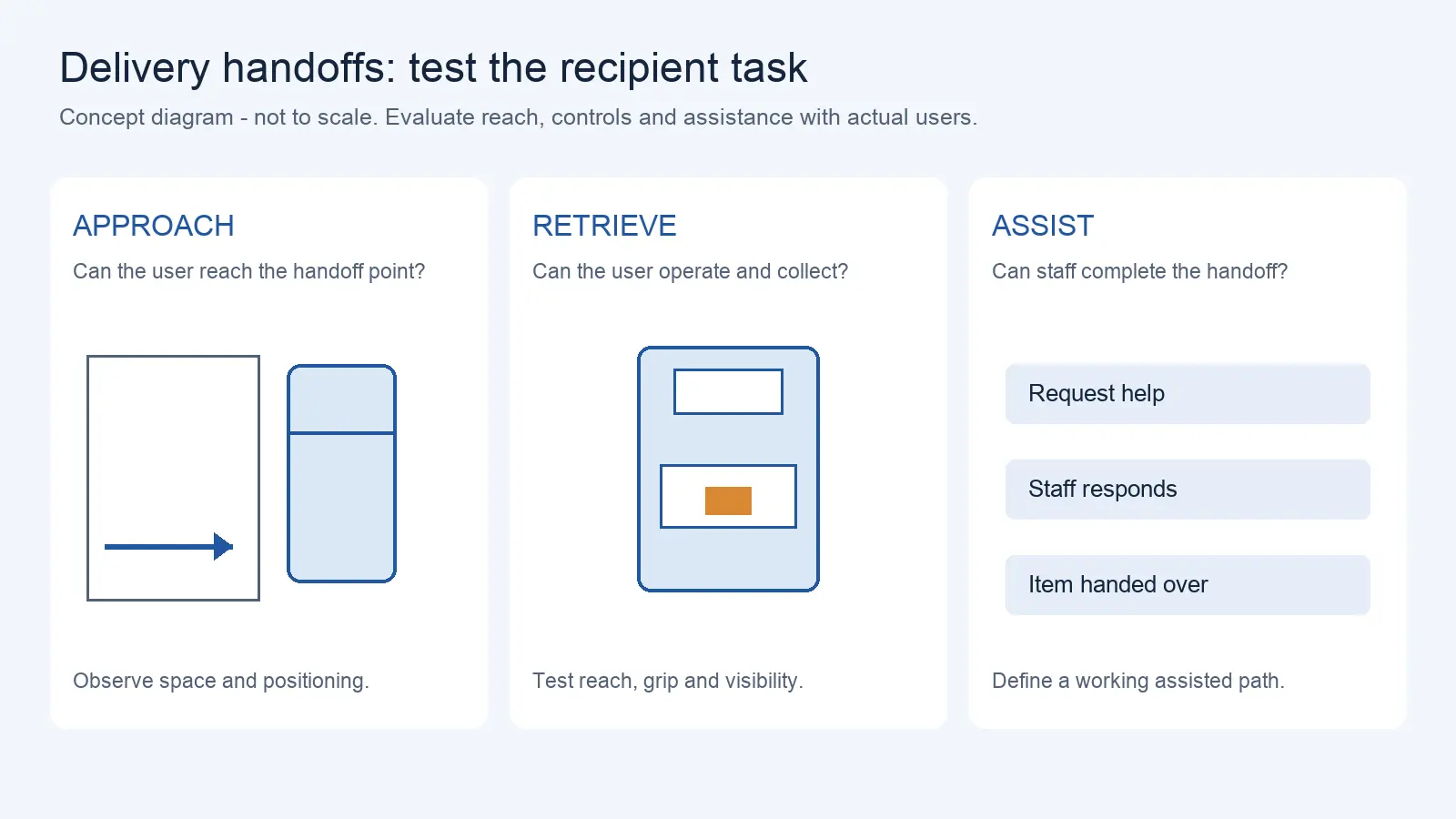
Delivery Robot Accessibility: Tray Reach, Controls, and Assisted Handoffs
Oct 12, 2026
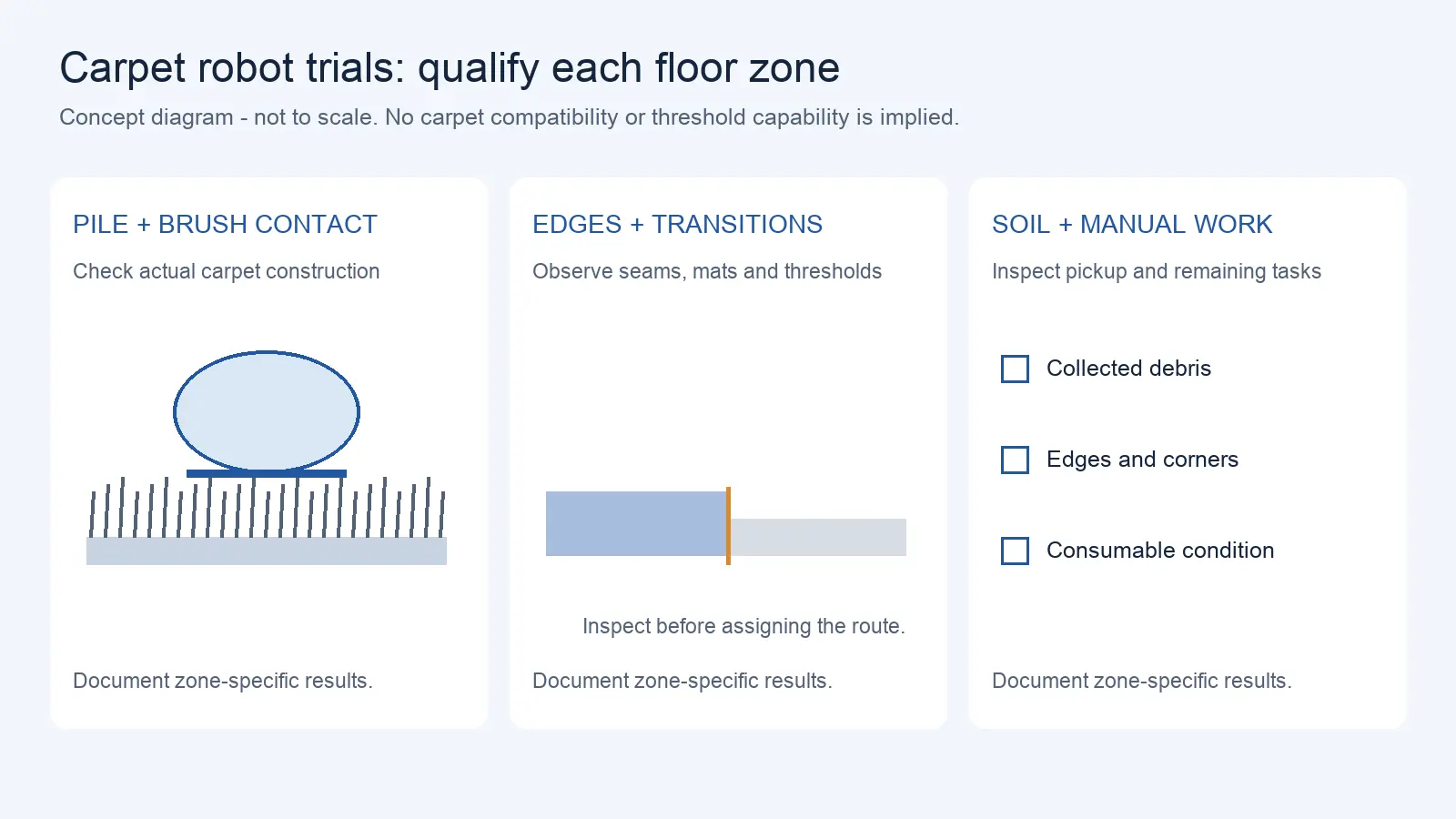
Commercial Carpet-Vacuuming Robots: Pile, Edge Transitions, and Maintenance Limits
Oct 12, 2026
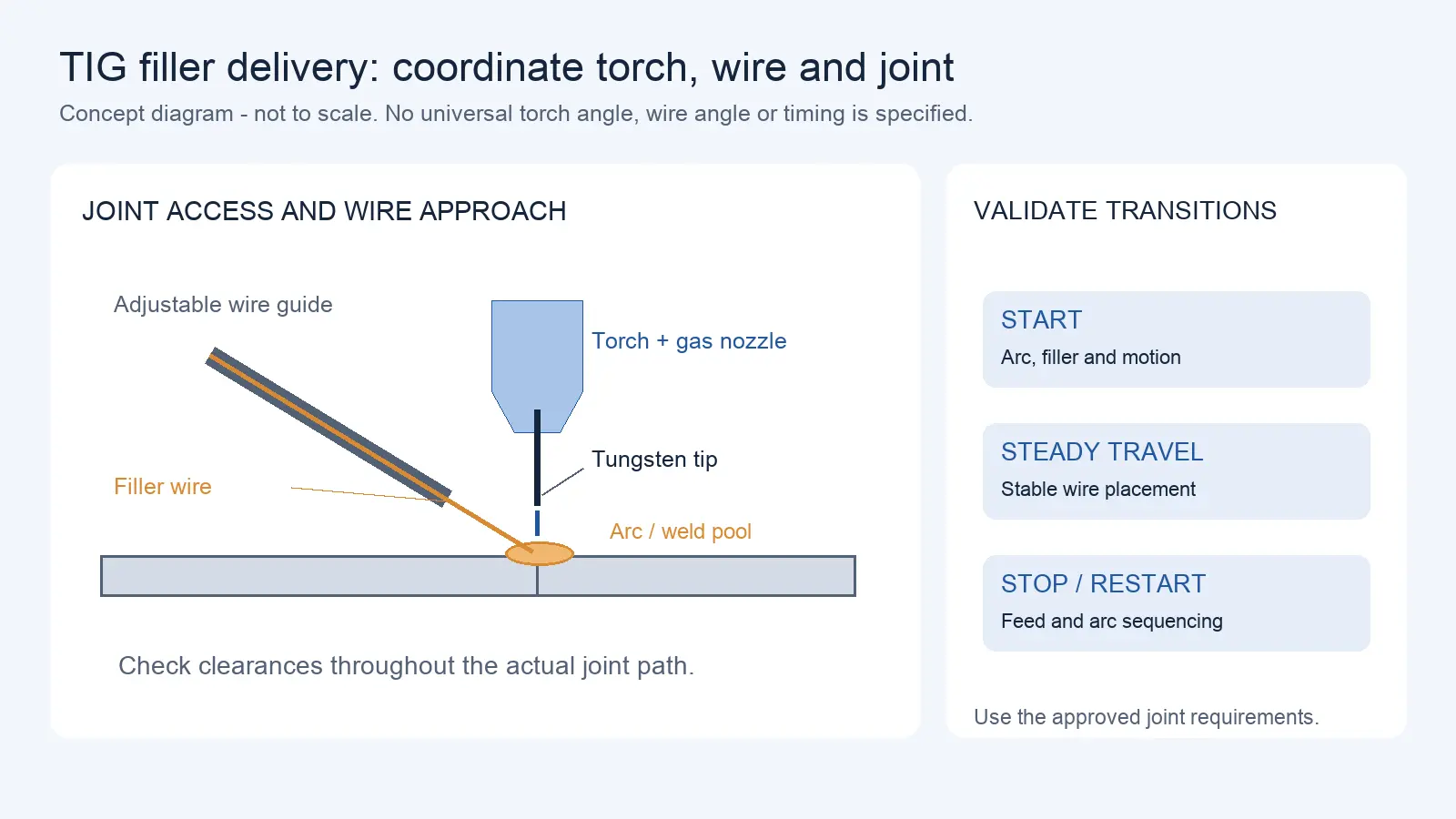
Robotic TIG Filler-Wire Delivery: Feed Angle, Arc Access, and Stop-Start Quality
Oct 12, 2026
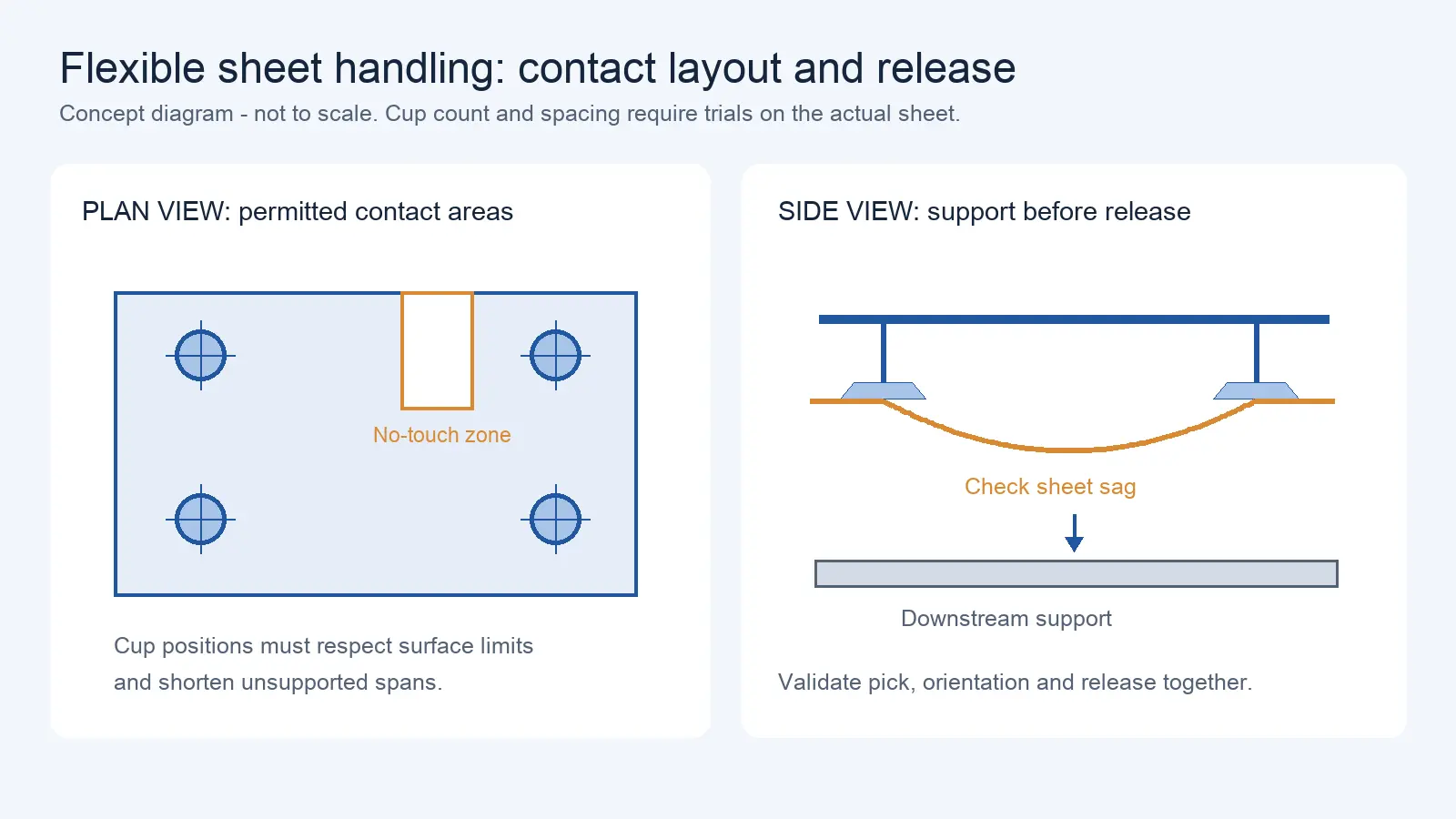
Suction Cup Layout for Flexible Sheets: Sag, Local Stress, and Controlled Release
Oct 12, 2026
Robot Compliance Responsibility Matrix: Robot Body, End Effector, System Integrator, and Final Application
When a robot system is supplied by multiple parties — a robot body manufacturer, an end effector supplier, a system integrator, and a final application owner — compliance responsibility rarely maps cleanly to a single party. The robot body manufacturer declares conformity for the robot itself. The end effector supplier ensures the gripper, welding torch, or tool is safe at the point of human contact. The system integrator assembles these components into a working cell and takes on system-level safety. The final application owner operates the system in a specific environment and must comply with local regulations.
In theory, this division looks straightforward. In practice, buyers frequently discover gaps only during commissioning, audits, or — worst case — after an incident. A robot body supplier provides a declaration of incorporation but not a declaration of conformity. An end effector supplier assumes the integrator will validate force-pressure limits. An integrator performs a system-level risk assessment but does not document how it accounts for the end effector's mass and geometry. The application owner assumes all compliance was handled upstream.
This article provides a framework for allocating compliance responsibility across these four parties before deployment — not to replace legal or regulatory advice, but to give procurement leads, project owners, and compliance coordinators a structured way to identify who is responsible for what, where the gray zones lie, and what to verify before signing off.
Why Compliance Responsibility Gets Blurred in Multi-Party Robot Procurement
Most robot procurement projects do not involve a single supplier delivering a fully compliant, ready-to-run system. A typical scenario involves:
- A robot body manufacturer supplying the manipulator arm
- A separate supplier providing the end effector (gripper, welding torch, dispensing head, or inspection tool)
- A system integrator designing the cell, selecting safety devices, programming the application, and commissioning the system
- A final application owner responsible for operation, maintenance, and local regulatory compliance
Each party has its own scope, its own documentation, and its own assumptions about what the other parties are covering. The problem is not that these parties are negligent — it is that compliance responsibility is inherently distributed, and without an explicit allocation matrix, the gaps between parties are invisible until something goes wrong.
Several factors make this worse:
Standards address parties differently. ISO 10218-1 addresses safety requirements for industrial robots — the robot body manufacturer's domain. ISO 10218-2 addresses robot systems and integration — the system integrator's domain. But end effector suppliers and final application owners are not the primary subjects of either part. Their obligations are defined indirectly through the integrator's system-level requirements, the applicable regulations of the destination market, and the contractual terms between parties.
Regulatory models split responsibility along supply chain roles. Under the EU Machinery Regulation (EU) 2023/1230, a robot body supplied without an end effector and without a specific application may be treated as partly completed machinery — requiring a declaration of incorporation but not a CE mark. The system integrator who completes the machinery assumes responsibility for the declaration of conformity and CE marking. This means the same physical robot can carry different compliance obligations depending on who supplies it, how it is configured, and where it is deployed.
Risk assessment is iterative and shared. ISO 12100 provides a general methodology for risk assessment and risk reduction, but it does not allocate responsibility between manufacturers, integrators, and users. Risk assessment happens at multiple stages — robot body design, end effector design, system integration, and final application — and each stage must account for the others. If the integrator's risk assessment does not account for the end effector's mass, or if the application owner's risk assessment does not account for the specific layout of the installed cell, the chain has a broken link.
Contracts may not match regulatory expectations. A buyer might contractually assign all compliance to the robot body supplier, but if the supplier provides only the robot body without the end effector and application, the supplier's regulatory obligation may end at the declaration of incorporation. The gap between what the contract says and what the regulatory model requires is where buyers are most exposed.
Robot Body Manufacturer Responsibility
The robot body manufacturer is responsible for the safety of the robot as designed and manufactured — before any end effector, peripheral equipment, or application-specific configuration is added.
Applicable Standards and Scope
ISO 10218-1:2025 addresses safety requirements for industrial robots. It covers the design, construction, and essential safety functions of the robot body itself — including control system safety, emergency stop performance, protective functions, and where applicable, force and torque limiting capabilities.
Under the EU Machinery Regulation (EU) 2023/1230, which applies from January 2027, a robot body supplied without a specific end effector and application may be considered partly completed machinery. In this case, the manufacturer provides a declaration of incorporation — a document stating that the machinery is intended to be incorporated into or assembled with other components to form a completed machine, and identifying the essential health and safety requirements that have been met. The manufacturer does not apply the CE mark to the robot body alone in this scenario.
Whether the 2025 edition of ISO 10218 becomes applicable to specific products depends on the destination market's regulations, national adoption timelines, and the supplier's certification transition plan. Specific changes in the 2025 edition should be confirmed against the ISO official standard text rather than supplier marketing materials.
What the Robot Body Manufacturer Should Provide
| Document | Purpose | Coverage Boundary |
|---|---|---|
| Declaration of incorporation (EU MR) | Declares conformity of the partly completed machinery to applicable essential health and safety requirements | Covers the robot body only — not the integrated system |
| Technical construction file | Design calculations, test reports, safety function specifications | Demonstrates how the robot body meets design-stage safety requirements |
| User information / instructions | Installation, operation, maintenance, and decommissioning instructions for the robot body | Does not cover application-specific integration or end effector operation |
| Risk assessment (design stage) | Identifies hazards and risk reduction measures inherent to the robot body design | Does not cover hazards introduced by end effector, integration, or application |
What the Robot Body Manufacturer Does Not Cover
The robot body manufacturer's responsibility ends at the robot as supplied. It does not extend to:
- Safety of the end effector or tooling
- System-level risk assessment after integration
- Application-specific safety measures (guarding, light curtains, area scanners)
- CE marking of the completed machine
- Compliance with destination-market regulations specific to the application (e.g., food safety, medical environment, explosive atmospheres)
Buyers should verify that the robot body supplier's documentation explicitly states these coverage boundaries. A declaration of incorporation that implies broader coverage than the supplier's actual scope can create a false sense of compliance security.
End Effector Supplier Responsibility
The end effector — whether a gripper, welding torch, dispensing head, inspection tool, or specialized tooling — introduces its own safety hazards and carries its own compliance obligations. In collaborative robot applications, the end effector is often the primary point of physical contact between the robot and a human operator, making its safety verification especially critical.
Applicable Standards and Scope
ISO 10218-2:2025 addresses the safety of robot systems and integration, which includes the interface between the robot body and end effector. The end effector supplier's obligations are defined through the integrator's system-level requirements rather than through a standalone standard dedicated to end effectors.
For collaborative applications, force and pressure limiting requirements — including biomechanical thresholds for various body regions — were originally specified in ISO/TS 15066:2016. The content of ISO/TS 15066 has been integrated into the 2025 edition of ISO 10218. Whether ISO/TS 15066:2016 remains a separate reference document or is fully superseded by ISO 10218:2025 should be confirmed against the ISO official standard text.
Key Responsibilities
| Responsibility | Description | Interface with Other Parties |
|---|---|---|
| Mechanical safety of the end effector | Design, construction, and protective measures for the tool itself | The integrator must verify that the end effector is compatible with the robot body's payload, reach, and mounting |
| Force and pressure limit verification (collaborative applications) | Ensure the end effector's mass, geometry, and surface properties do not exceed biomechanical thresholds during contact | The robot body manufacturer provides force/torque limiting capability; the end effector supplier must ensure the tool does not invalidate these limits |
| Technical documentation | Design files, test reports, material specifications, and instructions for the end effector | The integrator incorporates this documentation into the system-level technical file |
| Interface safety | Mechanical, electrical, and pneumatic interfaces between the end effector and robot body | The integrator verifies that interfaces are compatible and that no new hazards are introduced at the connection point |
The Critical Interface: Force and Pressure Limits
In collaborative robot applications using power and force limiting (PFL), the safety of human-robot contact depends on the combined behavior of the robot body and the end effector. The robot body manufacturer provides force and torque limiting functions. But the actual force and pressure experienced by a human during contact depends on factors that the robot body manufacturer cannot control alone:
- End effector mass and geometry — a heavier or sharper tool increases contact force and pressure
- Surface material and compliance — a rigid metal surface transmits more pressure than a compliant or padded surface
- Mounting orientation — how the end effector is attached affects the effective moment of inertia and contact dynamics
This means the end effector supplier must verify — or at minimum, provide sufficient data for the integrator to verify — that the combined robot-plus-end-effector system does not exceed biomechanical limits. If the end effector supplier provides only the tool without this verification data, the integrator must perform it, and the buyer must confirm who is doing it.
Buyers should confirm in the purchase agreement that the end effector supplier provides at minimum:
- Mass and center of gravity data
- Surface material specifications
- Force and pressure test data for collaborative applications (if applicable to the robot type, product configuration, and intended use)
If the end effector supplier does not provide this data, the buyer should ensure the integrator's scope explicitly includes force and pressure verification for the specific end effector.
System Integrator Responsibility
The system integrator bears the most complex compliance responsibility. By combining the robot body, end effector, peripheral equipment (safety fencing, light curtains, area scanners, conveyors), and application software into a working system, the integrator creates a completed machine — and with it, assumes the corresponding compliance obligations.
Applicable Standards and Scope
ISO 10218-2:2025 addresses the safety of robot systems and integration. It covers the design, manufacture, installation, operation, maintenance, and decommissioning of integrated robot systems or cells. The integrator's scope includes:
- System-level risk assessment
- Selection and implementation of safeguarding measures
- Verification of integrated safety functions
- Documentation of the completed system
Under the EU Machinery Regulation, the integrator — as the party who assembles partly completed machinery into a completed machine — typically provides the declaration of conformity and applies the CE mark. The integrator's declaration of conformity must account for all essential health and safety requirements of the completed machine, including those already addressed by the robot body manufacturer's declaration of incorporation.
Key Responsibilities
| Responsibility | Description | Documentation Output |
|---|---|---|
| System-level risk assessment | Identify hazards introduced by integration: new pinch points, reach envelopes with the end effector, human-robot interaction zones, peripheral equipment interfaces | Risk assessment report covering the completed system |
| Safeguarding selection and implementation | Select and install safety fencing, light curtains, area scanners, interlocked doors, and other protective measures appropriate to the identified risks | Safety function specification and validation report |
| Integrated safety function verification | Verify that safety functions work as intended in the completed system — emergency stop, safe stop, speed monitoring, force limiting — with the actual end effector and in the actual installation | Functional safety validation report |
| Declaration of conformity (EU MR) | Declare that the completed machine meets all applicable essential health and safety requirements | Declaration of conformity + CE mark (for EU market) |
| Technical file for the completed system | Compile and maintain the complete technical documentation, including all sub-component declarations and the integrator's own design and verification documents | Complete technical file |
The Integrator's Critical Accountability
The integrator is the party that transforms a collection of compliant components into a completed machine. Even if the robot body manufacturer and end effector supplier have each provided valid declarations and documentation, the integrator's responsibility is not simply to collect these documents. The integrator must:
- Verify compatibility — confirm that the robot body, end effector, and peripheral equipment are compatible and that no new hazards are introduced at the interfaces
- Perform the system-level risk assessment — this assessment must account for the actual configuration, the actual end effector, the actual layout, and the actual intended use — not a generic scenario
- Validate integrated safety functions — test that safety functions perform as required with the real end effector installed, in the real installation, under realistic operating conditions
- Document everything — the technical file must include not only the integrator's own documents but also the declarations and documentation from all sub-suppliers
If the integrator's risk assessment is based on assumptions about the end effector that the end effector supplier has not confirmed, or if the safety function validation is performed with a different end effector than the one ultimately deployed, the compliance documentation may not reflect the actual system.
Buyers should verify that the integrator's system-level risk assessment explicitly references the actual end effector model, the actual installation layout, and the actual intended application. A generic risk assessment that does not account for these specifics may not provide adequate compliance coverage.
Final Application Owner Responsibility
The final application owner — the party that operates the robot system in a specific facility for a specific purpose — carries compliance obligations that cannot be transferred to any supplier. Even when the robot body manufacturer, end effector supplier, and system integrator have all fulfilled their obligations, the application owner remains responsible for the safe and compliant operation of the system in its actual environment.
Key Responsibilities
| Responsibility | Description | Why It Cannot Be Delegated |
|---|---|---|
| Site-specific risk assessment | Assess risks introduced by the facility layout, workflow, adjacent equipment, personnel traffic, and environmental conditions | Only the application owner has access to and control over the actual operating environment |
| Operational procedures | Develop and enforce standard operating procedures, including start-up, shutdown, maintenance, and emergency response | Operating procedures must reflect the specific facility, staffing, and workflow |
| Operator training | Ensure all personnel who interact with or work near the robot are trained on hazards, safe operation, and emergency procedures | Training must be site-specific and maintained over time |
| Safeguarding maintenance | Maintain safety fencing, light curtains, area scanners, and interlocks in working condition throughout the system's operational life | Safety devices degrade, are bypassed, or are modified during operation — only the owner can control this |
| Local regulatory compliance | Comply with applicable occupational safety, environmental, and industry-specific regulations in the destination market | Regulatory obligations attach to the operator of the equipment in the jurisdiction where it is used |
| Incident reporting and investigation | Report and investigate incidents, near-misses, and safety function failures per local regulatory requirements | Regulatory reporting obligations fall on the entity operating the equipment |
Local Regulatory Compliance
Destination-market requirements depend on the product classification, configuration, intended use, and applicable law. In the EU, the completed machine must meet the EU Machinery Regulation. In the US, OSHA workplace safety regulations apply to employers as a matter of federal law. ANSI/RIA R15.06 is a voluntary consensus standard that may become a requirement if adopted by the project or contract. Other standards may apply depending on the application and industry. In other markets, national adoption of ISO standards or country-specific regulations may apply.
Whether a particular standard is mandatory depends on whether it has been adopted into law, referenced in a contract, or incorporated into a project specification. ISO and IEC standards themselves are not laws — they become requirements through regulatory adoption, contractual reference, or project-level specification. Buyers should confirm which standards are applicable to their specific product, configuration, intended use, and destination market with qualified compliance specialists.
The application owner's compliance obligations are independent of the supplier's obligations. A supplier may provide a fully compliant, CE-marked, ISO 10218-conformant system — and the application owner may still need to perform additional steps, such as a site-specific risk assessment, operator training certification, or registration with a local authority.
Gray Zones: Where Responsibility Overlaps or Gaps Emerge
Not all compliance responsibilities fall cleanly into one party's domain. Several areas are inherently shared, ambiguous, or easily overlooked. These gray zones are where compliance gaps most commonly emerge — and where buyers should focus their verification effort.
Gray Zone 1: System-Level CE Marking
When a robot body is supplied as partly completed machinery and an integrator assembles it into a completed machine, the integrator typically provides the declaration of conformity and CE mark. But what if the buyer purchases the robot body directly from the manufacturer and contracts a separate integrator? Or what if the buyer acts as its own integrator, assembling components from multiple suppliers?
In these cases, the party responsible for the declaration of conformity may not be obvious. Under the EU Machinery Regulation, the entity that assembles the completed machine — whether a contracted integrator or the buyer itself — may assume the obligations of a manufacturer. Buyers should confirm who holds this responsibility in their specific supply chain structure and document it in the contract.
Gray Zone 2: Force and Pressure Limit Validation in Collaborative Applications
In collaborative robot applications, the robot body manufacturer provides force and torque limiting functions. The end effector supplier provides the tool. The system integrator assembles them. But who validates that the combined system meets biomechanical thresholds?
The answer depends on the contractual allocation:
- If the end effector supplier provides force and pressure test data for the specific robot-end-effector combination, the integrator may verify and document this
- If the end effector supplier does not provide this data, the integrator must perform the testing
- If the integrator's scope does not explicitly include force and pressure validation, the responsibility may fall to the application owner
Buyers should confirm that the purchase agreement explicitly assigns force and pressure validation to a specific party — and that the party has the capability and equipment to perform it.
Gray Zone 3: Software Updates and Reassessment After Deployment
After deployment, software updates — whether to the robot controller, the safety controller, or the application software — may affect safety functions. Who is responsible for reassessing safety after an update?
- The robot body manufacturer may release controller firmware updates that affect safety function performance
- The integrator may update the application program or safety configuration
- The application owner may install updates or authorize changes
Responsibility for post-update safety reassessment should be defined in the service agreement or maintenance contract. If it is not defined, the default may be that the application owner — as the party operating the equipment — may bear the responsibility, whether or not they have the technical capability to perform the reassessment.
Buyers should clarify in the service agreement: who initiates updates, who reviews safety impact, who approves installation, and who performs post-update safety function validation.
Gray Zone 4: Multi-Vendor System Integration
When a system includes components from multiple suppliers — a robot body from one, an end effector from another, a safety controller from a third, peripheral equipment from a fourth — the integrator's risk assessment must account for all interfaces and interactions. But each supplier's documentation typically covers only their own component.
If a safety function depends on the interaction between two suppliers' components — for example, a safety-rated speed monitoring function that relies on both the robot controller and an external safety controller — neither supplier alone can validate the function. The integrator must perform the integrated validation.
Buyers should verify that the integrator's scope explicitly includes integrated safety function validation across all supplier interfaces, and that the integrator has access to the necessary documentation from each supplier to perform this validation.
Gray Zone Summary
| Gray Zone | Parties Involved | Key Question | Where to Allocate |
|---|---|---|---|
| System-level CE marking | Robot body manufacturer, integrator, buyer | Who provides the declaration of conformity for the completed machine? | Define in contract based on supply chain structure |
| Force and pressure validation | End effector supplier, integrator | Who tests the combined robot-plus-end-effector system? | Assign explicitly in purchase agreement |
| Post-update safety reassessment | Robot body manufacturer, integrator, application owner | Who validates safety functions after software updates? | Define in service agreement |
| Multi-vendor interface validation | All suppliers, integrator | Who validates safety functions that span multiple suppliers' components? | Integrator scope must explicitly include cross-supplier validation |
Documentation Chain: Building a Complete Evidence Trail
Compliance documentation is not a single document — it is a chain. Each party contributes a link, and the chain is only as strong as its weakest link. If any party's documentation is missing, incomplete, or inconsistent with the others, the buyer may face exposure during audits, regulatory inspections, or incident investigations.
The Documentation Chain
| Stage | Responsible Party | Key Documents | What to Verify |
|---|---|---|---|
| Robot body design and manufacture | Robot body manufacturer | Declaration of incorporation, technical construction file, user information, design-stage risk assessment | Documents cover the robot body only; coverage boundaries are explicitly stated |
| End effector design and manufacture | End effector supplier | Technical file, force/pressure test data (for collaborative applications), interface specifications | Documents are specific to the actual end effector model, not a generic product family |
| System integration | System integrator | Declaration of conformity, system-level risk assessment, safety function validation report, complete technical file | Risk assessment references the actual end effector and installation; validation was performed with the real configuration |
| Final application | Application owner | Site-specific risk assessment, operating procedures, training records, maintenance logs, incident reports | Risk assessment reflects the actual facility; training is current; safety devices are maintained |
Common Documentation Chain Failures
Missing links. The integrator's technical file includes the robot body manufacturer's declaration of incorporation but not the end effector supplier's technical documentation. The chain is incomplete.
Inconsistent configurations. The robot body manufacturer's documentation references a different end effector than the one actually installed. The integrator's risk assessment was performed with a prototype end effector, but the production unit has different mass or geometry. The documentation does not match the physical system.
Outdated documentation. The system was commissioned two years ago. Since then, the application software has been updated, a safety controller has been replaced, and the end effector has been changed. The technical file still reflects the original configuration. The documentation chain is broken.
Undocumented gray zones. Force and pressure validation was performed during commissioning, but the report does not specify who performed it, what equipment was used, or which end effector was installed. If the validation is challenged, the documentation may not be defensible.
Buyers should request the complete documentation chain at acceptance — not just the final declaration of conformity, but all sub-supplier declarations, risk assessments, and validation reports. The documentation should be cross-referenced to verify that the actual configuration matches the documented configuration.
Responsibility Allocation Matrix
The following matrix summarizes the compliance responsibility allocation across the four parties. This is an illustrative framework — actual responsibility allocation depends on the specific supply scope, applicable regulations, contractual terms, and destination market. No real supplier or product claim is represented.
Illustrative Responsibility Matrix
| Compliance Dimension | Robot Body Manufacturer | End Effector Supplier | System Integrator | Final Application Owner |
|---|---|---|---|---|
| Robot body safety design | Primary | — | — | — |
| End effector mechanical safety | — | Primary | Verifies compatibility | — |
| Force/pressure limit validation (collaborative) | Provides limiting function | Provides mass/geometry/surface data | Performs or coordinates system-level validation | Confirms validation is completed |
| System-level risk assessment | Provides input on robot body hazards | Provides input on end effector hazards | Primary | Provides input on site-specific conditions |
| Safeguarding selection and installation | — | — | Primary | Maintains over operational life |
| Integrated safety function validation | Provides robot body safety function data | Provides end effector compatibility data | Primary | Confirms validation in actual environment |
| Declaration of incorporation (EU MR) | Primary | — | — | — |
| Declaration of conformity / CE mark (EU MR) | — | — | Primary (if integrator completes the machine) | May apply if buyer acts as own integrator |
| Site-specific risk assessment | — | — | May provide input | Primary |
| Operator training | — | — | May provide initial training | Primary (ongoing) |
| Local regulatory compliance | — | — | May advise on applicable standards | Primary |
| Post-update safety reassessment | Provides firmware update information | May provide updated tool specifications | May perform reassessment if contracted | Primary if not otherwise assigned |
| Documentation chain completeness | Provides own documents | Provides own documents | Compiles complete technical file | Maintains operational records |
Illustrative — no real supplier or product claim. Actual responsibility allocation depends on supply scope, applicable regulations, contractual terms, and destination market.
How to Use This Matrix
- Map your supply chain. Identify which party fills each role in your project. In some cases, one supplier may fill multiple roles (e.g., a supplier that provides both the robot body and the end effector). In other cases, the buyer may fill the integrator or application owner role.
- Identify gray zones. Use the gray zone summary above to identify areas where responsibility is shared or ambiguous in your specific project structure.
- Allocate explicitly in contracts. For each gray zone, assign responsibility to a specific party in the purchase agreement, statement of work, or service agreement. Do not rely on assumptions or default allocations.
- Verify documentation at acceptance. Request the complete documentation chain — not just the final declaration — and cross-reference it against the actual system configuration.
- Plan for lifecycle changes. Define who is responsible for post-update safety reassessment, end effector changes, and configuration modifications throughout the system's operational life.
What Buyers Should Do Next
Allocating compliance responsibility across multiple parties requires more than a matrix — it requires verifying that each party has the capability, documentation, and contractual obligation to fulfill their assigned role. The following steps can help buyers move from framework to action.
Step 1: Define Your Supply Chain Structure
Document which parties are involved in your project and what each party is supplying. If you are purchasing a robot body, end effector, and integration services separately, the responsibility allocation will look different than if you are purchasing a complete integrated cell from a single supplier.
Step 2: Request Documentation from Each Party
For each party, request the specific compliance documents that correspond to their role:
- Robot body manufacturer: declaration of incorporation, technical construction file, user information
- End effector supplier: technical file, force/pressure test data (if applicable to the robot type and intended use), interface specifications
- System integrator: declaration of conformity, system-level risk assessment, safety function validation report, complete technical file
If any party cannot provide the documents corresponding to their role, this is a compliance gap that should be addressed before acceptance.
Step 3: Identify and Allocate Gray Zones
Use the gray zone framework to identify areas where responsibility is shared or ambiguous in your project. For each gray zone, assign responsibility to a specific party in the contract — and verify that the assigned party has the capability to fulfill it.
Who supplies each part of your robot system?
Tell us the robot type, tooling, destination and integration scope. We can
coordinate available product documents and responsibility questions for your
qualified project reviewers.
Source List
| # | Source | Type | Verification Status |
|---|---|---|---|
| 1 | ISO 10218-1:2025 — Robots and robotic devices — Safety requirements — Part 1: Industrial robots | ISO official standard | Published February 2025. URL: https://www.iso.org/standard/73933.html |
| 2 | ISO 10218-2:2025 — Robots and robotic devices — Safety requirements — Part 2: Robot systems and integration | ISO official standard | Published February 2025. URL: https://www.iso.org/standard/73934.html |
| 3 | EU Machinery Regulation (EU) 2023/1230 | EU official regulation | Published in Official Journal June 29, 2023; applies from January 2027 |
| 4 | ISO 12100:2010 — Safety of machinery — General principles for design — Risk assessment and risk reduction | ISO official standard | A-type standard; EN ISO 12100 is EU harmonized standard. URL: https://www.iso.org/standard/51528.html |
Note: ISO/TS 15066:2016 (collaborative robot safety) content has been integrated into ISO 10218:2025. Whether ISO/TS 15066:2016 remains a separate reference document should be confirmed against the ISO official standard text.
Share on Social:


Contact Us
In This Article
Delivery Robot Accessibility: Tray Reach, Controls, and Assisted Handoffs
Oct 12, 2026
Commercial Carpet-Vacuuming Robots: Pile, Edge Transitions, and Maintenance Limits
Oct 12, 2026
Robotic TIG Filler-Wire Delivery: Feed Angle, Arc Access, and Stop-Start Quality
Oct 12, 2026
Suction Cup Layout for Flexible Sheets: Sag, Local Stress, and Controlled Release
Oct 12, 2026