

 Contact Us

 Home /
 Buy, Lease, or Robot-as-a-Service (RaaS)? How Buyers Should Compare Robot Commercial Models
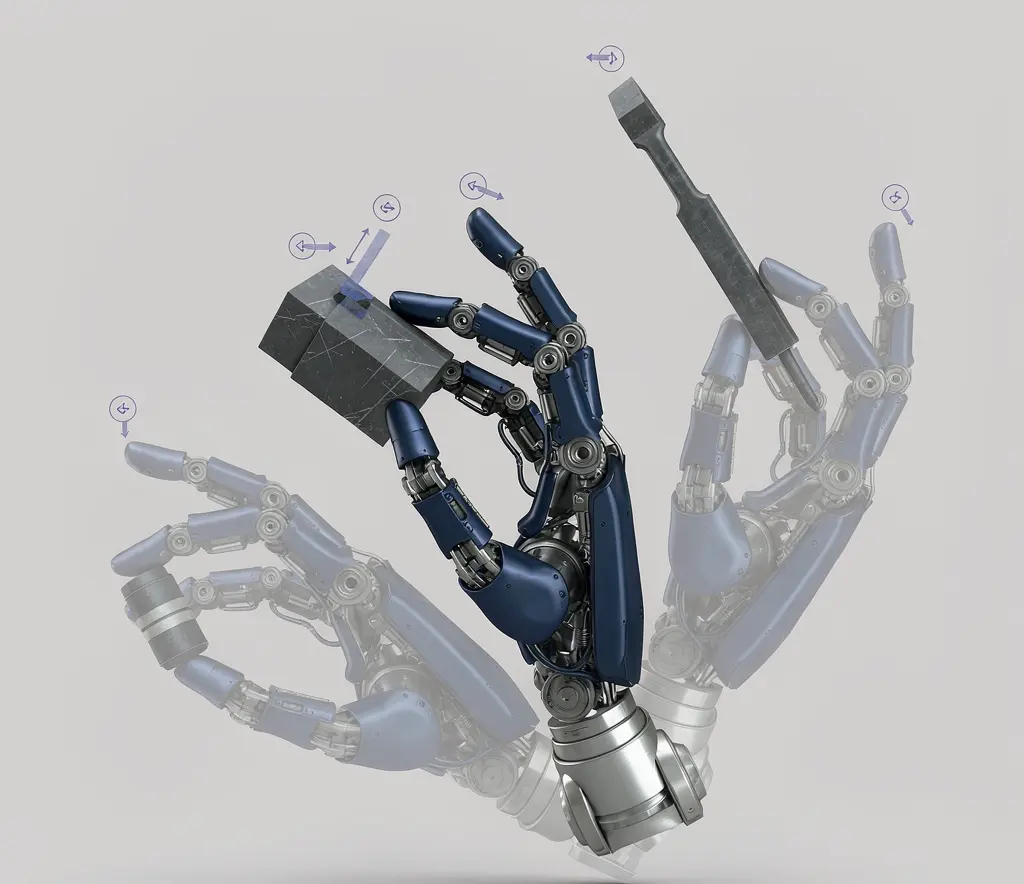
Humanoid Robot Hand Dexterity Verification: Grasp Set, Tool Use, Force Control, and Recovery
Oct 08, 2026

Industrial Exoskeleton Fit and Sizing: Anthropometry, Adjustment Time, PPE, and Shared-Device Programs
Oct 08, 2026

Robot Duty Cycle and Thermal Limits: Why Rated Payload and Speed Do Not Guarantee Continuous Operation
Oct 08, 2026

Robot IP Ratings Explained: What IP54, IP65, and IP67 Do — and Do Not — Prove
Oct 08, 2026
The same robot can be purchased outright, leased for a fixed term, or operated as a service with a recurring fee. Each commercial model shifts the cost structure, risk allocation, and operational responsibility differently. A buyer who compares only monthly prices misses the most important questions: Who carries maintenance responsibility? Who owns the software subscription? What happens at the end of the term? This article explains how to compare direct purchase, lease, and Robotics-as-a-Service (RaaS) models across the dimensions that matter for a robot deployment decision.
Why the Same Robot Can Have Very Different Commercial Models
A robot is both a physical asset (hardware that depreciates) and a digital platform (software that requires ongoing licensing and updates). This dual nature creates multiple ways to commercialize the same product:
- Direct purchase: The buyer acquires the hardware and pays for software separately. The buyer bears maintenance, support, and lifecycle costs.
- Lease: A leasing company or financing party holds the asset; the lessee uses it for a defined term. Lease structures vary—software, maintenance, and support may be bundled into the lease payment or billed separately. End-of-term options (return, purchase at fair market value, renew) depend on the contract.
- RaaS: A service provider owns (or manages) the hardware and software. The buyer pays a recurring fee (monthly, per-task, or per-uptime-hour). The provider’s scope may include maintenance, repairs, software updates, and in some cases operation and monitoring—but the exact scope is contract-defined.
The choice depends on the buyer’s capital availability, risk tolerance, operational expertise, and deployment timeline—not on which model is “cheapest” in absolute terms.
Direct Purchase: Ownership, Capital Cost and Lifecycle Responsibility
How It Works
The buyer pays the full hardware cost upfront (or finances it through a loan). Software, integration, training, and support are purchased separately. The buyer owns the asset and is responsible for all maintenance, repairs, and lifecycle management.
Cost Structure
| Cost Element | One-Time or Recurring | Buyer Responsibility |
| Robot hardware | One-time (CAPEX) | Full |
| End-effector and peripherals | One-time | Full |
| Integration engineering | One-time | Full |
| Software and fleet platform | Recurring (subscription) | Full |
| Spare parts and maintenance | Recurring | Full |
| Training | One-time + recurring (new staff) | Full |
| Insurance and depreciation | Recurring | Full |
| End-of-life disposal | One-time | Full |
Conditions That May Favor Direct Purchase
- Long-term, stable deployments with predictable demand
- Buyers with strong internal technical and maintenance capability
- Applications where the robot technology is mature and unlikely to change rapidly
- Buyers with available capital and a preference for asset ownership
Trade-offs
- High upfront capital requirement
- Buyer bears all maintenance and repair risk
- Technology lock-in: if the robot becomes obsolete, the buyer owns the obsolescence
- Requires internal technical capability for maintenance and operation
- Exit cost is high: if the deployment fails, the buyer owns idle or under-utilized equipment
Lease: Lower Initial Cash Requirement but Contract Commitments
How It Works
A leasing company or financing party purchases the hardware and leases it to the buyer for a defined term. The lease payment may include software, maintenance, and support, or these may be billed separately—this depends entirely on the lease structure. At the end of the term, the buyer returns the equipment, purchases it at fair market value, or renews the lease, per the contract terms.
Cost Structure
| Cost Element | One-Time or Recurring | Who Pays |
| Robot hardware | Amortized in lease payment | Lessor / financing party |
| End-effector and peripherals | May be included or separate | Contract-dependent |
| Integration engineering | Typically separate (one-time) | Buyer |
| Software and fleet platform | May be bundled in lease | Contract-dependent |
| Spare parts and maintenance | May be bundled or buyer responsibility | Contract-dependent |
| Training | Typically separate | Buyer |
| Lease payment | Recurring | Buyer |
Conditions That May Favor Lease
- Medium-term deployments with moderate uncertainty
- Buyers who want to preserve capital for other investments
- Applications where technology may change within the deployment period
- Buyers who prefer predictable recurring costs over variable maintenance costs
Trade-offs
- Total cost over the lease term may exceed direct purchase cost
- Contract commitment: early termination may incur penalties
- Configuration changes may require lessor approval
- End-of-term logistics: equipment return, inspection, potential refurbishment costs
- Software and maintenance terms depend on the lease structure
RaaS: Subscription, Service Scope, Utilization and Exit Terms
How It Works
A service provider owns (or manages) the hardware, software, and infrastructure. The buyer pays a recurring fee for the robot’s operation. The provider’s scope may include maintenance, repairs, software updates, and in some cases operation and monitoring—but the exact allocation of responsibilities is defined by the service contract, not assumed.
Cost Structure
| Cost Element | Who Pays | Notes |
| Robot hardware | Contract-dependent | May be included in service fee |
| Software and fleet platform | Contract-dependent | May be included in service fee |
| Maintenance and repairs | Contract-dependent | May be included in service fee |
| Spare parts | Contract-dependent | May be included in service fee |
| Integration engineering | Contract-dependent | May be buyer’s responsibility or included |
| Training | Contract-dependent | May be included or separate |
| Service fee | Buyer (recurring) | Monthly, per-task, or per-uptime-hour |
Pricing Models
| Pricing Model | How It Works | Conditions That May Favor |
| Monthly subscription | Fixed monthly fee per robot | Stable, predictable demand |
| Per-task pricing | Fee per completed task (delivery, clean, move) | Variable demand, outcome-based alignment |
| Per-uptime-hour | Fee per hour the robot is operational | Utilization-based alignment |
| Hybrid | Base subscription + per-task or per-hour | Combines predictability with utilization alignment |
Conditions That May Favor RaaS
- Pilot deployments (test before committing to purchase)
- Seasonal or variable demand (scale up and down without owning idle equipment)
- Buyers without internal maintenance capability
- Short-term or uncertain deployments
- Applications where the buyer wants to transfer operational risk to a provider
Trade-offs
- Recurring cost may be higher than direct purchase over a long period
- Limited control over configuration and deployment schedule
- Provider dependency: if the provider exits the market or discontinues the service, the buyer loses robot capability. Robot service providers may be acquired, pivot to different markets, or discontinue unprofitable service lines. Buyers should negotiate contract terms that include transition support (data export, hardware purchase option, notice period) in case the provider exits.
- Utilization risk: if demand drops, the buyer is still paying for the service (unless per-task pricing)
- Integration may not be included (buyer may still need to pay for site-specific integration)
What to Compare Beyond Monthly Price
The monthly price is the starting point, not the end point. The buyer should compare:
| Comparison Dimension | Direct Purchase | Lease | RaaS |
| Upfront cost | Full hardware + integration cost | First lease payment + integration (typically) | First service fee + possible integration |
| Monthly cost | Software + maintenance (buyer-managed) | Lease payment (structure-dependent) | Service fee (structure-dependent) |
| 3-year total cost | Contract/financing-dependent | Contract-dependent | Contract-dependent |
| 5-year total cost | Contract/financing-dependent | Contract-dependent | Contract-dependent |
| Maintenance responsibility | Buyer | Contract-dependent | Contract-dependent |
| Software updates | Buyer pays (subscription) | Contract-dependent | Contract-dependent |
| Technology refresh | Buyer pays for new hardware | Contract-dependent (refresh option may be negotiated) | Contract-dependent (may be included) |
| Exit cost | Contract-dependent (buyer owns asset) | Contract-dependent (termination terms) | Contract-dependent (termination terms) |
| Configuration control | Full | Contract-dependent | Contract-dependent |
| Deployment speed | Depends on supplier lead time | Contract-dependent | Contract-dependent |
Who Carries Maintenance, Software, Spares and Downtime Risk?
This is the most important question that buyers overlook when comparing commercial models. Commercial model affects how cost, ownership, service responsibility, software access, upgrade rights, and exit risk are allocated. The exact allocation must be verified in the contract rather than assumed from the model name alone.
| Risk Category | Direct Purchase | Lease | RaaS |
| Hardware failure | Buyer | Contract-dependent | Contract-dependent |
| Software bug or incompatibility | Buyer (supplier support) | Contract-dependent | Contract-dependent |
| Spare parts availability | Buyer | Contract-dependent | Contract-dependent |
| Downtime cost | Buyer (lost production) | Contract-dependent | Contract-dependent (SLA with credits may be negotiable) |
| Technology obsolescence | Buyer | Contract-dependent | Contract-dependent |
| Battery degradation | Buyer | Contract-dependent | Contract-dependent |
| Integration failure | Buyer | Contract-dependent | Contract-dependent |
The buyer should assess their internal capability to manage these risks. A buyer with a strong technical team may prefer to carry the risk in exchange for lower cost. A buyer without technical resources may prefer to transfer the risk to a provider, even at a higher recurring cost.
Critical Buyer Questions for Any Commercial Model
Regardless of which model is under consideration, the buyer should ask:
- Is integration / site modification / software-API configuration included in the recurring fee, or billed separately?
- Are consumables (cleaning solution, brushes, filters) included or separate?
- What are the early termination terms and penalties?
- Is there a minimum utilization commitment?
- At end-of-term, can the buyer export operational data, configuration files, and route maps?
- Is there a hardware purchase option at end-of-term, and at what valuation?
- What notice period is required for termination?
- Does the contract include SLA commitments with credits for downtime?
- Who owns the operational data generated during the contract term?
- What happens to the robot if the provider exits the market?
Commercial Model Comparison Worksheet
| Worksheet Item | Direct Purchase | Lease | RaaS |
| Upfront cost | $___ | $___ | $___ |
| Monthly recurring cost | $___ | $___ | $___ |
| Annual recurring cost | $___ | $___ | $___ |
| 3-year total cost | $___ | $___ | $___ |
| 5-year total cost | $___ | $___ | $___ |
| Maintenance responsibility | Buyer | Contract-dependent | Contract-dependent |
| Software subscription included? | No (buyer pays separately) | Contract-dependent | Contract-dependent |
| Spare parts included? | No (buyer pays separately) | Contract-dependent | Contract-dependent |
| Training included? | $___ | $___ | $___ |
| Integration included? | $___ | $___ | $___ |
| Technology refresh included? | No | Contract-dependent | Contract-dependent |
| Exit cost | $___ (idle asset value) | $___ (termination penalty) | $___ (return logistics) |
| Downtime risk owner | Buyer | Contract-dependent | Contract-dependent |
| Configuration control | Full | Contract-dependent | Contract-dependent |
| Contract term | N/A | ___ months | ___ months (or month-to-month) |
| Data export at end-of-term | N/A | ___ | ___ |
| Minimum utilization commitment | N/A | ___ | ___ |
Request a Quote or Technical Evaluation
Tell us what you need the robot to do. Even if some technical details are not yet confirmed, our team can help evaluate suitable options.
Please share, if available: application, key requirements, site and integration conditions, quantity, destination, and target timeline.
Send Your RequirementsShare on Social:


Contact Us
In This Article
Humanoid Robot Hand Dexterity Verification: Grasp Set, Tool Use, Force Control, and Recovery
Oct 08, 2026
Industrial Exoskeleton Fit and Sizing: Anthropometry, Adjustment Time, PPE, and Shared-Device Programs
Oct 08, 2026
Robot Duty Cycle and Thermal Limits: Why Rated Payload and Speed Do Not Guarantee Continuous Operation
Oct 08, 2026
Robot IP Ratings Explained: What IP54, IP65, and IP67 Do — and Do Not — Prove
Oct 08, 2026