

 Contact Us

 Home /
 Robot Fleet TCO for Enterprise Buyers: Hardware, Software, Integration, Spares, Service, and Infrastructure
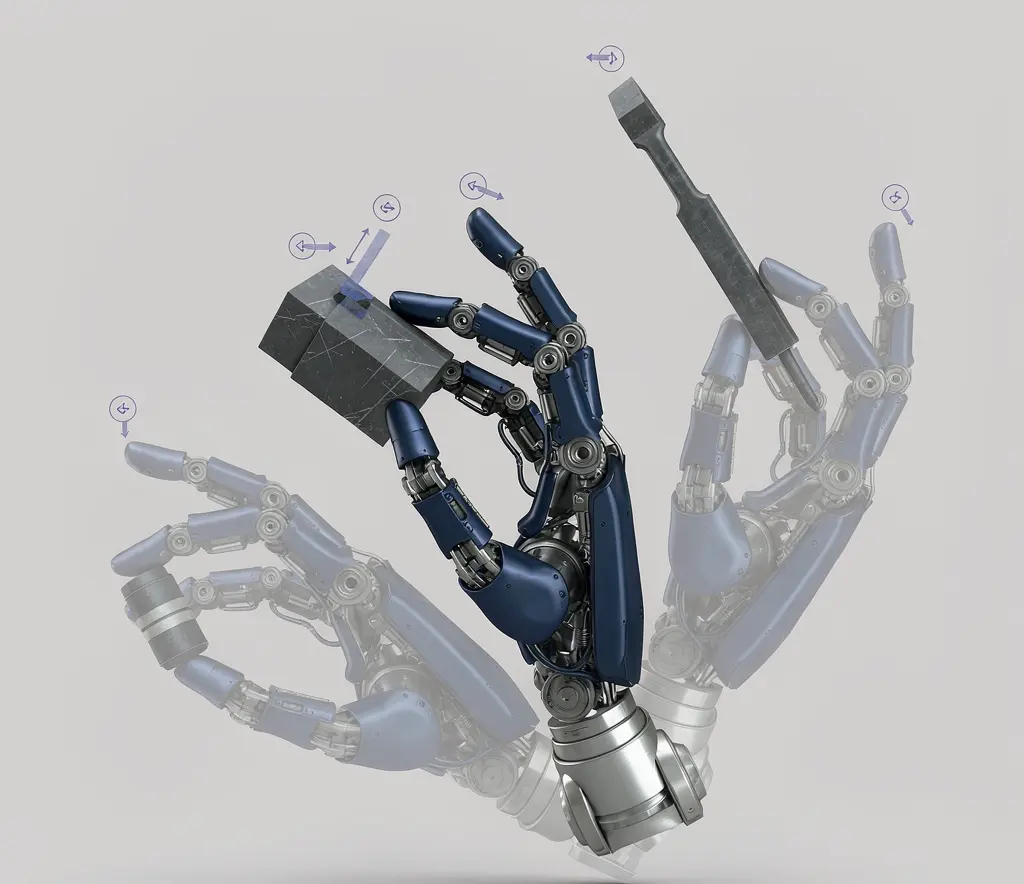
Humanoid Robot Hand Dexterity Verification: Grasp Set, Tool Use, Force Control, and Recovery
Oct 08, 2026

Industrial Exoskeleton Fit and Sizing: Anthropometry, Adjustment Time, PPE, and Shared-Device Programs
Oct 08, 2026

Robot Duty Cycle and Thermal Limits: Why Rated Payload and Speed Do Not Guarantee Continuous Operation
Oct 08, 2026

Robot IP Ratings Explained: What IP54, IP65, and IP67 Do — and Do Not — Prove
Oct 08, 2026
When an enterprise evaluates a robot fleet investment, the unit price of the robot is only one line in a much larger cost picture. A fleet of 20 robots deployed across 5 sites involves hardware, integration, software subscriptions, spare parts, training, support, infrastructure, and—critically—the cost of downtime and under-utilization. Buyers who compare only robot unit prices end up surprised by the total cost of ownership (TCO) after deployment. This article provides a structured TCO model for enterprise robot fleets, covering every cost category that should be estimated before the purchase decision is finalized.
Why Unit Price Is Only One Line in Enterprise Robot TCO
Illustrative example: a buyer evaluating a 20-robot fleet may focus first on the hardware quotation. But that figure can omit costs that account for a significant portion of the total project cost over a multi-year period. The full TCO of a robot fleet includes:
| Cost Category | One-Time or Recurring | What to Estimate |
| Hardware (robots + peripherals) | One-time | Robot units, end-effectors, vision, controllers, accessories |
| Integration and site preparation | One-time | Mechanical, electrical, software integration; site modification |
| Software, fleet platform, API | Recurring | Per-robot subscription, API access, custom development |
| Spare parts and consumables | Recurring | Critical spares, wear parts, batteries, consumables |
| Training, support, travel, service | Recurring | Operator/technician training, service contracts, travel |
| Infrastructure (network, power, safety) | One-time + recurring | Network upgrades, power installation, safety infrastructure |
| Downtime and under-utilization | Hidden / recurring | Lost production, idle capacity, deferred maintenance |
There is no universal percentage distribution for these categories—the actual split depends on the robot type, deployment scale, site conditions, support model, and utilization. But the principle holds: any TCO model that omits integration, software, spares, service, infrastructure, and downtime will understate the true cost of ownership.
Hardware and Peripheral Cost Across a Fleet
Hardware cost extends beyond the robot unit. A complete robot cell or fleet deployment includes:
Robot Units
- Robot arm or mobile robot base (the “robot” itself)
- Controllers (may be bundled or separate)
- Teach pendants or HMI devices
- Communication modules (Wi-Fi, 5G, or wired)
End-Effectors and Accessories
- Grippers (vacuum, mechanical, magnetic, soft)
- Vision systems (2D camera, 3D vision, force/torque sensor)
- Tool changers (if multiple end-effectors are needed)
- Payload mounting plates and adapters
Fleet Infrastructure (for Mobile Robots)
- Charging stations (quantity depends on battery chemistry, duty cycle, charger power, and opportunity charging capability)
- Network infrastructure (access points, switches, cabling)
- Docking or staging stations
- Safety infrastructure (area scanners, signage, floor markings, barriers)
Per-Site Hardware
- Robot pedestals or mounting plates (industrial arms)
- Floor preparation (flatness correction, surface treatment)
- Power supply installation (dedicated circuits, distribution panels)
- Utility connections (water, drainage, compressed air—where applicable)
The buyer should track hardware cost per robot and per site, because some hardware costs scale with robot count (e.g., grippers) while others scale with site count (e.g., charging stations, network infrastructure).
Integration and Site Preparation Cost
Integration is the engineering work that connects the robot to the production environment. It is frequently the most underestimated cost category in robot TCO.
Mechanical Integration
- Robot mounting and alignment
- Conveyor connection and material flow routing
- Fixture design and fabrication
- Guarding and safety perimeter installation
- Floor anchoring and vibration isolation
Electrical Integration
- Power supply wiring to robot and peripherals
- I/O wiring between robot and machines
- Safety circuit wiring (E-stop, light curtains, area scanners)
- Network cabling (Ethernet, fieldbus)
Software Integration
- PLC programming for machine interface
- Robot programming (path teaching, cycle optimization)
- WMS/MES/ERP interface development
- Vision system configuration and calibration
- Fleet manager configuration (routes, zones, traffic rules, charging schedules)
- Elevator and door controller integration (for mobile robots)
Site Modification
- Floor preparation (leveling, coating, joint repair)
- Wall or barrier modifications for robot paths
- Door modifications (automatic door openers, wider clearances)
- Elevator controller integration (may require elevator manufacturer involvement)
- Utility installation (power circuits, water lines, drainage connections)
Integration cost scales with the complexity of the site, not just the number of robots. The buyer should estimate integration cost per site, not per robot.
Software, Cloud, Fleet Management and API Costs
Software costs are recurring and cumulative. They are also the cost category most likely to surprise buyers who focused on hardware pricing during procurement.
Fleet Management Platform
Most commercial fleet management platforms charge a per-robot subscription fee, billed monthly or annually. The buyer should request the per-robot fee, any volume discounts, minimum fleet size charges, multi-site surcharges, and renewal terms.
Illustrative scenario: a fleet of 20 robots at a per-robot subscription fee. Over a 3-year period, the software cost may exceed the cost of a robot unit. All figures are buyer-supplied or supplier-quoted—not industry benchmarks.
Questions to ask about fleet platform pricing:
- Is the per-robot fee the same at all fleet sizes, or does it decrease with volume?
- Is there a minimum fleet size or minimum monthly charge?
- Are software updates included in the subscription, or charged separately?
- Is there a multi-site surcharge or a central management license?
- What happens to the subscription if robots are decommissioned or transferred to another site?
API and Integration Licenses
Some suppliers charge separately for API access, which is essential for WMS/MES integration, custom reporting, and third-party fleet management. API access may be included in the fleet platform subscription, or it may be an add-on.
Cloud vs. On-Premise
Cloud-managed platforms and on-premise platforms have different cost structures. The choice affects both cost and data governance—some enterprises require on-premise deployment for security or compliance reasons. Specific cost characteristics depend on the vendor’s architecture.
Custom Development
Integration with legacy systems, custom reporting, or specialized workflows may require custom software development, typically billed at an hourly rate.
Spares, Consumables, Batteries and Preventive Maintenance
Spare Parts Categories
| Category | Examples | Replacement Trigger | Stocking Strategy |
| Critical spares | Motor, controller, main board | Failure | Regional hub or on-site |
| Wear parts | Wheels, tires, brushes, gripper fingers | Usage-based (hours or cycles) | On-site stock |
| Consumables | Filters, lubricants, cleaning solution | Usage-based | On-site stock |
| Batteries | Battery pack | Capacity degradation (manufacturer-defined or operational threshold) | Regional hub or on-site |
| Sensors | LiDAR, camera, safety scanner | Failure or accuracy drift | Regional hub |
| Cables and connectors | Power cable, communication cable | Wear, bending fatigue | On-site stock |
Battery Cost Considerations
Batteries are typically the most expensive wear item in a mobile robot fleet. Battery life depends on charge cycles, depth of discharge, ambient temperature, and charging behavior. The buyer should request the manufacturer’s battery life specification (cycle count and capacity retention curve) and plan for battery replacement in the TCO model based on the expected duty cycle and the manufacturer’s data.
Preventive Maintenance
Preventive maintenance has its own cost—whether performed by on-site staff (labor cost) or by the supplier under a service contract (contract cost). The TCO model should include whichever applies.
Training, Support, Travel and Local Service Coverage
Training
| Training Type | Audience | Frequency | Cost Driver |
| Operator training | Operators | Initial + new hires | Per session, per site |
| Technician training | Maintenance staff | Initial + refreshers | Per session, per site |
| Integrator training | System integrators | Initial | Per session |
| Train-the-trainer | Regional trainers | Initial | Per session, centralized |
Training cost scales with the number of sites and staff turnover.
Support and Service
| Support Model | Cost | Risk | Conditions That May Favor |
| Self-supported | Low (internal labor) | High (depends on internal expertise) | Buyers with strong technical teams |
| Supplier basic support | Moderate (per-call or per-incident) | Moderate (response time varies) | Small fleets, non-critical applications |
| Supplier service contract | Higher (annual fee) | Lower (SLA-backed response) | Critical applications, multi-site fleets |
| Third-party managed service | Varies (outcome-based pricing) | Lower (SLA + multi-vendor expertise) | Multi-vendor fleets, multi-site operations |
Travel Costs
For multi-site deployments, travel costs for installation, commissioning, training, and service visits can be substantial. The buyer should request travel cost estimates from the supplier (included or billed separately, estimated number of trips, per-trip cost). Local service coverage—whether through the supplier’s regional team, a local partner, or a third-party service provider—can reduce travel costs and improve response time.
Downtime and Under-Utilization as Hidden Cost Drivers
Downtime and under-utilization are the most overlooked cost categories in robot TCO. They do not appear on any invoice, but they represent real economic loss.
Downtime Cost
When a robot is down, the production capacity it was supposed to provide is lost. The cost of downtime depends on:
- The value of the production lost during the downtime
- Whether alternative capacity (manual labor or another machine) is available
- The duration of the downtime (from fault to recovery)
- The frequency of downtime events
Illustrative scenario: estimate downtime cost by multiplying the buyer’s own production value per hour by the duration of the downtime, then adjust for any alternative capacity or recovery options. Use buyer-specific data rather than an industry benchmark.
Under-Utilization Cost
Under-utilization occurs when a robot is deployed but not used at its intended capacity. Common causes:
- The process was not fully converted to robot operation (manual fallback remains)
- The robot was oversized for the actual demand (designed for peak, runs at average)
- The robot is waiting for upstream or downstream process bottlenecks
- The robot is available but operators do not use it (change management failure)
Under-utilization is insidious because it does not trigger any alert. The robot is running, the fleet dashboard shows “available,” but the robot is only performing a fraction of its intended throughput. The depreciation, software subscription, and floor space costs are incurred regardless of utilization.
Delayed Maintenance Cost
Delaying preventive maintenance saves money in the short term but increases long-term cost. Equipment degradation accelerates as components wear. The cost of a major failure caused by deferred maintenance can exceed the cost of the preventive maintenance that would have prevented it—but the specific ratio depends on the equipment, failure mode, and maintenance program.
Request a Quote or Technical Evaluation
Tell us what you need the robot to do. Even if some technical details are not yet confirmed, our team can help evaluate suitable options.
Please share, if available: application, key requirements, site and integration conditions, quantity, destination, and target timeline.
Send Your RequirementsBuild a Three-Scenario TCO Model
A single TCO number is less useful than a range that reflects different assumptions about deployment scale, utilization, and support. We recommend building three TCO models:
Scenario A (Minimum Viable Deployment)
| Category | What to Include |
| Hardware | Core robots + basic end-effectors only |
| Integration | Mechanical and electrical only (no software integration) |
| Software | Fleet platform at minimum fleet size |
| Spares | Critical spares only (no wear parts stock) |
| Training | Operator training only (no technician training) |
| Support | Per-incident support (no service contract) |
| Infrastructure | Existing network and power (no upgrades) |
| Downtime | Not estimated (buyer-defined assumption) |
Scenario A represents the minimum cost to get robots deployed. It is useful for understanding the floor of the investment, but it may not be a sustainable operating model.
Scenario B (Planned Operating Deployment)
| Category | What to Include |
| Hardware | Complete robot cells with end-effectors, vision, and peripherals |
| Integration | Full mechanical, electrical, and software integration |
| Software | Fleet platform at planned fleet size + API access |
| Spares | Critical spares + wear parts + initial consumables |
| Training | Operator + technician training + train-the-trainer |
| Support | Service contract with SLA |
| Infrastructure | Network upgrades, power installation, safety infrastructure |
| Downtime | Buyer-defined assumption based on expected reliability |
Scenario B represents the planned cost of operating the fleet as intended.
Scenario C (Expansion-Ready Deployment)
| Category | What to Include |
| Hardware | Planned fleet + expansion capacity (chargers, network) |
| Integration | Full integration + documented interfaces for future sites |
| Software | Fleet platform at final planned fleet size + advanced analytics |
| Spares | Regional spare parts pool + battery replacement budget |
| Training | Multi-site training program + regional trainer certification |
| Support | Multi-site service contract with regional coverage |
| Infrastructure | Network sized for final fleet + redundant coverage |
| Downtime | Buyer-defined assumption with preventive maintenance program |
Scenario C represents the cost of deploying the fleet with future growth in mind.
TCO Model Summary
| Model | Multi-Year TCO | Key Assumption |
| Scenario A | $___ (fill in with project data) | Minimum viable deployment |
| Scenario B | $___ (fill in with project data) | Planned operating deployment |
| Scenario C | $___ (fill in with project data) | Expansion-ready deployment |
The actual numbers depend on robot type, site conditions, support model, and utilization. The purpose of the three-model approach is to give decision-makers a range, not a single number—and to make the assumptions behind each number visible. For comparing commercial models (Buy, Lease, RaaS), see our Robot Commercial Models guide. For normalizing supplier quotations, see our Quotation Comparison guide.
Share on Social:


Contact Us
In This Article
Humanoid Robot Hand Dexterity Verification: Grasp Set, Tool Use, Force Control, and Recovery
Oct 08, 2026
Industrial Exoskeleton Fit and Sizing: Anthropometry, Adjustment Time, PPE, and Shared-Device Programs
Oct 08, 2026
Robot Duty Cycle and Thermal Limits: Why Rated Payload and Speed Do Not Guarantee Continuous Operation
Oct 08, 2026
Robot IP Ratings Explained: What IP54, IP65, and IP67 Do — and Do Not — Prove
Oct 08, 2026