

 Contact Us

 Home /
 How to Run a Low-Risk Robot Pilot Before a Full Purchase: Scope, Metrics, and Acceptance Criteria
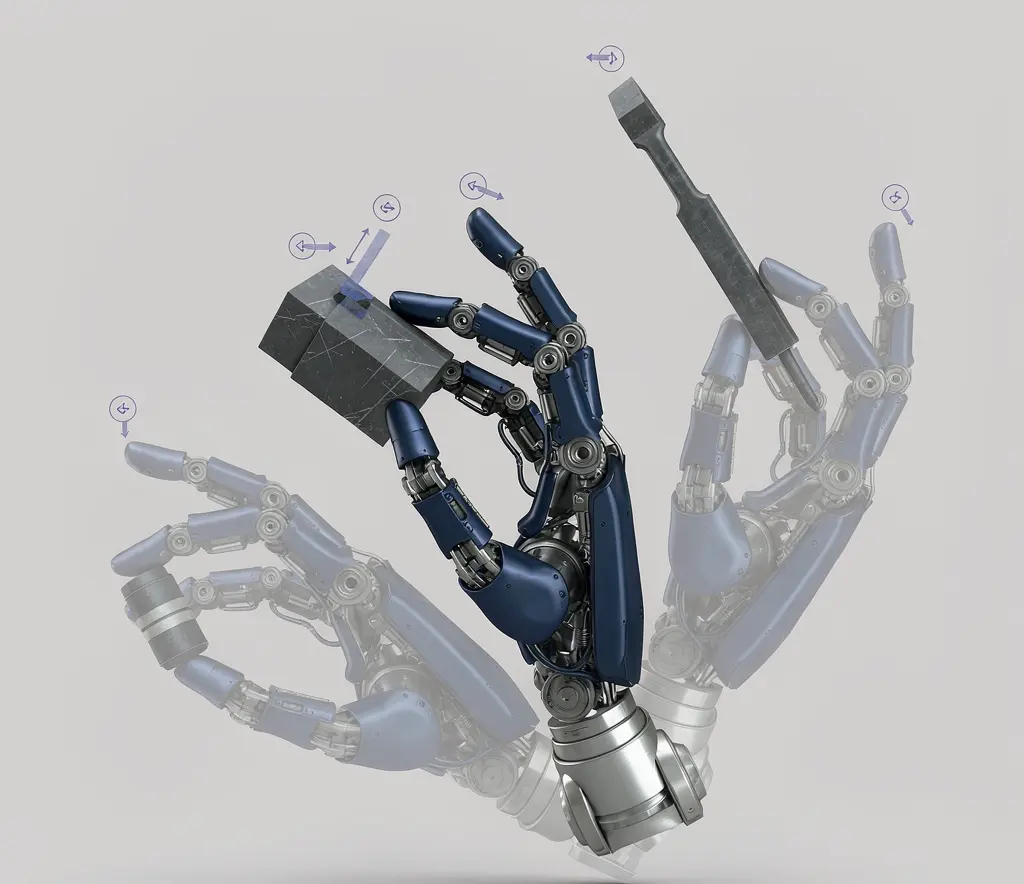
Humanoid Robot Hand Dexterity Verification: Grasp Set, Tool Use, Force Control, and Recovery
Oct 08, 2026

Industrial Exoskeleton Fit and Sizing: Anthropometry, Adjustment Time, PPE, and Shared-Device Programs
Oct 08, 2026

Robot Duty Cycle and Thermal Limits: Why Rated Payload and Speed Do Not Guarantee Continuous Operation
Oct 08, 2026

Robot IP Ratings Explained: What IP54, IP65, and IP67 Do — and Do Not — Prove
Oct 08, 2026
A pilot is not a demo. A demo shows what a robot can do under controlled conditions. A pilot tests whether a robot can do what your operation actually requires under real conditions, with real parts, real operators, and real constraints. The difference between a well-designed pilot and a poorly designed one is the difference between a confident purchase decision and an expensive mistake. This article explains how to design a robot pilot that reduces purchase risk by testing the right things, measuring the right metrics, and defining what “success” means before the pilot starts.
What a Pilot Should Prove—and What It Cannot Prove
A pilot should prove that the robot can perform the target task at the required level of performance in the buyer’s actual operating environment. Specifically, the pilot should answer:
- Can the robot handle the actual parts (dimensions, weight, surface, orientation)?
- Can the robot achieve the required throughput or cycle time?
- Can the robot operate reliably over a sustained period (not just a single cycle)?
- Can the robot integrate with the required systems (machine, conveyor, WMS)?
- Can operators run the robot after training, without constant supplier support?
- What are the failure modes, and how recoverable are they?
A pilot cannot prove:
- Long-term reliability (months or years of operation)
- Multi-robot fleet behavior (if only one robot is piloted)
- Full-scale throughput (if only a subset of the process is automated)
- Total cost of ownership (if hidden costs like spares and training are not tracked)
- Scalability to other sites (if the pilot site is not representative)
Understanding these limits prevents the buyer from over-interpreting pilot results. A successful pilot means the robot is worth purchasing—not that it will definitely succeed at full scale.
Select a Representative Task, Not the Easiest Demo
A recurring pilot design risk is selecting the easiest task to demonstrate, rather than the most representative task for the operation. Suppliers naturally prefer to demo their robot on a task it performs well, but the buyer needs to test the robot on the task it will actually perform.
What Makes a Task Representative
- The part is typical of the production mix (not the lightest or easiest to handle)
- The cycle time requirement is at or near the production target (not relaxed for the pilot)
- The environment is representative (not a clean test area, but the actual production floor)
- The integration is real (connected to the actual machine, conveyor, or WMS—not simulated)
- The operator is a typical production operator (not a supplier engineer)
What to Avoid
- “Lab conditions” pilot: the robot runs in a clean test area with perfect lighting, flat floor, and no traffic. The pilot succeeds, but the production environment is different.
- “Best case” pilot: the robot handles the easiest part, at the slowest speed, with a supplier engineer operating it. The pilot succeeds, but production requires harder parts at higher speed with a trained operator.
- “Single cycle” pilot: the robot performs one cycle successfully. The pilot is declared a success, but sustained operation reveals thermal issues, battery limitations, or integration instabilities.
Define Baseline Performance Before the Robot Arrives
Before the robot is deployed, the buyer should measure and document the current performance of the manual or semi-automated process. This baseline is essential for two reasons:
- It provides a comparison point: “the robot achieved X, compared to the manual baseline of Y”
- It prevents the “pilot succeeds but we don’t know if it’s better” problem
Baseline Metrics to Document
| Metric | What to Measure | Why It Matters |
| Throughput | Units processed per hour (manual) | Robot performance compared against current process |
| Quality | Defect rate, rework rate (manual) | Robot should not introduce new quality issues |
| Cycle time | Time per unit (manual) | Robot’s cycle time compared against current process |
| Operator time | Hours of operator attention per shift | Whether robot reduces operator time, not just cycle time |
| Error/recovery rate | How often does the manual process require intervention? | Robot’s intervention rate compared against current process |
| Downtime | How much time is lost to manual process issues? | Whether robot reduces or increases downtime |
Note: whether the robot must meet or exceed manual throughput depends on the buyer’s business case. Some projects accept different throughput in exchange for safety, labor availability, consistency, or other operational value. The baseline defines the comparison; the business case defines what “good enough” means.
Choose Metrics: Throughput, Coverage, Task Success, Intervention, Quality and Uptime
The pilot should measure metrics that directly answer “is this robot good enough for production?” The pass criteria for each metric should be buyer-defined, derived from the baseline, the business requirement, and agreed acceptance criteria—not from generic industry thresholds.
| Metric | Definition | How to Measure | Pass Criterion |
| Throughput | Units processed per hour (or area cleaned per hour, or deliveries per hour) | Count completed tasks over a defined measurement period (e.g., 1 shift) | Buyer-defined, based on business requirement |
| Task success rate | Percentage of tasks completed without manual intervention | Count successful tasks / total tasks | Buyer-defined |
| Intervention rate | Manual interventions per 100 tasks | Count interventions / total tasks x 100 | Buyer-defined |
| Quality | Defect rate or quality score after robot operation | Inspect output against quality standard | Buyer-defined, compared to baseline |
| Uptime | Percentage of scheduled operating time the robot was available | (Scheduled time - downtime) / scheduled time | Buyer-defined |
| Coverage (cleaning) | Percentage of target area actually cleaned | Measure cleaned area / target area | Buyer-defined |
| Recovery time | Time from fault to resumed operation | Measure fault-to-recovery time for each incident | Buyer-defined |
Setting Pass Criteria
Pilot acceptance thresholds should be defined before the test based on the buyer’s business requirements, baseline, application criticality, and agreed gap-closure plan. The pilot is a first deployment—the robot, the integration, and the operators are all new. Setting the bar at full production target may reject a robot that would reach full performance after optimization. The specific threshold is a buyer decision based on application criticality, available alternatives, and the gap-closure plan for full deployment.
Test Real Obstacles, Real Parts, Real Operators and Real Peak Conditions
The pilot must test the robot under conditions that reflect actual production, not idealized conditions:
Real Obstacles
- Production floor with actual layout (racking, machines, pedestrian routes)
- Dynamic obstacles (forklifts, people, other equipment in motion)
- Floor conditions as they are (not freshly cleaned or leveled for the pilot)
- Lighting as it is (not supplemented with extra lights for the pilot)
Real Parts
- Actual production parts (not samples or mock-ups)
- Full range of part variations (if parts vary in size, weight, or surface, test the range)
- Parts in the actual presentation method (conveyor, pallet, bin, fixture)
- Parts with actual condition (oily, wet, dusty—not cleaned for the pilot)
Real Operators
- Production operators who will actually run the robot (not engineers or supplier staff)
- Operators who have received the standard training (not advanced or extended training)
- Operators running the robot through a full shift (not just a 30-minute demo)
Real Peak Conditions
- Test during peak production periods (not during low-demand periods)
- Test with the actual upstream and downstream process running (not in isolation)
- Test with the actual shift schedule (including shift changes and breaks)
- Test with the actual network and utility conditions (not a dedicated pilot network)
Document Exceptions and Manual Intervention
Every exception and manual intervention during the pilot should be documented—not to criticize the robot, but to understand its real-world behavior:
Exception Log
| Data Point | Why It Matters |
| What happened | Describes the failure mode |
| When it happened | Identifies patterns (time of day, shift, production phase) |
| What the robot was doing | Identifies the task or condition that triggered the exception |
| What the operator did | Describes the recovery action |
| How long it took | Measures the recovery time and its impact on throughput |
| Root cause (if known) | Identifies whether the issue is robot, integration, environment, or operator |
| Was it repeatable | Determines if it’s a systematic issue or a one-time event |
This exception log is the most valuable output of the pilot. It tells the buyer what to expect in production and what to plan for in terms of SOPs, training, and support. Review the exception log with the supplier before the purchase decision—patterns in the log reveal whether issues are fixable (integration, SOP) or fundamental (capability mismatch).
Decide Pass / Modify / Stop / Scale
At the end of the pilot, the project team should make one of four decisions:
Pass (Proceed to Full Purchase)
- All pilot metrics meet or exceed the buyer-defined pass criteria
- Exception log shows no critical or systematic issues
- Operators can run the robot without constant supplier support
- The business case holds at the actual pilot performance level
Modify (Proceed After Changes)
- Most metrics meet criteria, but specific issues need to be addressed
- Issues are understood and fixable (e.g., gripper adjustment, route optimization, SOP update)
- A plan exists to address the issues before full deployment
- The business case still holds with the expected post-modification performance
Stop (Do Not Proceed)
- Critical metrics do not meet criteria
- Issues are not understood or not fixable within budget
- Operators cannot run the robot after training
- The business case does not hold at the actual pilot performance level
Scale (Proceed to Multi-Site Rollout)
- Pilot passes all criteria
- Configuration is documented and standardized
- Site readiness process is defined and tested
- Support model is validated
The “Modify” decision is a frequent outcome—pilots often reveal issues that need to be addressed before full deployment. The key is to distinguish between issues that are fixable (gripper, route, SOP) and issues that are fundamental (robot cannot handle the part, throughput is structurally insufficient).
Pilot Test Checklist for First-Time Buyers
| Pilot Element | Status | Notes |
| Representative task selected (not easiest demo) | ||
| Baseline performance documented (before robot) | ||
| Metrics defined with buyer-defined pass criteria | ||
| Real parts, real environment, real operators | ||
| Peak conditions tested (not just low-demand periods) | ||
| Exception log maintained throughout pilot | ||
| Sustained operation tested (multiple shifts, not single cycle) | ||
| Integration tested (real machine/WMS, not simulated) | ||
| Operators trained and tested (without supplier support) | ||
| Failure modes documented and understood | ||
| Business case validated at actual pilot performance | ||
| Decision made: Pass / Modify / Stop / Scale | ||
| Pilot report documented with metrics, exceptions, and decision |
Request a Quote or Technical Evaluation
Tell us what you need the robot to do. Even if some technical details are not yet confirmed, our team can help evaluate suitable options.
Please share, if available: application, key requirements, site and integration conditions, quantity, destination, and target timeline.
Send Your RequirementsShare on Social:


Contact Us
In This Article
Humanoid Robot Hand Dexterity Verification: Grasp Set, Tool Use, Force Control, and Recovery
Oct 08, 2026
Industrial Exoskeleton Fit and Sizing: Anthropometry, Adjustment Time, PPE, and Shared-Device Programs
Oct 08, 2026
Robot Duty Cycle and Thermal Limits: Why Rated Payload and Speed Do Not Guarantee Continuous Operation
Oct 08, 2026
Robot IP Ratings Explained: What IP54, IP65, and IP67 Do — and Do Not — Prove
Oct 08, 2026