

 Contact Us


 Home /
Food-Contact Robot Grippers: Cleanability, Material Evidence, and Changeover Design
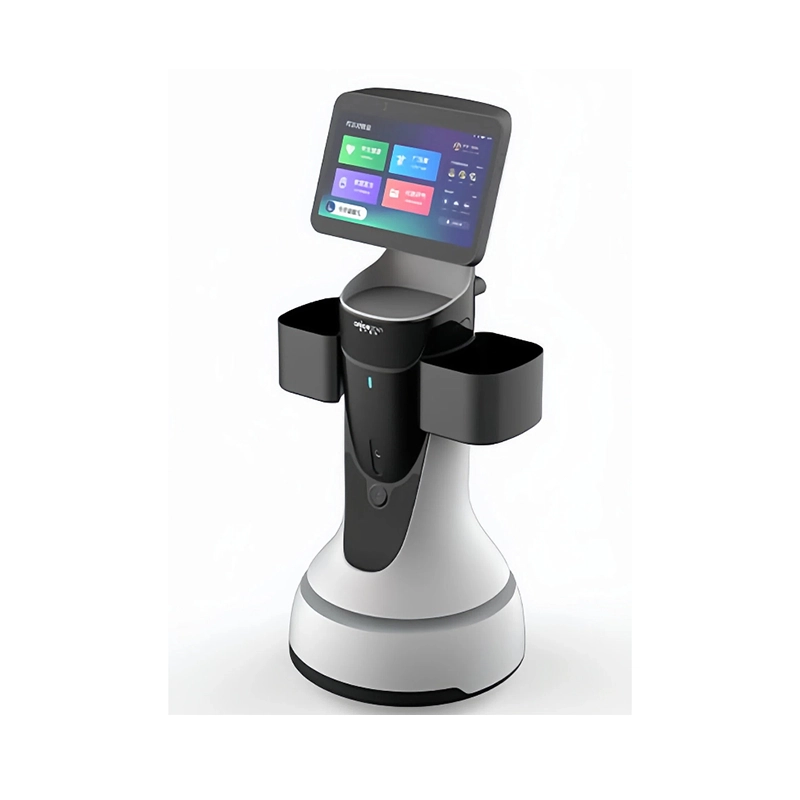
Multilingual Guide Robots: Translation Quality, Place Names, and Content Ownership
Oct 15, 2026

Proving Cleaning Quality Beyond Coverage Maps: Soil Removal, Inspection, and Rework
Oct 15, 2026

Robot Conveyor Tracking: Encoders, Trigger Timing, and Moving Coordinate Frames
Oct 15, 2026
Magnetic Grippers for Thin Steel Sheets: Air Gaps, Double-Sheet Pickup, and Release
Oct 15, 2026
A gripper that carries a sealed box of cereal and one that picks an unwrapped sandwich can use similar hardware while presenting different food-contact and hygiene requirements. The moment a gripper touches food that is not already enclosed by packaging, every surface it contacts becomes a food-contact material, and the questions shift from "does it grip" to "what is it made of, how is it cleaned, and what evidence proves the food stays safe."
This article is written for the buyer who has to qualify a robot's end-of-arm tooling for food work, or who has to decide whether a gripper marketed as "food-grade" is actually adequate. It works through the sequence a hygienic-design review would use: define the contact classification, identify every contact material, inspect the geometry and disassembly, match cleaning conditions to material limits, manage allergen and product changeovers, and compile a model-specific evidence pack. The recurring theme is that a label is not a material record, and a material record is not an evidence pack.
Define Direct, Indirect, and No Food Contact
Classification comes first, because it determines how much rigor everything else needs.
Direct contact: the gripper touches the food itself, with no intervening package. A finger that lifts an unwrapped pastry is in direct contact. Identify the material and its suitability for the food, contact time, temperature and intended market.
Indirect contact: the gripper touches a tray, mold, conveyor or fixture that can transfer residues to food. Assess the actual contamination and material-transfer path for every contacted surface; adding an intermediate surface does not automatically remove the gripper from the hygiene assessment.
No contact: the gripper handles sealed, packaged goods. The food-contact question is largely absent, though the gripper may still need to be cleanable for general facility hygiene.
The classification is per surface, not per robot. One tool can have a direct-contact finger, an indirect-contact support, and a no-contact mounting plate all at once. Map the contact points on the actual tool, for the actual task, before sourcing any material. A supplier who says "the gripper is food-grade" without knowing which surfaces touch food is answering a question that has not been asked.
Identify Every Contact Material
"Food-grade" is a marketing phrase, not a specification. What matters is a material record for every contact surface.
That record has to cover more than the obvious metal fingers. It includes the vacuum cups, which are elastomers with their own formulation and their own extraction and degradation behavior. It includes coatings and platings, which can wear or flake. It includes seals and gaskets at joints. It includes any lubricant that could migrate to a contact surface. And it includes the tooling's own materials of construction, because stainless steel is not a single thing; the grade and its alloying elements determine what it is compliant with and what it might release.
For each material, obtain the supplier documentation that establishes its identity and the basis for its intended food-contact use. A declaration, authorization reference and supporting test record serve different purposes; ask which one applies to that material and market. In the United States, FDA describes several regulatory routes, including applicable regulations and effective Food Contact Notifications. When an FCN is the relevant route, it is effective for the identified manufacturer, substance and conditions of use. Trace the supplied material to that authorization rather than borrowing a similar material's status.
For EU plastic components, review Regulation 10/2011 and its applicable amendments, including the relevant declaration and supporting compliance documentation. Do not apply the plastics rules indiscriminately to every elastomer, metal or coating. China's National Health Commission standards catalogue separately lists GB 4806.7-2023 for plastics and GB 4806.9-2023 for metals, alongside material-specific standards for rubber, coatings and silicone rubber. Match the actual formulation and intended use to the applicable requirements instead of treating a metal or plastic declaration as coverage for the whole tool.
The practical point is that there is no single global "food-grade" status. A material that satisfies one market's rules may not satisfy another's, and the buyer's task is to obtain documentation for the market where the product will be sold. Record the applicable document version and use limitations before committing to the offered configuration.
A concrete Chinese mainland manufacturer example is SRT's SFG-SNM2-N4049 product description. It describes silicone fingers, a PTFE coating on connector surfaces and fluororubber seals at gaps. That is already three material entries to reconcile with the offered tool. The public description helps build the contact-material list; obtain the actual component formulation, batch traceability and applicable test documents for the unit being purchased.
Inspect Crevices, Drainage, and Tool Disassembly
A cleanable design is a physical property, not a rating.
Food residues and allergens collect in crevices, in threads, at joints, in blind holes, and where two surfaces meet without a true seal. A hygienic design minimizes these traps: smooth surfaces, radiused internal corners, no threaded fasteners exposed to product, and, where parts must join, a seal that closes the gap rather than creating a harborage. Drainage matters too; liquid that pools on a surface can harbor growth, so the geometry should shed water rather than hold it.
Then verify the cleaning route. Some assemblies require disassembly; others are designed for cleaning in place. The EHEDG test-method overview distinguishes in-place cleanability of closed equipment from cleanability of open equipment, and leaves process-specific cleaning regimes with the food manufacturer. Require evidence that the chosen route reaches the relevant surfaces. Where dismantling is required, check the steps, frequency, reassembly checks and whether the production crew can carry them out.
This is the point where the buyer should resist conflating ingress protection with hygienic design. An IP rating says something about how well a component resists the ingress of dust and water under defined test conditions. It says nothing about whether the surface geometry sheds residue, whether crevices exist, or whether the tool can be cleaned. A tool can be splash-proof and still be impossible to clean hygienically. The two properties are separate, and hygiene is the one that governs food safety.
Match Cleaning Conditions to Material Limits
Every material has a cleaning envelope, and cleaning that exceeds it degrades the material, which then becomes a contamination risk.
The relevant limits are the standard ones: which cleaning agents are compatible, at what concentration, at what temperature, for what contact time, and with what mechanical action. A polymer that tolerates one sanitizer at ambient temperature may not tolerate it hot or at high concentration. A coating that survives normal washdown may be damaged by a caustic cycle. A seal may swell or harden under conditions the food plant considers routine.
The buy-side requirement is model-specific compatibility evidence: the manufacturer's stated cleaning conditions for the specific material, on the specific model. A general statement that a material "is cleanable" is not enough; the buyer needs the conditions under which it is cleanable, and the plant needs to be able to meet those conditions in its actual cleaning routine. Where the plant's normal method conflicts with the material's limit, the conflict has to be resolved before deployment, either by changing the material or by changing the method.
Use the OEM instructions as a starting boundary, then test the plant's actual recipe. SRT's published SFG-S description discusses neutral-detergent compatibility and direct rinsing. That statement does not establish compatibility with every hot caustic cycle. Put agent, concentration, temperature, duration and repeated-cycle inspection results in the same material record, with the food-safety team responsible for the accepted procedure.
Manage Product and Allergen Changeovers
When the same tool handles different products, changeover becomes a food-safety control, and allergens are the sharp edge of it.
If the tool contacts an allergen-containing product and then a product that must be allergen-free, the tool is a potential cross-contact path. The changeover procedure has to define how the tool is cleaned between products, how that cleaning is verified, and who is accountable for the verification. An automated robot does not change this requirement; it may help by making the cleaning repeatable, but it does not remove the human responsibility to confirm that the changeover did what it was supposed to do.
Set a defined allergen-control target and validate the changeover against it. A cleaning command alone is not evidence that the target was met. What the equipment can do is be designed for cleanability and provide the disassembly and material documentation that makes validation feasible. The changeover design and the validation method should be documented together, per product pair, and the buyer should treat "cleans between products" as a claim that requires the plant's own verification.
Compile a Model-Specific Evidence Pack
The output of the qualification is a pack, not a promise. It gathers, for the specific tool and the specific task, the evidence that a food-safety reviewer can check.
The pack should contain: the contact classification for each surface on the tool; the material record for every contact material, with the manufacturer's compliance declaration for the target market; the cleaning conditions the material tolerates, and a statement of how the plant meets them; the disassembly and cleaning procedure, including the changeover method; and a list of the evidence gaps that remain open, with the responsible party for closing each one. Gaps are normal at this stage; the point is that they are recorded as gaps rather than papered over with a label.
Use one row per contact component: component and surface ID; material or formulation and batch; food, time and temperature; target market and applicable document version; cleaning recipe and limits; supporting file; verification owner and open action. A missing batch report stays an open action, even when the product brochure names a food-grade material.
Fill the pack and the gripper's suitability stops being a matter of trust. A buyer who can show, for each contact surface, what it is made of, what it is compliant with, how it is cleaned, and what remains to be verified, has a reviewable basis for approving or rejecting the offered configuration.
Build a Gripper Material-Evidence Pack
Share the contact-surface list, target food and market, cleaning chemicals and temperatures, proposed gripper model and any supplier material declarations. AIsirRobot can coordinate available OEM documents and organize missing material, cleaning and traceability items for the plant's food-safety review. It does not certify food-contact suitability. Coordinate food-contact gripper documentation.
Share on Social:


Contact Us
In This Article
Multilingual Guide Robots: Translation Quality, Place Names, and Content Ownership
Oct 15, 2026
Proving Cleaning Quality Beyond Coverage Maps: Soil Removal, Inspection, and Rework
Oct 15, 2026
Robot Conveyor Tracking: Encoders, Trigger Timing, and Moving Coordinate Frames
Oct 15, 2026
Magnetic Grippers for Thin Steel Sheets: Air Gaps, Double-Sheet Pickup, and Release
Oct 15, 2026