

 Contact Us


 Home /
Cleaning Robot Filtration: Filter Ratings, Whole-Machine Leakage, and Dust Restrictions
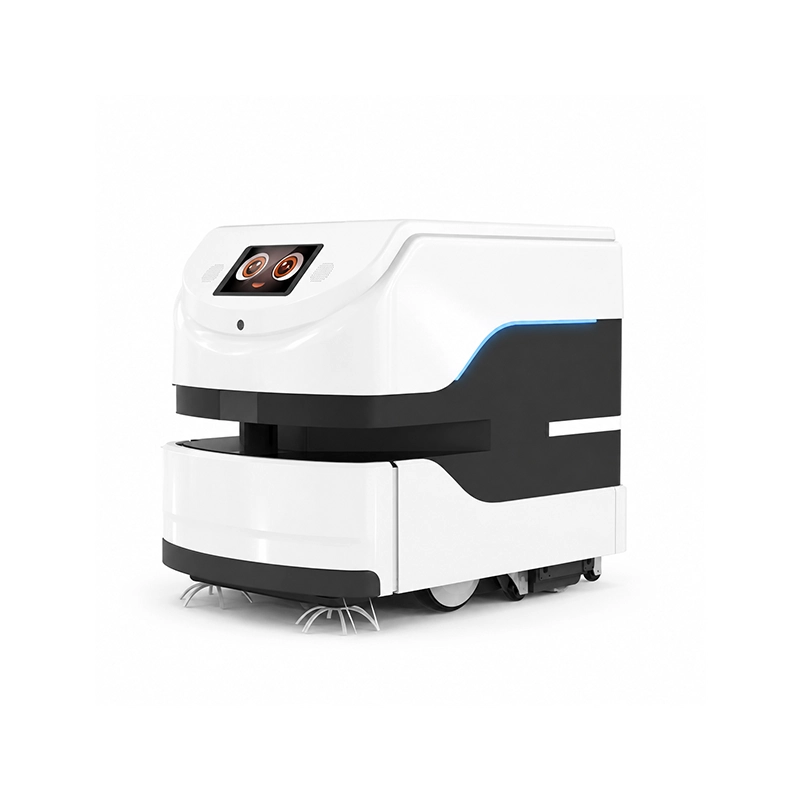
Cleaning Robot Filtration: Filter Ratings, Whole-Machine Leakage, and Dust Restrictions
Oct 14, 2026
Robotic Weld Inspection: Visual Checks, NDT, and What Camera Images Cannot Prove
Oct 14, 2026

Autonomous Trailer Loading: When Warehouse AMR Capability Is Not Enough
Oct 14, 2026
Robot Demonstration Data for Research: Synchronization, Labels, Resets, and Reproducibility
Oct 14, 2026
A spec sheet that says "HEPA filter" reads like a guarantee. In practice it is usually a statement about a single component, tested under conditions that say nothing about the machine it is bolted into, and nothing at all about the dust you actually need to capture. The gap between a filter rating and a filtration result is wide enough that a purchasing decision made on the label alone can leave a facility less protected than the manual method it replaced.
This article is about closing that gap. It is written for the buyer who has to decide whether a cleaning robot is acceptable for a specific dust, and it works through the same sequence a careful EHS review would follow: name the dust, separate media from machine, check the manufacturer's permitted materials, look at how the filter loads and gets replaced, ask for test evidence that actually applies, and then make a use, restrict, or reject call.
Identify the Dust and Required Task
"Cleaning" covers a wide range of tasks that carry very different risks. At one end is ordinary nuisance dust: dry dirt, dust, and debris on a floor, where the goal is appearance and basic hygiene. At the other end are combustible and hazardous dusts, where the goal is controlling an explosion or an exposure risk, and where the wrong equipment does not just fail to help, it can become part of the hazard.
The distinction matters because it changes what evidence is required. A combustible dust cloud ignites only when it is within its explosive range and meets an ignition source, but the consequence when it does is severe, and food facilities handle exactly the kind of dust that fits this description, including sugar, flour, and milk powder. A cleaning device that concentrates and agitates such dust, or that provides an ignition source, is a different risk object than one that sweeps up sand.
So the first step is not technical at all. Name the dust, its concentration, and the task. If the dust is hazardous or combustible, the occupational risk assessment belongs to a qualified EHS professional. A product marketing page is not an assessment, and this article is not a substitute for one.
Separate Filter Media from Whole-Machine Performance
This is the single most important distinction in the whole topic. A filter's efficiency rating is a property of the filter element. It is not a property of the machine.
EN 1822-5:2009 provides a clear example of this boundary: it covers EPA, HEPA, and ULPA filter elements. It uses a liquid aerosol particle-counting method to determine the efficiency of the filter element and to classify it. The scope is the element. The DIN adoption has been withdrawn and replaced by DIN EN ISO 29463-5:2019-05; check the applicable edition on the supplied report. It does not test the housing, the seals, the bypass paths, or the exhaust of the assembled machine. A filter that earns a high classification while sitting on a test bench can still be surrounded by leaks once it is installed in a unit that was never designed to seal to that class.
What actually determines whole-machine performance is everything around the media: the seal between the filter and the housing, the absence of bypass paths where air travels around the filter instead of through it, the integrity of the exhaust, and the condition of every joint after the unit has been bumped, vibrated, and opened for service. None of these is captured by the filter label. Two units with the same filter can perform very differently.
For the buyer, this turns into a specific requirement: any claim about whole-machine filtration has to be supported by a test of the whole machine, or by a design and seal specification that a qualified party can verify. The filter rating alone answers a narrower question than the one being asked.
Review the Manufacturer's Allowed Materials
Every credible cleaning machine comes with a manufacturer's statement of what it may and may not be used for. This is not boilerplate. It is where the manufacturer draws the line on dusts, environments, and maintenance, and it is the document that governs whether a given use is within the machine's design envelope.
Read it against the actual dust. Does the manufacturer permit this material? Are there restrictions on concentration, temperature, or the presence of an ignition source? Does the machine require a specific filter class or a specific dust-handling method for this category? Is the machine rated for the area classification where it will operate?
These are the questions that separate a compliant deployment from an improvised one. If the manufacturer's permitted-materials list does not cover the dust in question, that is not a detail to be worked around, it is the answer: the machine is not the right tool for that dust. Combustible dust calls for an application-specific assessment of the material, potentially hazardous area, ignition sources, and the equipment actually proposed. China's GB 17919-2025 covers combustible-dust collection systems and is scheduled to take effect on November 1, 2026; it is not a present-day approval standard for a mobile floor-cleaning robot. Do not infer that a mobile robot is suitable from a HEPA-labelled filter or from requirements written for fixed dust collectors.
Inspect Filter Loading and Replacement
A filter is a consumable. As it loads, pressure drop and available airflow can change, while media capture efficiency need not simply decline; leakage and damaged seals introduce separate risks. This is where maintenance design becomes a risk decision.
Inspect loaded-filter airflow and differential pressure against the manufacturer's service limits. If the design lets the filter be changed without contaminating the people doing the change, servicing is routine. If it does not, every filter change becomes an exposure event for the maintenance worker. Bags, cartridges, and their replacement procedures all differ here, and the differences are what the buyer should inspect.
Questions worth asking: How is the filter or dust bag removed, and what protects the person removing it? Is there a defined change indicator such as a pressure gauge or a load signal, or does replacement depend on guessing? What happens to the captured dust, and is its disposal defined? Who is responsible for exposure control during servicing, and under what procedure?
These are exactly the areas that occupational respiratory protection standards govern, and there the personal protection is not a substitute for a well-designed machine. GB 18664-2025, China's current standard for selecting, using and maintaining respiratory protective equipment, took effect on September 1, 2026 and replaced GB/T 18664-2002. It concerns respiratory protection for people, not certification of a robot's filtration system. It is a human-protection document. It does not make a poorly sealing machine acceptable, and a respirator program should sit alongside, not instead of, correct machine selection.
Request Applicable Test Evidence
When a supplier claims a filtration performance, the question is not whether a test exists but whether the test applies. Three things have to line up: the standard's scope, the tested configuration, and the filter condition during the test.
Scope: does the cited standard test the thing the buyer cares about? A filter-element standard tested the element, not the machine. A standard for one dust category does not cover another.
Configuration: was the test run on the same model, with the same filter, the same seals, and the same exhaust arrangement that will be delivered? A test on a different configuration proves something about that configuration, not this one.
Condition: was the filter new, loaded, or at end of life? Efficiency and airflow can behave differently across those states, and a claim that holds only for a pristine filter is a claim about a state the machine spends little time in.
None of this requires the buyer to become a test lab. It requires the buyer to ask for the test report, read its scope line, and confirm that the report describes the delivered product. Where a supplier cannot produce applicable evidence, that absence is itself information. The honest response is to record it as an open gap, not to accept the marketing claim as a substitute. And note the boundary the standards themselves draw: EN 1822-5 classifies filter elements, full stop. A supplier who presents an element classification as a whole-machine guarantee has either misunderstood the standard or is counting on the buyer to.
Set a Use, Restrict, or Reject Decision
All of the above converges on a decision that has three possible answers, and buyers too often collapse them into one.
Use: the dust is benign, the machine's permitted materials cover it, whole-machine evidence is available and applicable to the delivered configuration, and servicing the filter does not expose workers. This is a straightforward deployment.
Restrict: the machine can be used, but only within defined limits. Perhaps it is acceptable for the everyday nuisance dust in a space but never for a spill of a hazardous material, or it requires a specific filter and a specific change procedure, or it is limited to areas where the dust class has been confirmed by sampling. Restrictions are legitimate outcomes, provided they are written down and enforceable.
Reject: the dust is hazardous or combustible and the machine cannot meet the requirements. This is the case where the correct answer is to keep the specialized equipment or manual method in place, not to accept a general-purpose robot because it is convenient. A robot that cannot be shown to be suitable for a combustible dust should not be placed into service on the hope that it will be.
The decision belongs on a single line, with the reasoning and the open gaps recorded next to it, so that the next person who reviews the facility inherits the logic and not just the conclusion. That is the difference between a filtration decision and a filtration guess.
Request Filtration Evidence for the Actual Dust
Send the dust description or SDS, proposed cleaning method, destination market and exact robot/filter configuration. AIsirRobot can coordinate available OEM permitted-materials lists, filter-element reports and whole-machine documentation, making the unresolved scope visible before procurement. Hazardous-area approval and site EHS decisions remain with the appropriate qualified parties. Check the robot filtration documentation.
Share on Social:


- PREV: Robotic Weld Inspection: Visual Checks, NDT, and What Camera Images Cannot Prove
- NEXT: Not NEXT
Contact Us
In This Article
Cleaning Robot Filtration: Filter Ratings, Whole-Machine Leakage, and Dust Restrictions
Oct 14, 2026
Robotic Weld Inspection: Visual Checks, NDT, and What Camera Images Cannot Prove
Oct 14, 2026
Autonomous Trailer Loading: When Warehouse AMR Capability Is Not Enough
Oct 14, 2026
Robot Demonstration Data for Research: Synchronization, Labels, Resets, and Reproducibility
Oct 14, 2026