

 Contact Us

 Home /
 Robot Scrubber Water Recovery: Squeegees, Vacuum Paths, and Residual Water
Robot Scrubber Water Recovery: Squeegees, Vacuum Paths, and Residual Water
Oct 12, 2026

Robotic Aluminum MIG Welding: Wire Feeding, Surface Preparation, and Process Qualification
Oct 12, 2026

Central Vacuum Pump vs On-Tool Ejector: Choosing the Vacuum Source for Robotic Picking
Oct 11, 2026

AMR Tugger Tow Capacity: Drawbar Pull, Cart Resistance, and Starting Loads
Oct 11, 2026
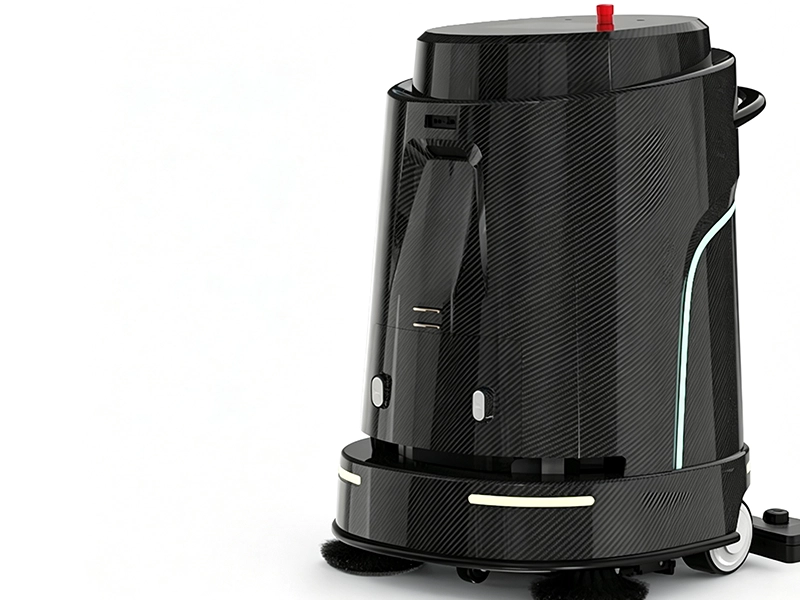
A scrubber robot that completes its route has not necessarily left a floor you can reopen. The brushes turn, the machine reports “cleaning complete,” and the floor still holds a film of water that the squeegee did not lift. Water recovery is a separate job from scrubbing, with its own hardware, its own failure modes, and its own acceptance test. This article is about the recovery end of the machine: how to verify that dirty water actually leaves the floor, how to inspect the parts that do it, and how to decide when a zone is ready to reopen.
Separate Scrubbing from Water Recovery
Scrubbing and recovery use different parts of the machine. The brush or pad contacts the floor to loosen soil. The squeegee and vacuum path collect the loosened water and soil so they can be carried into the recovery tank. A machine can scrub well and recover poorly, or the reverse.
For the broader selection of sweeping, scrubbing and vacuuming tasks, see our commercial cleaning robot cleaning modes overview.
The design intent is visible in the specification sheet. LionsBot's R3 Scrub Pro, for example, lists a 591 mm squeegee width against a 366 mm base scrubbing path. The manufacturer separately advertises a 682 mm cleaning width with the side brush, so verify which area is actually wetted and recovered in that operating mode. The same unit lists a 24-liter recovery tank against a 21-liter clean-water tank, a tank-capacity arrangement that provides nominal space for recovered liquid. The tank figures alone do not establish the actual recovery rate or residual water left on the floor. Those numbers describe one model's configuration, not an industry rule. What matters for your evaluation is whether the squeegee covers the scrub path and whether the recovery capacity is sized for the water the machine applies over a real route.
Treat the two functions as separate test targets. “Coverage complete” answers whether the machine passed over the area. It does not answer whether the water was collected.
Inspect the Squeegee and Vacuum Path
Recovery depends on a short chain of parts, and a weak link degrades all of it.
The squeegee blade is the first contact. Its material, edge condition, and angle against the floor determine how much water it pushes and how much it leaves behind. Many production units use a trailing squeegee that can be replaced without tools; quick-change designs are documented in scrubber patents, which is useful because blade replacement is a recurring maintenance task rather than a one-time adjustment.
Behind the blade, the vacuum path runs through a squeegee hose, a vacuum fan or motor, seals, and the recovery tank. A blocked hose, a worn fan seal, a full tank float, or a cracked gasket all interrupt recovery even when the blade is new. The recovery tank itself has an inlet and often a float or sensor that stops suction when the tank is full, which is a recovery protection rather than a cleaning feature.
Tank handling also affects unattended cleaning infrastructure, a separate question from water recovered on the floor.
Build an inspection that walks the whole chain, not just the blade. Blade edge and angle, squeegee hose for blockages and kinks, fan intake, tank seals and float, and tank level. Record the state of each item before and after a run. A drop in recovery that appears with a healthy blade usually points downstream.
Test Turns, Joints, and Uneven Zones
This is where “the machine completed its route” and “the floor is ready to reopen” come apart most visibly. Water is most likely to be left behind where the machine changes direction or where the floor changes character, so these are the areas worth turning into fixed checkpoints.
During turns, actual recovery depends on squeegee geometry, articulation, turning radius, contact, and speed; a particular model may leave water outside its effective collection path. At floor joints, expansion gaps, and grout lines, the blade can lose contact briefly. On uneven or sloped surfaces, the blade may lift on one side. Around drains, thresholds, and mats, the geometry changes faster than the blade can respond.
Mark these locations on the site plan and test them specifically. Run the machine through a turn at its normal operating speed, then check the inside of the curve for residual water. Pass over a joint and look on both sides of it. Observe the bottom of a gentle slope. The factory may not publish quantitative residual-water figures for turns and joints; when that data is missing, the test belongs on your floor with your machine.
Check Foam, Debris, and Wear
Recovery performance changes with what the machine is picking up and how worn the parts are.
Foam is a common cause of recovery problems, because a foam layer can reach the tank inlet and trigger a float or reduce effective capacity before the tank is actually full. Debris such as wrappers, leaves, and hair can block the squeegee hose or the tank inlet screen. Both conditions are related to operation and maintenance rather than to the cleaning chemical itself, which is a separate topic.
Wear is gradual and easy to miss. A blade that looks acceptable can have a rounded or nicked edge that lets water pass. Fan performance can decline as seals age. A maintenance record that logs blade condition, hose condition, and tank inlet state at each service interval will surface these trends before they become visible as wet floors.
Confirm allowed operating conditions with the manufacturer before you attribute a recovery problem to foam or debris, and record what you find. Do not assume a machine can handle a given foam level or debris type without checking the supplier's stated limits.
Define Inspection and Rework Criteria
Whether a floor is ready to reopen is a site standard, not a robot feature. The robot can help you apply that standard consistently, but it cannot define it for you.
Set the acceptance criteria with the people responsible for floor safety and cleaning quality. Common criteria include no visible standing water, no continuous wet streak along the route, and dry-to-touch at the locations where people walk first, such as entrances and main traffic lanes. Some sites will require a drying period or a secondary pass. Others will accept a damp surface that dries quickly.
Once the criteria exist, decide who performs the check, what tool they use, and what record they keep. A rework rule matters as much as the pass rule: if a zone fails, is the response a second pass, a manual touch-up, or a delay before reopening? This article cannot tell you that any floor is safe to reopen on a fixed schedule, and no machine can guarantee a slip-free surface. The criteria and the rework rule have to come from your site's safety and cleaning standards, then be written down so the robot's output is judged the same way every time.
Compare Recovery Evidence Across Models
When you compare candidate scrubbers, compare them under matched conditions. Recovery results depend heavily on the area tested, the amount and type of water on the floor, and the condition of the consumables, so a single clean-lap demonstration on a dry floor tells you little.
Fair comparison means the same route, the same floor type, and the same starting condition for each machine. The floor should carry a representative load of dirty water, not a fresh, uniform film. The squeegee blades on each machine should be in comparable condition, because a new blade on one unit and a worn blade on another will dominate the result. Even the tank level should be comparable, since a nearly full recovery tank can behave differently from an empty one.
Record what you actually observed: residual water at turns, joints, and slopes; visible streaks; and the state of the recovery tank. Ask each supplier for their own recovery test conditions so you can judge whether their evidence applies to your site. Where a supplier publishes recovery data, note the test setup; where none is published, treat the on-site comparison as your primary evidence.
Have a route with turns, joints or wet streaks that you need to evaluate? Share the floor zones, your observed residual-water pattern, current blade and tank conditions, and any candidate machine specifications. AIsirRobot can organize these inputs into a preliminary comparison and a list of questions for the manufacturer through application assessment.
Share on Social:


Contact Us
In This Article
Robot Scrubber Water Recovery: Squeegees, Vacuum Paths, and Residual Water
Oct 12, 2026
Robotic Aluminum MIG Welding: Wire Feeding, Surface Preparation, and Process Qualification
Oct 12, 2026
Central Vacuum Pump vs On-Tool Ejector: Choosing the Vacuum Source for Robotic Picking
Oct 11, 2026
AMR Tugger Tow Capacity: Drawbar Pull, Cart Resistance, and Starting Loads
Oct 11, 2026