

 Contact Us


 Home /
Robotic Floor-Care Compatibility: Pads, Surface Finishes, and Flooring Warranty Evidence
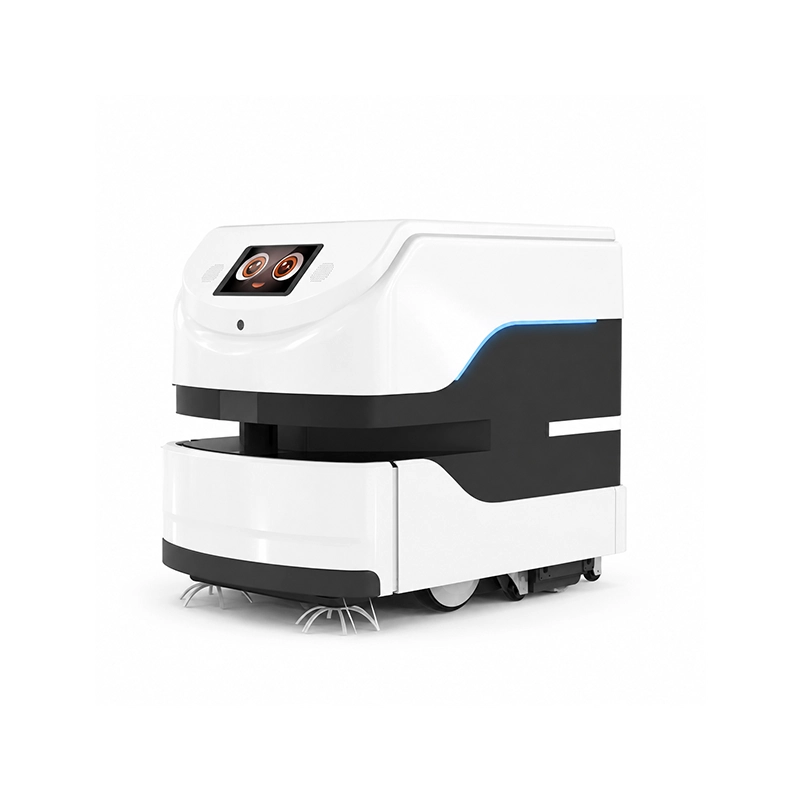
Robotic Floor-Care Compatibility: Pads, Surface Finishes, and Flooring Warranty Evidence
Oct 14, 2026

Robotic Welding Torch Servicing: Nozzle Cleaning, Wire Cutting, and TCP Drift
Oct 14, 2026

Food-Contact Robot Grippers: Cleanability, Material Evidence, and Changeover Design
Oct 14, 2026

AMRs for Cross-Docking: Shipment Sorting, Cut-Off Windows, and Misroute Recovery
Oct 14, 2026
A cleaning robot and a floor are a mechanical couple. The robot's brushes and pads apply force, abrasion, and motion to a surface, and that surface is not just "floor." It is a finished system: a substrate, a finish, a coating, perhaps a sealer, with joints and repairs, and it may come with a manufacturer's care instructions and a warranty that says what the surface may and may not be subjected to. Ask only whether the cleaning chemical is suitable and you have answered the easy question and skipped the one that produces costly damage.
This article is about the mechanical side of that couple. It is written for the buyer, the facility engineer, and the flooring maintainer who have to decide whether a specific robot-and-pad combination is acceptable on a specific floor, and it works through: identifying the installed surface system, separating chemical from mechanical compatibility, reading the flooring care and warranty instructions, running a representative trial, tracking changes over time, and documenting approved combinations. The chemical question belongs to a separate discussion; this article stays on abrasion, brushes, contact pressure, and wheels.
Identify the Installed Surface System
"Do we have stone or vinyl?" is not enough. The surface has to be described as a system.
Start with the exposed floor-covering material: natural stone such as marble or granite, a resilient covering such as vinyl or linoleum, tile, rubber, carpet tile, or poured resin. Record the supporting substrate separately. Each behaves differently under mechanical action; some are hard and brittle, some are resilient and can be scuffed, some are fibrous and can be fuzzed.
The finish is what the substrate is treated with. Natural stone is often protected and polished, sometimes with a crystallized or ground finish. Resilient floors have factory finishes and may have site-applied dressings. The finish is the layer the cleaning tool actually contacts, and it is often the most sensitive part of the system.
Add the details that determine behavior: the joints between tiles or planks, which can catch a brush or a wheel; the coating's age and condition, since a worn finish is more vulnerable than a fresh one; and the history of repairs, since patched areas may behave differently from the original surface.
Record all of this for each distinct floor area before sourcing anything. Different areas of the same building may need different pad and brush specifications, and one flat specification across a mixed building is a recipe for damaging the most sensitive floor.
Separate Chemical and Mechanical Compatibility
The chemical and the mechanical questions are related but distinct, and mixing them up leads to the wrong evidence.
Chemical compatibility asks whether the cleaning solution, at its concentration, damages the finish or the substrate. That is a question about the detergent, the finish chemistry, and the exposure, and it belongs to the chemical discussion, not this one.
Mechanical compatibility asks whether the brush or pad, at the robot's contact pressure and rotation, abrades, scuffs, or otherwise physically alters the surface. This is about the tool's abrasive action, the pad's material and grade, the brush's bristle type and stiffness, the downward force, the contact time, and the wheel material that traverses the floor.
A floor can pass the chemical test and fail the mechanical one. A finish that tolerates the detergent perfectly well can still be dulled by a too-abrasive pad, scored by a stiff brush, or marked by hard wheels. And a floor can pass the mechanical test and fail the chemical one. Both have to be satisfied, and each needs its own evidence. This article owns the mechanical side and deliberately does not restate chemical dosage or compatibility, which are covered elsewhere.
Read Flooring Care and Warranty Instructions
Collect both the installed flooring manufacturer's maintenance instructions and the actual warranty terms. Recommended cleaning methods and contractual coverage are not identical documents, and damage linked to an incompatible method may create a warranty dispute.
Read the method, pad specification, machine type, finish treatment and exclusions together. For example, Forbo's UK Marmoleum care guide, issued September 2022, identifies Topshield pro as a factory finish that should remain in place. It specifies a 3M red pad or equivalent for defined tasks and excludes brown or black pads on Marmoleum. The guide also warns that pad colour codes vary by manufacturer and country. A colour name alone is therefore an incomplete purchase specification. These are named product instructions, not approval for every robot or finish.
Obtain the documents for the installed product and the applicable purchase date and market. Forbo's US Marmoleum with Topshield pro commercial warranty, v1.30 dated October 2024, ties care requirements to the published guidelines in effect at original purchase and lists exclusions for improper floor care and specified damage. Use this as a reason to preserve the applicable document version; a US warranty example does not establish coverage in China or another market. Where the proposed method is unclear, send the exact machine, pad and settings to the flooring supplier for written clarification.
Where the care instructions name an approved pad or brush type, the robot specification should match it. Exclude a prohibited method from the proposed cleaning program unless the flooring manufacturer supplies an applicable written revision.
Regional and historical documents also need version control. The Chinese Marmoleum cleaning guide published by Forbo Flooring (Shanghai), marked SH01/07/2010, separates ordinary premises from commercial settings with professional equipment and gives different cleaning workflows. Its commercial workflow identifies a red cleaning pad. This is historical mainland guidance for that flooring family, not a current robot qualification. Obtain the instruction version for the installed finish rather than transferring an old Chinese workflow or a newer overseas one to it.
Run a Small Representative Trial
Use a pad selection table to shortlist documented options, then validate the proposed combination on the installed finish. A representative trial adds site evidence that a category table cannot provide.
Run it on a representative area, not the most convenient one. An area that has the same finish, the same age, and the same traffic as the rest of the floor is representative; a freshly finished sample patch in a back room is not. Get the area's owner, the flooring maintainer, and the cleaning operator to agree in advance what "acceptable" means: no visible dulling, no gloss change, no scratches, no change at the joints, no lifting at the edges. Write the criteria down before the trial, so the result is judged against a standard rather than a feeling.
Then run the robot with the proposed pad and brush, for a realistic duration and number of passes, and inspect the result under good lighting. Photograph the area before and after, and note the conditions. A small, controlled trial limits the area exposed before rollout and tests the actual combination on the installed finish. Run it within the documented care limits; a successful trial does not override a prohibited method.
Track Changes Beyond One Pass
A single pass can reveal immediate damage, while repeated operation is needed to assess developing wear. Choose the follow-up period from the intended cleaning frequency and the finish's condition.
Look for progressive dulling, brush wear at vulnerable edges and wheel marks associated with retained grit. Record pass count, route, pad condition and floor condition alongside each inspection so that a developing change can be traced to the tested process.
So the plan should include a follow-up check, at a defined interval, on the trial area, with the same criteria as the initial trial. The check should look for the slow changes: gloss loss, film build-up, joint wear, edge lifting, color shift. This is where the maintenance program earns trust, because it can reveal developing damage before the same process is repeated across the building. It is also where the buyer should resist claiming, on the basis of one good pass, that the combination is permanently safe. One pass may rule out obvious immediate changes under that test, but it cannot establish longer-term compatibility. Repeated checks over a defined interval provide the next level of evidence, not a blanket warranty.
Document Approved Machine-Pad-Floor Combinations
The end product is a versioned record, not a general statement.
For each floor area, record the approved combination: the specific robot model, the specific pad or brush specification, the contact pressure and any settings, the approved cleaning method, the trial result, and the follow-up check. Include the flooring product and its care documents. Date and version the record. Reassess changes that affect floor contact or the approved method, including a different pad specification, pressure setting, route behaviour or refinishing. A software update that does not affect those conditions should be recorded and screened for impact rather than automatically treated as a new floor-care approval.
The reason to insist on a specific record is that there is no such thing as a pad that suits every floor. A grade that is correct for one finish can be harmful to another, and a general recommendation spreads the one across the other. A versioned, per-area record keeps each floor paired with the combination that was actually verified for it, and it gives the next person who inherits the building the reasoning, not just the routine.
Build that record and the floor-care decision stops being a guess that gets tested at the floor's expense.
Match Each Installed Floor to Documented Care Limits
Send the flooring model and finish, manufacturer care instructions and warranty terms, candidate robot/pad combinations and any trial observations. AIsirRobot can coordinate available product documentation and identify evidence gaps by area, rather than treating a generic pad recommendation as warranty approval. Review floor-care document compatibility.
Share on Social:


- PREV: Robotic Welding Torch Servicing: Nozzle Cleaning, Wire Cutting, and TCP Drift
- NEXT: Not NEXT
Contact Us
In This Article
Robotic Floor-Care Compatibility: Pads, Surface Finishes, and Flooring Warranty Evidence
Oct 14, 2026
Robotic Welding Torch Servicing: Nozzle Cleaning, Wire Cutting, and TCP Drift
Oct 14, 2026
Food-Contact Robot Grippers: Cleanability, Material Evidence, and Changeover Design
Oct 14, 2026
AMRs for Cross-Docking: Shipment Sorting, Cut-Off Windows, and Misroute Recovery
Oct 14, 2026