

 Contact Us


 Home /
Choosing a Robot Gripper for Bags That Change Shape
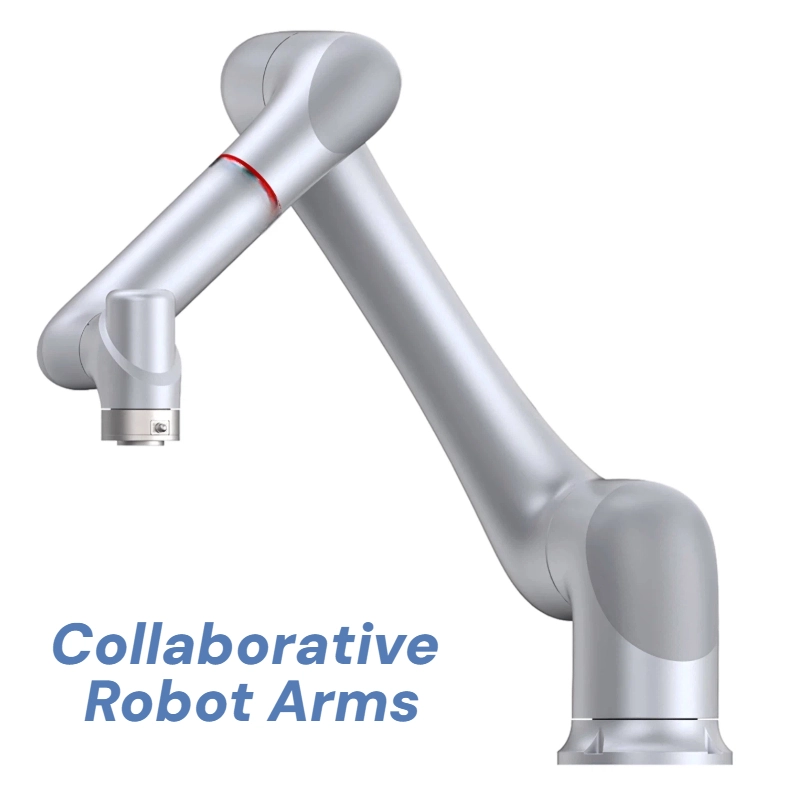
Choosing a Robot Gripper for Bags That Change Shape
Oct 17, 2026
Multilingual Guide Robots: Translation Quality, Place Names, and Content Ownership
Oct 15, 2026
Proving Cleaning Quality Beyond Coverage Maps: Soil Removal, Inspection, and Rework
Oct 15, 2026
Robot Conveyor Tracking: Encoders, Trigger Timing, and Moving Coordinate Frames
Oct 15, 2026
Start the comparison with a filled bag on the conveyor and end it with the gripper out of the way. The release geometry belongs in the selection decision from the start. The bag that arrives at the robot is a changing object: it takes one shape on the belt, another while it hangs from the tool, and a third once the pallet supports it. What has to be recorded first is not a single number but the bag family, the seam position, and the actual fill condition of the bags the line will run.
The filled bag changes between pickup and release
A bag is a flexible container, so its geometry is a function of what is inside it, how full it is, how it was sealed, and what is touching it. Any selection that treats the bag as a rigid block will miss the conditions that most often decide whether a concept works on the line.
Describe the bag in three states before comparing tools:
- On the conveyor. How the bag is presented, whether it stands or lies, which face is up, and where the seal sits relative to the incoming pose. This is the state the tool first meets.
- Suspended during the transfer. How the fill settles and the panel bulges once the bag is off the belt and hanging from the tool. The load shifts into the tool contact and supporting bag panels; check seam loading and changes in the bag footprint during the move.
- Supported on the pallet. How the bag flattens, spreads, or folds once a layer below it carries the weight, and how much the bag can shift as the next layer is placed.
The inputs to collect are the bag material and any porosity data, the fill medium, the permitted fill range, the seam orientation, and the allowed incoming pose. Record these as data to be gathered, not as assumed values. A porosity figure that applies to one bag family does not transfer to another, and a fill range quoted as a single nominal number hides the lower and upper ends that the tool will actually meet.
Follow the load path through the gripping concepts
Support from below, side clamping, and vacuum are three different physical paths from the tool to the bag. They differ in where the load enters the bag, what they require from the bag's surface, and which part of the bag they put at risk. Comparing them under the same load question is more useful than reading them as a feature list.
The table below fixes what each concept must be checked against. It is a method for narrowing candidates, not a statement of measured performance for any tool.
| Concept | Contact condition to verify | Release check required here | Conditional decision |
|---|---|---|---|
| Under-support / support fingers | Whether the conveyor admits the fingers; whether the bag base has a load-bearing area | After set-down, whether the fingers withdraw without disturbing this bag or the neighbor | Keep as an unproven candidate when entry or withdrawal path is undefined |
| Side clamping | Permitted contact zone, limits on bag and seam compression, and pose variation | After release, whether bag shape and landing point stay within the process allowance | Obtain bag limits and sample-bag behavior before advancing |
| Vacuum | Bag material, surface wrinkling, available contact area, and the tool maker's own application conditions | Whether placement support and vacuum release sequence match | Do not let a static lift stand in for the full transfer motion |
Under-support that must enter and withdraw
Under-support carries the bag from a surface beneath it, so it needs a path in under the bag and a path out once the bag is set down. The questions are geometric: can the fingers reach the bag base on the conveyor without lifting or dragging it, and is there enough of a stable base to carry the load? The withdrawal check matters as much as entry. If the fingers cannot clear the bag and the neighboring layer, the concept has not demonstrated an undisturbed release even after a clean lift.
Side clamping that must preserve the bag and seam
Side clamping presses on the bag panels. A hybrid tool is another candidate only when its added contact path solves a defined problem for the bag family. The limits here are the permitted contact zone and how much the bag and seam can be compressed without losing shape or integrity. Because clamping acts through the bag wall, the seam position relative to the jaws becomes a hard input rather than a detail. A clamp that holds a bag cleanly at nominal fill can crush or slip at the low-fill end, so the permitted fill range and the seam orientation both have to be recorded before a clamp is judged.
Vacuum contact that must survive the bag's changing surface
Vacuum suitability depends on the bag surface, leakage, available contact area and the complete vacuum system. Porosity or flexibility alone does not establish that vacuum pickup is impossible: Schmalz describes needle grippers for materials that are difficult to grip using vacuum, not a universal exclusion of vacuum. For a filled bag, examine wrinkles, panel movement and changing contact during the transfer, and obtain the proposed tool maker's material and operating limits. A static lift is only one part of that evidence. Needle penetration must not be assumed acceptable for a sealed bag or its contents.
Compare the wider gripper selection principles when a bag application needs a concept beyond support, side clamping or vacuum.
The release can rule out a good pickup
A concept that lifts well can still fail at the placement end, so the release belongs in the same decision. Draw the relative positions of the support fingers, jaws, or cups against the conveyor, the pallet, and the adjacent bag. Then look at three things that are easy to skip during the lift and hard to ignore at set-down.
- Contact transfer. Whether the bag can be handed from the tool to the pallet surface without the tool holding tension against the layer below.
- Support withdrawal. Whether the fingers or jaws can leave the bag and clear the next bag's space without dragging either one.
- Bag rebound. Whether the bag settles, spreads, or folds once released, and whether that movement stays inside the placement allowance.
Finished-stack stability, interlayers, wrapping and upstream conveyor constraints belong in palletizing system selection. The decision here remains the single bag's contact and release geometry.
Select trial bags from the permitted production range
The comparison becomes executable when it turns into a defined set of sample bags. Cover the range the line is allowed to run rather than the easiest bag on the shelf: a nominal-fill bag, a bag at the permitted low end, a bag at the permitted high end, and a bag presented at the allowed incoming skew. Label each sample with its physical condition and the version it came from, so a result can be traced later.
Record the same fields for every bag, without fixing a test count. The card holds: Bag family / Actual fill condition / Seam orientation / Incoming pose / Tool concept / Pickup observation / In-motion envelope / Seam and bag inspection / Release interference / Decision and evidence ID.
The four starting rows are the nominal, lower-limit, upper-limit, and skewed bags. The result column reads "pending on-site trial." Marking a box as passed before the trial would misrepresent the method as a completed test.
| Sample | Fill condition | Seam orientation | Incoming pose | Tool concept under test | Result |
|---|---|---|---|---|---|
| S-1 | Nominal | As specified | Aligned | To be assigned | Pending on-site trial |
| S-2 | Permitted lower limit | As specified | Aligned | To be assigned | Pending on-site trial |
| S-3 | Permitted upper limit | As specified | Aligned | To be assigned | Pending on-site trial |
| S-4 | Nominal | As specified | Allowed skew | To be assigned | Pending on-site trial |
Damaged bags outside the permitted range are handled only under an approved exception procedure and are not part of the standard comparison. Ordinary bag handling is not a food-contact qualification, so any material argument stays limited to the surfaces the tool actually touches.
Carry a candidate and its unresolved conditions into review
The output of this work is a candidate decision plus the missing inputs behind it. Sort each concept into one of three states and name what stands in the way: advance to a sample trial, hold pending evidence, or exclude.
- Advance. The contact condition, entry and withdrawal path, and release behavior are all defined by the tool maker or by the sample card, and the bag family is inside the permitted range.
- Hold. One or more required inputs are missing, for example an undefined withdrawal path or an unconfirmed contact limit, so the concept cannot be judged yet.
- Exclude. A defined condition rules the concept out for this bag family, such as a proposed vacuum system that cannot establish its required holding condition on the permitted bag surface.
Take the bag-family record, fill range, seam orientation and a pickup-to-release sketch into an application assessment. Those inputs let AIsirRobot organize the candidate conditions and the questions to send to the tooling supplier. Keep each concept marked advance, hold or exclude; the sample trial still has to resolve the contact and release behavior for the actual bags.
Share on Social:


Contact Us
In This Article
Choosing a Robot Gripper for Bags That Change Shape
Oct 17, 2026
Multilingual Guide Robots: Translation Quality, Place Names, and Content Ownership
Oct 15, 2026
Proving Cleaning Quality Beyond Coverage Maps: Soil Removal, Inspection, and Rework
Oct 15, 2026
Robot Conveyor Tracking: Encoders, Trigger Timing, and Moving Coordinate Frames
Oct 15, 2026