Contact Us



Humanoid Robot Platform Integration for Research, Education and Validated Service Tasks
AIsirRobot helps teams evaluate platform fit, select configurations, plan secondary development and validate target workflows through task-specific assessment and PoC testing. The humanoid robot platform described on this page offers 21 degrees of freedom, integrated 3D LiDAR and depth-camera perception, and an open SDK for custom development. Mobility, manipulation and runtime performance must be confirmed for the selected configuration and operating environment before deployment.
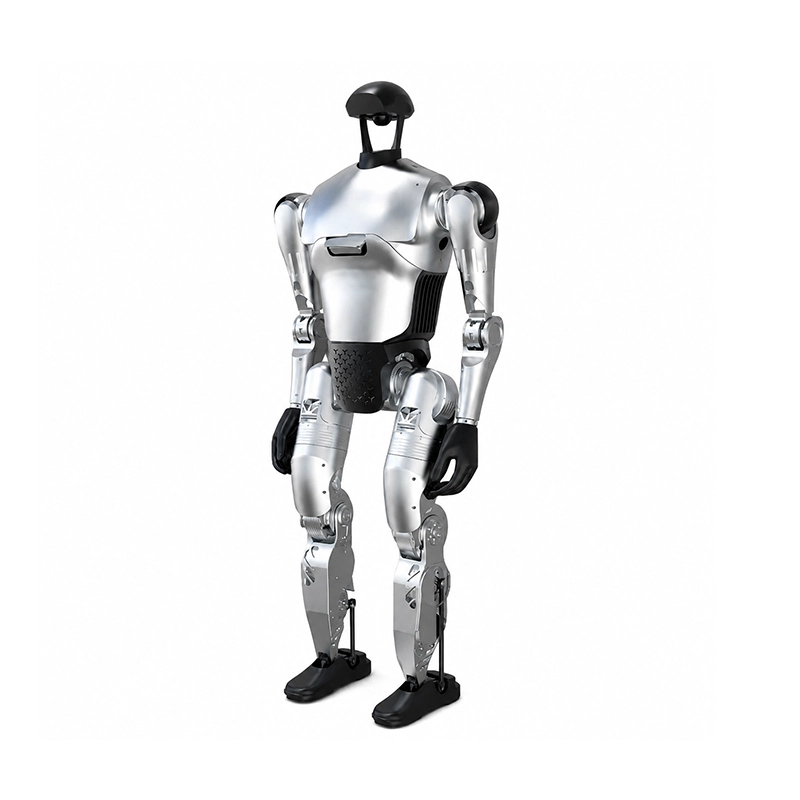



What This Humanoid Robot Platform Is
The platform offered and integrated by AIsirRobot is a bipedal humanoid robot with the following configuration:
- 21 degrees of freedom(joint actuators), with optional wrist joints and multi-finger dexterous hand available subject to configuration selection
- Onboard perception: LIVOX MID-360 3D LiDAR and Intel RealSense D435i depth camera
- Voice interaction: stereo audio output, 5 W speaker, AI voice recognition via Wi-Fi
- Open SDK and open-source training frameworkfor secondary development
- Companion teaching materials and trainingincluded with the platform
AIsirRobot is not the manufacturer of this robot. AIsirRobot’s role is to help buyers evaluate whether this platform fits their task requirements, select the right configuration, coordinate integration and development, and manage delivery, training and warranty support. The robot’s manufacturer-stated specifications are listed in the configuration table below. Actual performance in a specific application depends on task load, environment conditions, configuration options and validation results.
 Photo
Photo
When a Humanoid Form Factor Makes Sense
A humanoid robot is not the right answer for every automation problem. This platform is worth evaluating when your use case involves:
- Human-scale environments where doorways, corridors, staircases and workstations are designed for human dimensions and cannot be easily restructured
- Multi-step tasks that combine mobility, perception, interaction and manipulation within a single workflow
- Variable or evolving task requirements where a fixed single-purpose machine would require frequent reconfiguration
- Research and education settings where a full-stack humanoid platform with open SDK access accelerates algorithm development and student training
A humanoid form factor offers the potential advantage of reusing existing human-scale facilities. This does not mean the environment needs zero modification — floor surfaces, charging arrangements, safety zones, tool design and network infrastructure may still require adjustment.
When the task is fixed, high-cycle and path-standardized — such as continuous palletizing or single-route transport — a dedicated robotic arm, AMR or AGV will typically deliver a faster return on investment at lower complexity. AIsirRobot can help you assess whether this platform fits your scenario or whether a dedicated robot is the more practical choice.
Validated and Candidate Application Scenarios
The following scenarios are based on the platform’s hardware configuration. Each scenario requires task-specific validation before deployment.
Research and Education
Task: Algorithm development, motion control research, robotics curriculum, student training and competition preparation.
What the platform contributes: Open-source training framework, open SDK, companion teaching materials and competition platform access provide a full-stack development environment for robotics labs and university programs.
Prerequisites: Task scope, curriculum integration, SDK development environment and safety supervision must be defined by the institution.
Validation metrics: Development environment setup time, SDK build success, student task completion rate, experiment reproducibility.
Limits: Lab space, power, supervision and safety zone requirements must be assessed by the institution.
Maturity: Primary intended use case. Configuration and development support are included in the standard package.
Public Service Interaction and Demonstration
Task: Reception, guidance, voice-based interaction and demonstration in public spaces.
What the platform contributes: Bipedal mobility, human-scale stature (143 cm) and voice interaction (stereo, 5 W speaker) enable standing-position interaction and guided movement in public areas.
Prerequisites: Site layout, traffic patterns, ambient noise levels, safety zone requirements and language support must be assessed before deployment.
Validation metrics: Interaction success rate, voice recognition accuracy in target noise conditions, navigation reliability in the deployment space.
Limits: Public deployment requires site-specific safety assessment, supervision model and potentially regulatory compliance depending on the region and venue.
Maturity: Candidate use case. Requires site assessment and PoC validation before commitment.
Interactive Learning and Guided Demonstration
Task: Voice-controlled interactive learning, AI-assisted demonstration and guided content delivery.
What the platform contributes: Voice control, AI voice recognition and Wi-Fi connectivity support interactive learning and guided demonstration scenarios.
Prerequisites: Content scope, user interaction model, language support and data privacy requirements must be evaluated.
Validation metrics: Voice command recognition rate, content delivery accuracy, user interaction completion rate.
Limits: This scenario does not imply medical, care or therapeutic applications. Content system, language model and data handling must be configured for the target user group and regulatory environment.
Maturity: Candidate use case. Content and interaction model require configuration and validation.
Industrial Delivery and Order Picking (PoC Candidate)
Task: Delivery and order picking in selected warehouse or facility settings.
Status: This is a PoC candidate, not a validated application. The platform’s mobility, perception and manipulation capabilities may be applicable to delivery and picking tasks, but the following must be confirmed before any commitment:
- Payload capacity has not been specified — object weight limits must be validated through task-specific assessment
- End-effector configuration (gripper type, reach, grasp range) must be selected and tested against target objects
- Picking positions, cycle targets and success rates must be measured in a controlled PoC
- System interfaces (WMS, conveyor, safety interlock) must be defined and tested
AIsirRobot can help structure a PoC plan for this scenario. Do not assume the platform supports industrial picking without validation.
Software, SDK and System Integration
The platform provides an open SDK and open-source training framework for secondary development. The following integration layers should be considered when planning a deployment:
Robot Platform Layer
- Onboard sensors: LIVOX MID-360 3D LiDAR, Intel RealSense D435i depth camera
- Motion control: 21 joint actuators with high-speed, high-torque outer-rotor torque motors
- End-effector: Standard configuration does not include a gripper or dexterous hand; optional multi-finger dexterous hand available subject to configuration selection
- Onboard computing: Handles sensor processing, motion planning and voice interaction
Development Layer
- SDK: Available for secondary development; supported operating systems, programming languages, ROS version, documentation and examples to be confirmed for the target development environment
- Open-source training framework: Supports algorithm development and motion control research
- Simulation: Availability and compatibility to be confirmed
- Logging and version control: To be confirmed based on development workflow
Task Layer
- Task orchestration: Custom workflows built via SDK
- Teleoperation and supervision: Operation controller included in standard package; remote supervision model to be defined
- Exception recovery: Recovery procedures to be developed and tested during PoC
- Permissions and data: Access control and data handling to be configured per deployment requirements
Site and Enterprise Systems
- Standard interfaces: Wi-Fi connectivity; specific protocols and APIs to be confirmed
- Custom connectors: Required integrations (e.g., WMS, MES, ERP, access control, elevator, PLC) will be reviewed against the customer’s software environment
- Integration scope: AIsirRobot helps identify required interfaces, distinguish standard capabilities from custom development, and plan integration milestones
PoC and Deployment Process
AIsirRobot follows a structured process to help buyers evaluate the platform and plan deployment. Each stage produces deliverables and a Go/Modify/Stop decision.
| Stage | What Happens | Deliverable | Decision |
| 1. Discovery | AIsirRobot collects task requirements, target objects, environment conditions, cycle targets, system integration needs, safety requirements and deployment details | Requirements matrix documenting the use case, constraints and baseline metrics | Go — proceed to feasibility. Modify — adjust requirements. Stop — platform not suitable. |
| 2. Feasibility Assessment | AIsirRobot reviews requirements against platform configuration, identifies capability gaps, safety risks and interface needs | Feasibility report with configuration recommendation, identified risks and PoC plan | Go — proceed to PoC. Modify — adjust configuration or scope. Stop — gap cannot be closed. |
| 3. PoC (Proof of Concept) | Controlled-environment testing of the target task using the selected configuration. Success rate, cycle time, intervention rate, uptime and stop conditions are measured | PoC report with measured metrics, identified issues and deployment recommendations | Go — proceed to deployment. Modify — adjust configuration, task or environment. Stop — metrics do not meet requirements. |
| 4. Deployment and Integration | Site preparation, system integration, operator training and acceptance testing | Deployed system, training completion record, acceptance report and maintenance plan | Accept — system meets criteria. Modify — address issues and re-test. Reject — does not meet criteria. |
| 5. Support and Maintenance | Warranty handling, configuration support, technical issue resolution and ongoing maintenance | Support plan with response expectations, maintenance schedule and escalation path | — |
After each stage, AIsirRobot and the buyer jointly review the deliverable and decide whether to proceed, adjust or stop. This prevents committing to a full deployment before key risks are resolved.
Safety, Supervision and Risk Assessment
Humanoid robots operating in proximity to people require application-level risk assessment. The platform includes configurable capabilities, but safe deployment depends on the specific task, environment and supervision model.
Safety Considerations for This Platform
The following must be assessed and addressed before deployment:
- Emergency stop and protective stop: Confirm available safety functions and their activation methods for the selected configuration
- Speed limitation and zone control: Define operating speed limits and restricted areas based on site layout and human traffic
- Fall and failure handling: A bipedal robot may lose balance; fall direction, impact area and recovery procedures must be assessed
- Human handover and supervision: Define when human intervention is required, the supervision model (direct observation, remote monitoring, camera) and handover procedures
- Staircase and slope operation: Stair climbing and slope traversal require specific safety measures including barrier assessment, fall protection and speed control
Data and Privacy
- Camera and sensor data: The platform uses a 3D LiDAR and depth camera; data storage, processing location (onboard vs. cloud), retention period and access control must be defined
- Voice interaction: AI voice recognition via Wi-Fi may involve cloud processing; language support, data transmission and local privacy regulations must be evaluated
- Network security: Wi-Fi connectivity requires network configuration, authentication and potentially network segmentation for the robot
Regulatory Compliance
Safety standards, certification requirements and regulatory obligations vary by country and application. AIsirRobot helps identify applicable requirements, but compliance verification is the responsibility of the deploying organization. Do not assume that the platform is certified for a specific region or application without confirmation.
TCO / ROI or Research and Education Value
For Commercial and Service Deployments
The total cost of ownership for a humanoid robot platform includes:
- Platform and accessories: Robot, optional end-effector, batteries, charger and operation controller
- Integration and development: SDK setup, custom workflow development, system interface configuration and testing
- Site preparation: Safety zones, floor preparation, charging infrastructure and network setup
- Training: Operator training, developer onboarding and maintenance training
- Operation and maintenance: Supervision labor, maintenance, spare parts, battery replacement and downtime costs
- PoC and validation: Controlled testing, metric collection and configuration iteration
For example, a facility planning 8-hour daily operation would need to account for at least two battery sets, charging infrastructure, supervision labor during transition periods, scheduled maintenance windows and potential downtime during configuration adjustments. These costs extend well beyond the robot unit price.
Return on investment depends on the specific task baseline, labor cost structure, cycle targets and measured performance from PoC. AIsirRobot does not promise a guaranteed payback period. ROI must be calculated using the customer’s baseline data and PoC results.
For Research and Education Programs
The development value of the platform includes:
- Curriculum coverage: Courses and research directions the platform can support (robotics, perception, motion control, human-robot interaction)
- Development efficiency: SDK access, open-source framework and companion teaching materials reduce setup time for labs and courses
- Experiment reproducibility: Consistent hardware platform enables repeatable experiments and student project continuity
- Maintenance and upgrade: Ongoing maintenance, spare parts and software updates affect long-term program cost
Contact AIsirRobot to discuss your program scope, curriculum integration and platform configuration.
Package, Commercial Terms and Support
Standard Package
| Item | Quantity |
| Robot | 1 |
| Battery | 1 |
| Charger | 1 |
| User manual | 1 |
| Operation controller | 1 |
Optional Configurations
- Wrist joints (additional arm DoF)
- Multi-finger dexterous hand
Optional configurations, availability and pricing depend on project scope and configuration selection. Contact AIsirRobot to confirm available options for your specific requirements.
Commercial Terms
| Parameter | Value | Notes |
| Minimum order quantity | 1 unit | |
| Typical lead time | 35 days | Estimated; confirmed in quotation based on configuration, customization scope, order quantity and destination logistics |
| Warranty | 12 months | Scope, coverage terms, start date and exclusions confirmed in quotation |
How AIsirRobot Supports Buyers
AIsirRobot provides the following support for humanoid robot platform buyers:
- Requirements analysis: Converting your task description into a structured requirements matrix
- Configuration selection: Matching sensor, actuator, end-effector and software options to your task and environment
- Feasibility assessment: Reviewing your use case against platform capabilities before purchase
- PoC planning: Defining test scenarios, success metrics, stop conditions and deliverables
- Integration coordination: Assisting development teams with SDK access, API configuration and external system connectivity
- Training coordination: Coordinating operator and developer training using the companion teaching materials and training program
- Warranty and after-sales handling: 12-month warranty coverage, with ongoing support for configuration questions and technical issues
Support scope and availability vary by project requirements and deployment region.
Configuration and Technical Specifications
FAQS
Who manufactures this humanoid robot platform?
AIsirRobot is not the manufacturer. AIsirRobot offers, configures and integrates the platform for buyers, and provides selection guidance, PoC planning, integration coordination, training and warranty support. The robot’s manufacturer-stated specifications are listed in the configuration table on this page.
What tasks is this humanoid robot suitable for?
The platform is primarily configured for research, education and controlled service-task development. Public service interaction, interactive learning and industrial delivery are candidate use cases that require PoC validation before commitment. Suitability for a specific task depends on object characteristics, environment conditions, cycle requirements, safety considerations and system integration scope.
How long does the battery last?
Manufacturer-stated battery runtime is 2 to 4 hours. Actual runtime varies with task load, movement intensity, sensor usage, configuration and environmental conditions. Battery capacity, charging time and swap method are to be confirmed. For applications requiring extended operation, charging schedules and task cycling should be planned during deployment.
Can the robot climb stairs?
The platform’s manufacturer-stated specifications include stair climbing with a step height of up to 25 cm and a maximum slope angle of 20 degrees. These are manufacturer-stated values; test conditions including step dimensions, tread surface, direction (up/down), speed, payload and safety measures must be confirmed. A site assessment is required before deploying the robot in stair-climbing scenarios.
What sensors does the robot use?
The platform integrates a LIVOX MID-360 3D LiDAR for spatial scanning and an Intel RealSense D435i depth camera for RGB and depth perception. These sensors support environment mapping, obstacle detection and visual navigation. Perception performance in a specific application depends on lighting, surface properties, object characteristics and software configuration.
Can we develop custom applications?
The platform provides an open-source training framework and an open SDK interface for secondary development. Development teams can build custom task workflows, integrate external systems and configure perception and motion behaviors. Supported operating systems, programming languages, ROS version, documentation and license are to be confirmed for the target development environment.
What safety functions are included?
Specific safety functions (emergency stop, protective stop, speed limitation, zone control, fall handling) must be confirmed for the selected configuration. Safe deployment requires application-level risk assessment covering the task, environment, supervision model and human interaction level. The robot’s humanoid form factor does not automatically guarantee safe operation near people without assessment and mitigation.
What must be validated in a PoC?
A PoC should validate: task success rate, cycle time, intervention rate, uptime, safety performance in the target environment, system interface functionality and operator workflow. The PoC plan, metrics and stop conditions are defined jointly by AIsirRobot and the buyer during the feasibility assessment stage.
Can the robot integrate with ROS or enterprise systems?
The platform provides an SDK for secondary development. ROS compatibility, enterprise system interfaces (WMS, MES, ERP, access control) and required custom connectors will be reviewed against the customer’s software environment during the integration planning stage.
When is a dedicated robot better than a humanoid?
When the task is fixed, high-cycle and path-standardized — such as continuous palletizing, single-route transport or repetitive picking — a dedicated robotic arm, AMR or AGV will typically deliver a faster return on investment at lower complexity. AIsirRobot can help assess whether this humanoid platform or a dedicated robot is the more practical choice.
What is included in the standard package?
The standard package includes the robot, one battery, one charger, one user manual and one operation controller. Optional configurations such as wrist joints and multi-finger dexterous hands are available subject to project requirements.
What are the warranty period and lead time?
The platform comes with a 12-month warranty. Typical lead time is 35 days. Both are estimated values and will be confirmed in the quotation based on configuration, customization scope, order quantity and destination logistics.
How do we start the evaluation process?
Document your task requirements, target objects, environment conditions, cycle targets, system integration needs, safety requirements and deployment details. Submit these to AIsirRobot to begin the Discovery stage and receive a feasibility assessment.
Request a Quote or Technical Evaluation
Tell us what you need the robot to do. Even if some technical details are not yet confirmed, our team can help evaluate suitable options.
- Application: Briefly describe the task, workflow, or problem you want the robot to handle.
- Key requirements: Share any known payload, reach, capacity, runtime, accuracy, speed, or other performance needs.
- Site & integration: Tell us about the operating environment, layout, existing equipment, or software interfaces if relevant.
- Quantity & timeline: Let us know the expected quantity, destination country, and target delivery or deployment time.