Contact Us



AIsirRobot : 300 kg Heavy-Duty Autonomous Mobile Robot for Industrial Material Transport
A 300 kg Heavy-Duty Autonomous Mobile Robot (AMR) designed for intelligent industrial material transport, featuring LiDAR SLAM + stereo vision navigation, low-profile lifting, and flexible deployment across factories, warehouses, and logistics centers.



What Is a Heavy-Duty Mobile Robot?
A Heavy-Duty Mobile Robot is an autonomous mobile robot (AMR) designed to transport industrial payloads safely and efficiently in manufacturing, warehousing and logistics environments. Unlike traditional automated guided vehicles (AGVs) that follow fixed paths, heavy-duty AMRs use SLAM navigation, LiDAR and vision systems to map their surroundings, plan routes dynamically and avoid obstacles in real time. Depending on the application, payload capacities typically range from several hundred kilograms to tens of tons.
The AIsirRobot 300 kg Heavy-Duty Autonomous Mobile Robot is a 300 kg payload heavy-duty AMR equipped with a low-profile lift platform, LiDAR SLAM + stereo vision fusion navigation, and fully on-board path planning. It is designed for continuous material transport in factories, warehouses and logistics hubs — and is available as a standalone robot or as part of an integrated automation solution.
 Photo
Photo
Core Capabilities
Dynamic Route Replanning
LiDAR SLAM and stereo vision fusion enable real-time mapping and millisecond-level route adjustment, allowing continuous operation in dynamic industrial environments.
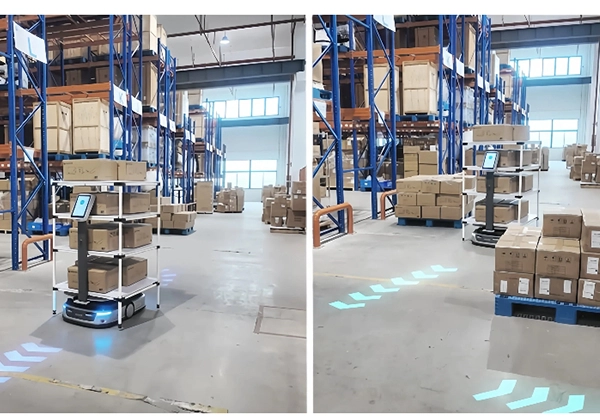
6-Hour Runtime & Fast Charging
Supports up to 6 hours of full-load operation with 3.5-hour fast charging. Automatic charging, manual charging and battery swapping options improve uptime.
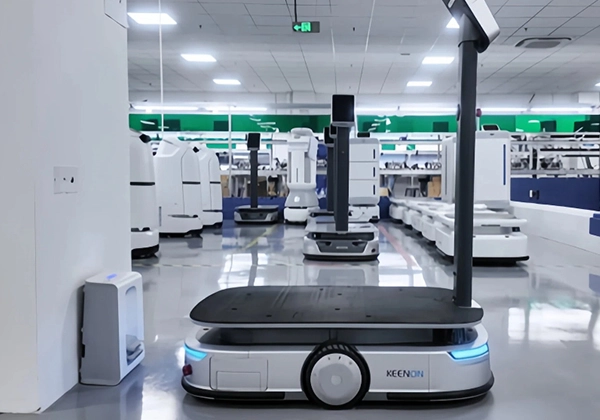
Offline Autonomous Operation
On-board path planning enables independent navigation without central controllers, Wi-Fi or 5G, ensuring reliable operation in complex facilities.
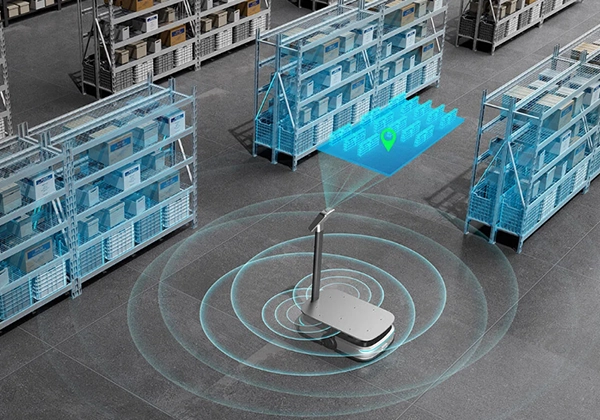
One-Day Deployment with VSLAM
VSLAM technology enables rapid deployment without magnetic tapes, QR codes or reflectors, reducing installation time and infrastructure changes.
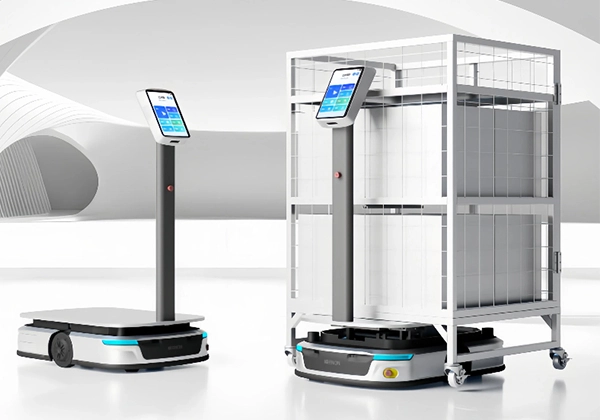
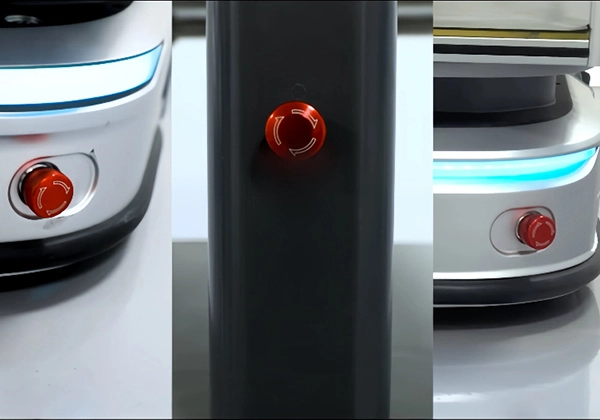
360° Safety Protection
3D vision, dual LiDAR and triple emergency-stop systems provide multi-layer safety protection for reliable human-robot collaboration.
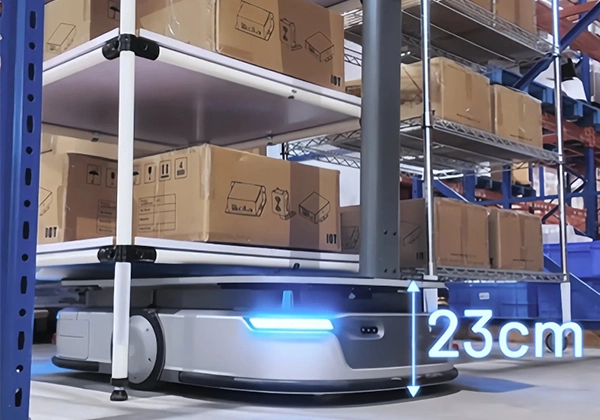
Low-Profile Lift Platform
The 230 mm chassis fits under standard 1,200 × 1,200 mm shelves and lifts up to 300 kg with flexible delivery modes:
Transport – Zone-to-zone material transfer
Cycle – Repeated route delivery
Direct – Point-to-point transport
Multi-point – Multiple station delivery
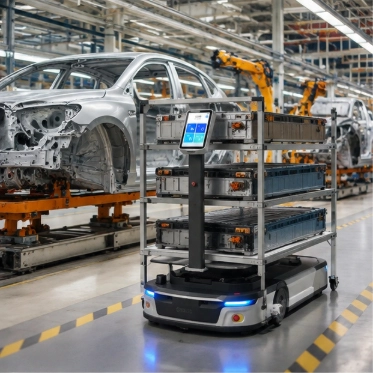
Why Work With AIsirRobot
A robot alone does not solve material flow challenges. AIsirRobot provides complete AMR solutions — from platform selection and system integration to deployment and lifecycle support.
Application Industries
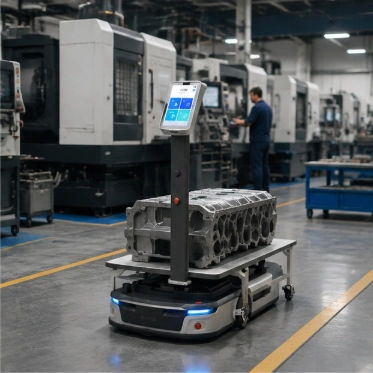
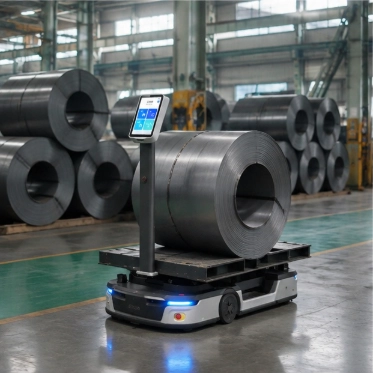
Technical Specifications
FAQS
Q: How does the 300 kg Heavy-Duty Autonomous Mobile Robot handle slopes, uneven floors or floor joints?
The dual LiDAR and 3D vision system continuously maps floor conditions during operation. Minor surface irregularities and standard warehouse floor joints are handled autonomously. For environments with significant ramps or damaged flooring, a site assessment is recommended to confirm suitability before deployment.
Q: Can multiple 300 kg Heavy-Duty Autonomous Mobile Robot units operate together as a fleet?
Yes. While each 300 kg Heavy-Duty Autonomous Mobile Robot operates independently on-board, a fleet management system can be added to coordinate multiple units — managing traffic control, task assignment and charging schedules across the fleet. Individual robots continue to function even if the fleet management server goes offline.
Q: What happens if the robot encounters an obstacle it cannot bypass?
The 300 kg Heavy-Duty Autonomous Mobile Robot first attempts to replan its route around the obstacle. If no viable path is found, the robot stops safely and waits for the obstacle to clear or for an operator to manually guide it past the blockage. The triple emergency-stop system provides an additional layer of fail-safe protection.
Q: Is the 300 kg Heavy-Duty Autonomous Mobile Robot compatible with our existing WMS, MES or ERP system?
The 300 kg Heavy-Duty Autonomous Mobile Robot can be integrated with WMS, MES, ERP and PLC systems as part of a complete automation solution. Integration scope depends on your existing software architecture and the tasks you need the robot to perform. Share your system environment and integration requirements during consultation for a specific compatibility assessment.
Request a Quote or Technical Evaluation
Tell us what you need the robot to do. Even if some technical details are not yet confirmed, our team can help evaluate suitable options.
- Application: Briefly describe the task, workflow, or problem you want the robot to handle.
- Key requirements: Share any known payload, reach, capacity, runtime, accuracy, speed, or other performance needs.
- Site & integration: Tell us about the operating environment, layout, existing equipment, or software interfaces if relevant.
- Quantity & timeline: Let us know the expected quantity, destination country, and target delivery or deployment time.