Contact Us



Accelerate Mobile Robot Development with an Open, ROS-Compatible Chassis Platform
Building a Mobile Robot chassis from scratch takes months—designing the drive system, integrating navigation algorithms, testing sensor fusion, and validating safety functions. The AIsirRobot mobile robot chassis eliminates that foundation work. With a 300 kg payload capacity, dual-laser SLAM navigation, autonomous obstacle avoidance, and an open SDK platform, it provides a validated, customizable AMR base that lets developers and integrators focus on application logic instead of reinventing the mobile platform.



What Is a Mobile Robot Chassis?
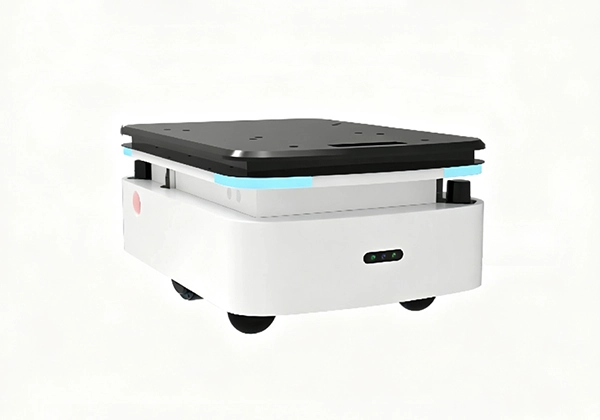
A mobile robot chassis is the core platform of an autonomous mobile robot, integrating drive systems, navigation sensors, battery management, safety features and open SDK/API interfaces. It provides the movement, positioning and control foundation for customized robot applications.
Unlike traditional AGVs that rely on fixed paths, SLAM-based mobile robot chassis systems use sensors and intelligent navigation to map environments, avoid obstacles and operate without magnetic tracks or markers.
Key Components
| Component | Function |
|---|---|
| Drive System | Provides motion and steering control |
| SLAM + 3D Vision | Enables autonomous navigation and obstacle avoidance |
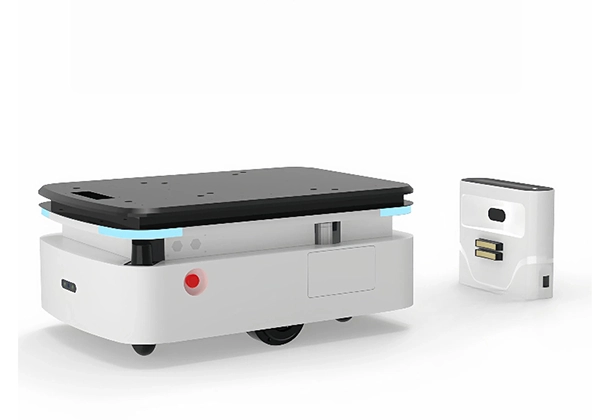
| LiFePO4 Battery | Supports continuous operation and auto charging |
| Safety System | Provides emergency stop protection |
| Open SDK/API | Enables secondary development and system integration |
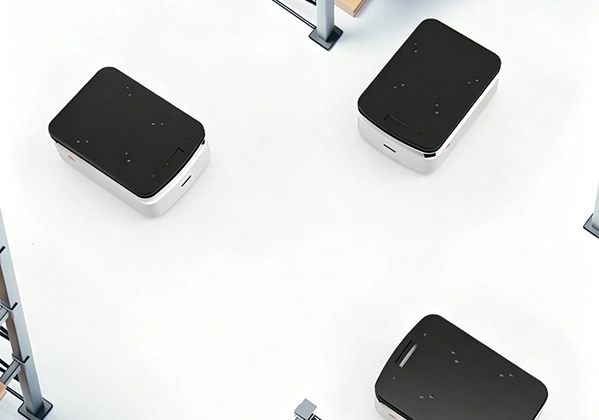
| Scheduling System | Supports multi-robot coordination |
 Photo
Photo
Why Choose Our Mobile Robot Chassis Solutions
When you source a robot chassis, you are not just buying hardware. You are investing in a development platform that determines your project timeline, integration complexity, and long-term maintainability.Here is what we provide beyond the chassis itself:
You focus on building your application. We help you source, validate, integrate, and deploy the mobile platform that supports it.
Core Advantages
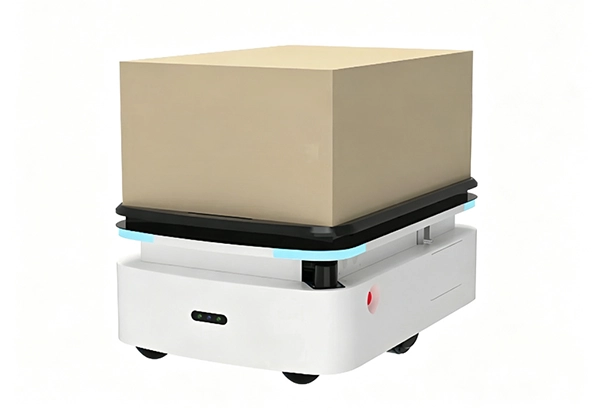
300 kg Payload Capacity
Sufficient Capacity for Real-World Upper-Mount Loads
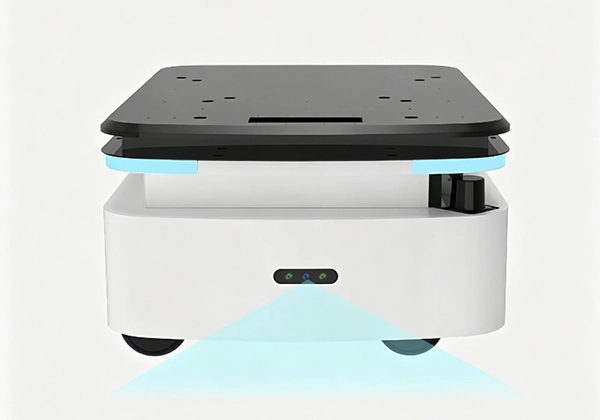
Dual-Laser SLAM Navigation
Autonomous Positioning Without External Infrastructure
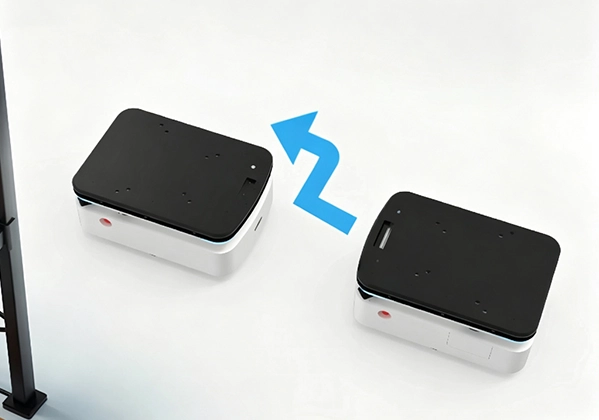
Autonomous Obstacle Avoidance:
No Collisions, No Manual Intervention
Code-Free, Track-Free Deployment
Reduce Installation Cost and Complexity
Open SDK Platform
Build Your Application on a Validated Base
Multi-Robot Coordination
Scale from One Unit to a Fleet
Typical Applications
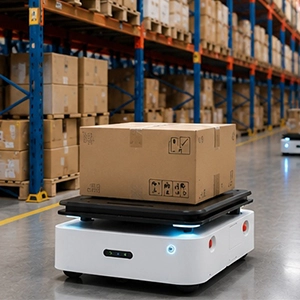
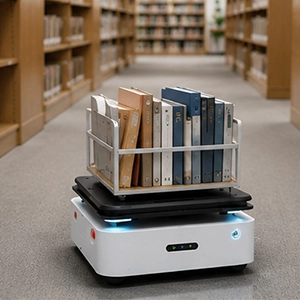
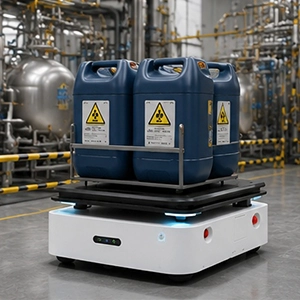
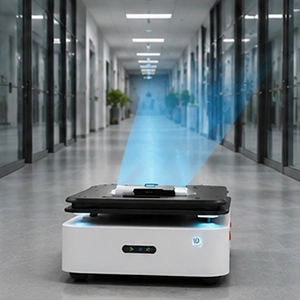
Technology and Specification Guide
FAQS
Q: Does the Mobile Robot chassis support ROS or ROS2?
The SDK exposes navigation, motion control, and sensor data interfaces compatible with standard ROS communication patterns, making the chassis suitable for ROS-based development. For detailed ROS/ROS2 driver packages and integration documentation, contact us with your specific development stack.
Q: What programming languages does the SDK support?
The SDK API supports integration with common programming languages used in robotics development, including C++ and Python workflows. The API exposes navigation control, motion commands, and sensor data access. For complete language support details and documentation access, contact us with your development stack.
Q: What navigation method does the chassis use? The Mobile Robot chassis uses dual-laser SLAM (Simultaneous Localization and Mapping) combined with dual 3D cameras for multi-sensor fusion navigation. No floor markers, QR codes, or physical tracks are required for deployment.
Q: Does the chassis support automatic charging?
Yes. The Mobile Robot chassis supports both auto-return charging and direct charging. The charging station features overcurrent protection and smart power-off, with an output of 43.2V DC / 5A. Charging time is approximately 6 hours.
Q: What is the runtime on a single charge?
The chassis operates for up to 8 hours under full load (300 kg) and up to 25 hours with no load.
Q: Can the chassis dimensions be customized?
The standard dimensions are 804 × 590 × 317 mm. For custom size requirements, contact us to discuss feasibility and project specifics.
Q: Can the payload capacity be customized?
The standard maximum payload is 300 kg. For applications requiring different load capacities, contact us to discuss available options.
Q: Can a robotic arm be mounted on the chassis?
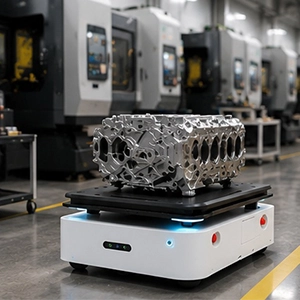
Yes. The 300 kg payload capacity and flat top plate support upper-mount integration with manipulators and other devices. SDK API coordination between chassis motion and upper-mount operation is available for custom integration. Contact us to discuss your specific manipulator model and mounting requirements.
Q: Does the chassis support multi-robot operation?
Yes. The Mobile Robot chassis includes an autonomous scheduling system that supports multi-robot collaboration, managing task allocation and path conflict resolution across multiple units in the same facility.
Q: What communication interfaces are available?
The chassis supports common communication interfaces used in robotics and industrial automation. Specific available interfaces (CAN bus, Ethernet, Wi-Fi, serial) depend on configuration. Contact us to confirm interfaces for your system architecture.
Q: What is the lead time and warranty?
Lead time is 35 days. The warranty period is 12 months. MOQ is 1 unit.
Q: Do you provide technical support for integration?
Yes. We provide integration engineering support including upper-mount device integration guidance, SDK documentation access, compatibility validation, and deployment support. Contact us with your project requirements for a consultation.
Request a Quote or Technical Evaluation
Tell us what you need the robot to do. Even if some technical details are not yet confirmed, our team can help evaluate suitable options.
- Application: Briefly describe the task, workflow, or problem you want the robot to handle.
- Key requirements: Share any known payload, reach, capacity, runtime, accuracy, speed, or other performance needs.
- Site & integration: Tell us about the operating environment, layout, existing equipment, or software interfaces if relevant.
- Quantity & timeline: Let us know the expected quantity, destination country, and target delivery or deployment time.