Contact Us



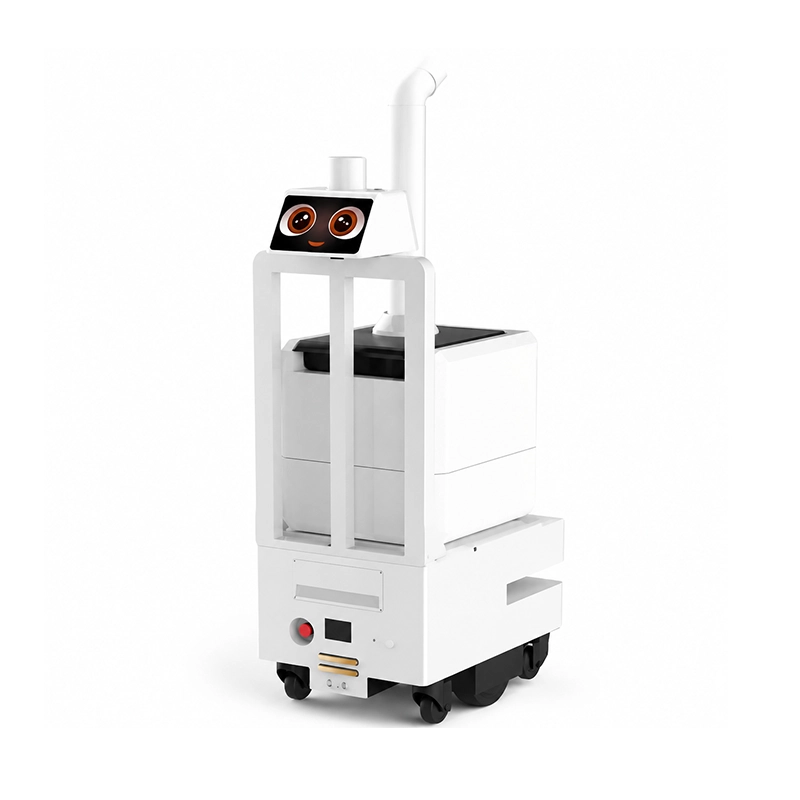
300 kg Payload Autonomous Material Handling Robot
The AIsirRobot autonomous material handling robot is for repetitive shelf, rack, and material transport in factory and warehouse environments. It supports loads up to 300 kg, including the transported shelf or rack, and uses Laser SLAM navigation — no QR codes or magnetic tracks required. A 10 cm autonomous lifting mechanism, four remote calling methods, and optional elevator control for multi-floor delivery are available.



Product Overview
 Photo
Photo
Material Handling Robot Applications
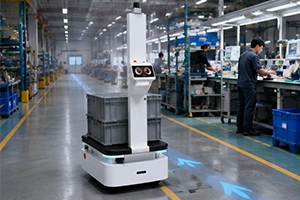
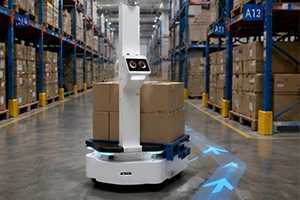
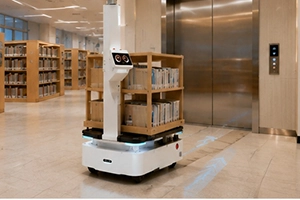
The AIsirRobot autonomous material handling robot is designed for environments where repetitive material transport between fixed or semi-fixed points is required.
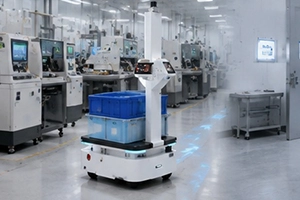
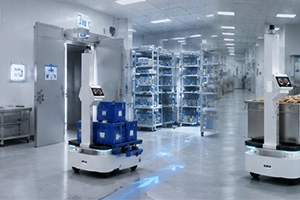
Material Handling Robot Key Features & Capabilities
Is This Robot Right for Your Application?
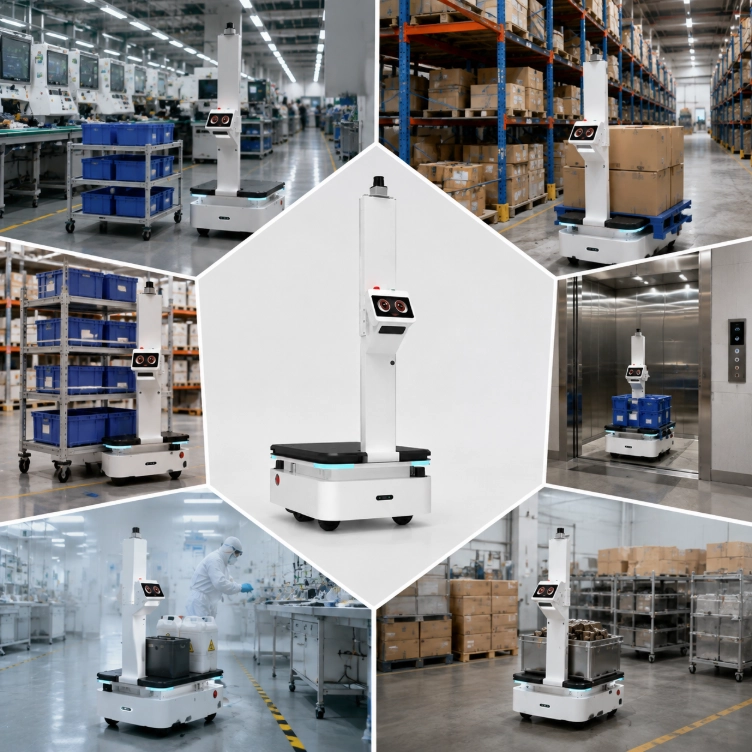
Suitable For
- Repetitive indoor material transport between fixed or semi-fixed points
- Shelf or rack-based transport with compatible dimensions and clearance
- Loads within the 300 kg payload range, including the shelf or rack
- Factory and warehouse environments with suitable floor conditions
- Applications requiring autonomous navigation without floor modifications
- Multi-floor transport when compatible elevator integration is available
Requires Further Assessment
- Non-standard shelf dimensions or underside clearance
- Uneven or unsuitable floor conditions
- Complex elevator systems requiring custom integration
- Special safety or certification requirements
- Applications outside confirmed indoor operating environments
- Loads exceeding the 300 kg rated payload
- Environments with extreme temperatures, humidity, or dust levels
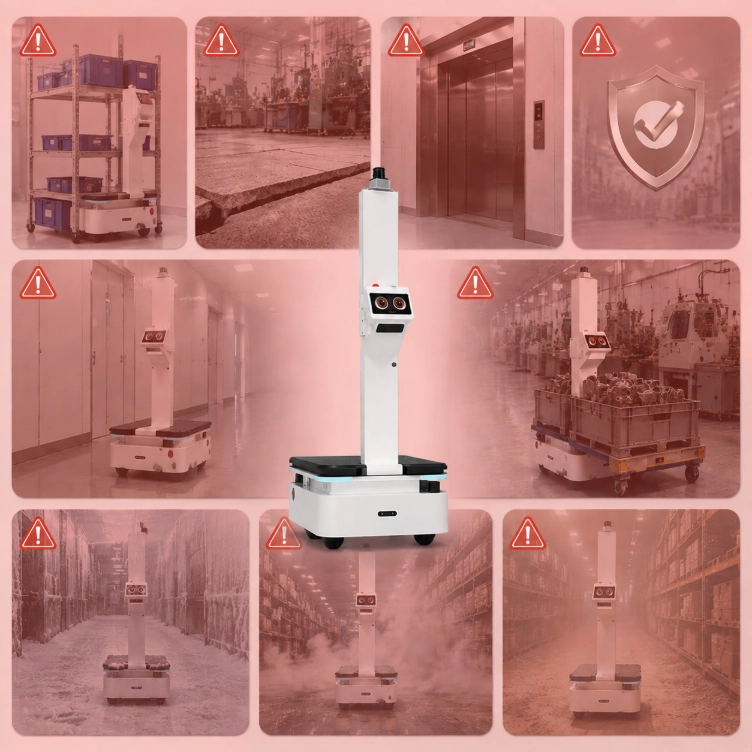
If your application falls into the “Requires Further Assessment” category, contact our team with your site details. We can help determine whether the available configuration can be adapted to your requirements.
Battery & Charging System for Autonomous Material Transport
LiFePO4 Battery
| Parameter | Specification |
| Battery Type | Lithium Iron Phosphate (LiFePO4) |
| Battery Capacity | 38.4 V / 27 Ah |
| Charge Cycles | 2,000+ discharge cycles |
| Safety Characteristics | High-temperature tolerant; designed to resist combustion and explosion |
What It Means in Practice
LiFePO4 chemistry provides a higher safety margin than standard lithium-ion batteries in industrial environments. The 2,000+ cycle life reduces battery replacement frequency and lowers total cost of ownership over the robot’s service period.
Applicable Conditions
Battery runtime per charge depends on payload weight, travel distance, lifting frequency, and operating environment. Actual cycle life varies with charging patterns and ambient temperature conditions.
Automatic Recharging
The robot returns to its charging station automatically when battery levels drop. A charging dock with charging contacts enables autonomous docking and charging without manual intervention.
Practical Implication
The robot can operate without dedicated personnel for battery management. Charging occurs during idle periods or low-battery states, minimizing workflow interruption.
Technology and Specification Guide
FAQS
Q: How much weight can the robot carry?
The robot supports a maximum payload of 300 kg. This rating includes the weight of the transported shelf or rack. The actual goods weight depends on the shelf weight and load distribution.
Q: Does the payload include the shelf or rack?
Yes. The 300 kg payload rating includes the shelf, rack, or container being transported. For example, if your shelf weighs 40 kg, the maximum goods weight is approximately 260 kg.
Q: How does the robot navigate?
The robot uses a 50 m single-line LiDAR sensor and a SLAM (Simultaneous Localization and Mapping) algorithm. It builds a real-time map of the environment and localizes itself within that map. No floor-mounted QR codes, magnetic strips, or reflectors are required.
Q: Does it require QR codes or magnetic tracks?
No. The robot navigates using laser SLAM technology. No QR codes, magnetic strips, or physical track modifications need to be installed on the facility floor.
Q: Can it avoid obstacles?
Yes. The standard configuration uses LiDAR and ultrasonic sensors for obstacle detection. The robot detects obstacles in its path and actively navigates around them. Optional 3D cameras add enhanced depth perception for environments with moving objects or complex layouts.
Q: Are 3D cameras included in the standard configuration?
No. 3D cameras are optional equipment. The standard obstacle avoidance system uses LiDAR and ultrasonic sensors. Contact our team to determine whether your environment requires the 3D camera upgrade.
Q: Can it work with an elevator?
Elevator control is an optional function. Integration depends on your elevator model and building control system. Provide your elevator specifications and floor layout so our team can evaluate compatibility.
Q: What floor conditions are required?
The robot operates on indoor floor surfaces suitable for laser-based navigation. Floor flatness, surface material, and reflectivity affect navigation performance. Site assessment is recommended before deployment to confirm suitability.
Q: What information is required for configuration?
To help us recommend the right configuration, please share: your application scenario, typical load weight and dimensions, shelf or rack dimensions, travel routes and distances, required transport frequency, number of floors (if cross-floor delivery is needed), existing elevator model, floor surface conditions, and target deployment timeline.
Q: How long does deployment take?
Deployment timeline depends on facility size, route complexity, and the number of stations. The process typically includes: site survey and workflow assessment, environment mapping using the robot’s LiDAR system, route and station configuration, and test runs before full operation. On the buyer’s side, facility access for the mapping process, floor surface information, and elevator interface details (if cross-floor delivery is needed) help streamline the setup. Contact our team for a deployment plan tailored to your site.
Q: What is the warranty?
The AIsirRobot autonomous material handling robot comes with a 12-month warranty.
Q: What is the MOQ and lead time?
MOQ is 1 unit. Standard lead time is 35 days.
Request a Quote or Technical Evaluation
Tell us what you need the robot to do. Even if some technical details are not yet confirmed, our team can help evaluate suitable options.
- Application: Briefly describe the task, workflow, or problem you want the robot to handle.
- Key requirements: Share any known payload, reach, capacity, runtime, accuracy, speed, or other performance needs.
- Site & integration: Tell us about the operating environment, layout, existing equipment, or software interfaces if relevant.
- Quantity & timeline: Let us know the expected quantity, destination country, and target delivery or deployment time.