

 Contact Us

 Home /
 Differential vs. Omnidirectional AMR Drive: When Is Lateral Motion Worth the Extra Complexity
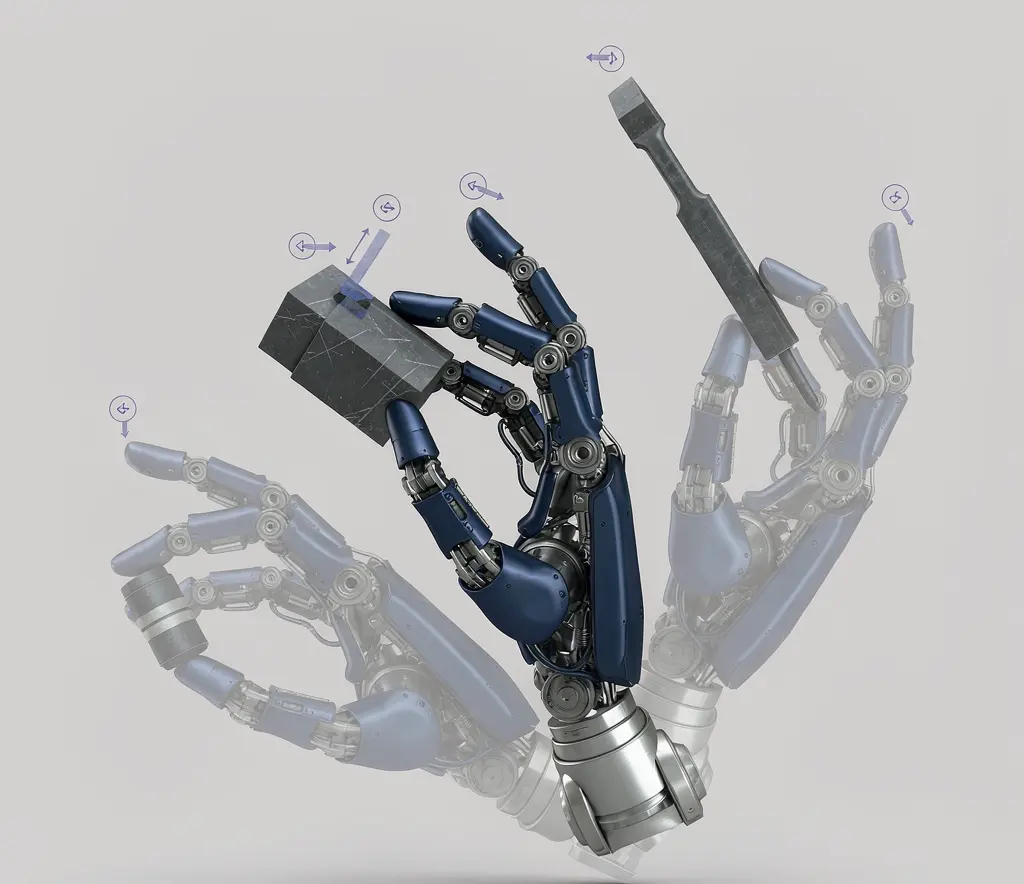
Humanoid Robot Hand Dexterity Verification: Grasp Set, Tool Use, Force Control, and Recovery
Oct 08, 2026

Industrial Exoskeleton Fit and Sizing: Anthropometry, Adjustment Time, PPE, and Shared-Device Programs
Oct 08, 2026

Robot Duty Cycle and Thermal Limits: Why Rated Payload and Speed Do Not Guarantee Continuous Operation
Oct 08, 2026

Robot IP Ratings Explained: What IP54, IP65, and IP67 Do — and Do Not — Prove
Oct 08, 2026
The drive architecture determines what movements the robot can make. The two mainstream approaches — differential and omnidirectional — have a fundamental difference in motion freedom.
Differential drive: Two drive wheels (typically at chassis center) plus several caster wheels. Steering is achieved through speed differences between the two drive wheels. Can move forward, backward, and turn (including in-place rotation), but cannot move laterally.
Omnidirectional drive: A broader category that includes several sub-architectures:
- Mecanum wheels: Each wheel has rollers mounted at 45°. Four wheels are independently controlled to enable movement in any direction — forward, backward, turning, lateral, diagonal.
- Steerable wheels (independent steering): Each wheel can rotate to point in any direction. Can achieve omnidirectional motion through coordinated steering. More complex mechanically, but maintains full wheel contact (no roller friction issues).
- Four-wheel steering (4WS): Wheels steer together or independently to reduce turning radius or, depending on steering architecture, may support crab-style lateral motion. Not all 4WS architectures support full lateral movement — confirm the specific motion capabilities with the supplier.
The differences sound simple, but they have far-reaching effects on aisle width, docking method, floor requirements, maintenance cost, and payload capacity. Choosing omnidirectional is not about picking “the more advanced option.” It is about whether lateral motion creates real value in your specific scenario.
In-Place Rotation vs. True Lateral Movement
Differential in-place rotation: The robot can rotate to any angle, then drive forward in the new direction. At intersections and docking positions, the robot adjusts heading through “rotate-then-drive.”
The problem: during rotation, the robot’s sweep area is a circle with the diagonal as diameter. In a narrow aisle, the rotation space needed may exceed the aisle width.
Omnidirectional lateral movement: The robot does not need to rotate to move sideways. In a narrow aisle, the space needed for lateral passage equals robot width plus safety clearance — far less than the rotation sweep.
Scenario comparison:
| Scenario | Differential | Omnidirectional | Difference |
| Straight aisle travel | Good | Good | No difference |
| 90° turn (wide intersection) | In-place rotation | Lateral or rotation | No significant difference |
| 90° turn (narrow intersection) | Rotation space may be insufficient | Lateral passage | Omni advantage |
| Attitude adjustment after docking | Rotate to adjust angle | Lateral + rotation | Omni more flexible |
| Side docking (pickup from side) | Needs 90° rotation then forward | Direct lateral move | Clear omni advantage |
| Long-distance straight transport | Efficient | May have higher energy use | Differential advantage |
Traction, Wheel Slip, and Floor Sensitivity
Differential drive: Drive wheels are typically at chassis center with a relatively large contact area. Traction is predictable. Caster wheels are passive — they do not provide drive force but need to rotate freely. On uneven floors, casters may bind or vibrate.
Mecanum omnidirectional: Each wheel has rollers mounted at 45°. Four wheels are independently controlled. Mecanum rollers make rolling contact with the floor at an angle — friction coefficient and floor flatness have a bigger impact on motion accuracy and traction than with conventional drive wheels.
Steerable/4WS: Maintain full wheel-to-floor contact (no rollers), so traction behavior is closer to conventional wheels. But the added steering mechanism adds mechanical complexity and maintenance.
Floor sensitivity comparison:
| Floor condition | Differential | Mecanum Omni | Steerable/4WS | Notes |
| Smooth epoxy floor | Verify | Verify | Verify | All perform normally |
| Oily floor | Verify traction | Verify — roller contact area | Verify | Mecanum slip risk to confirm |
| Gaps/seams | Verify caster behavior | Verify roller catch | Verify | All need floor assessment |
| Rough floor | Verify vibration | Verify vibration + accuracy | Verify | Differential may be more tolerant |
| Ramps | Verify traction | Verify lateral slip | Verify — depends on steering mode | All need ramp testing |
If your floor conditions are not ideal (oil, rough, gaps, ramps), omnidirectional motion accuracy and safety may be more affected — especially with Mecanum wheels. On-site testing is needed to verify.
Payload and Center of Gravity Effects
Differential drive: Drive wheels carry part of the load, casters carry the rest. Under full load, drive wheel loading increases — payload and traction are positively correlated.
Mecanum omnidirectional: Four wheel sets are evenly distributed, spreading the load across four corners. But Mecanum wheels typically have lower per-wheel load capacity than same-sized conventional drive wheels — the roller structure limits loading.
Steerable/4WS: Per-wheel load capacity is closer to conventional wheels, but the steering mechanism adds weight and complexity that also eats into payload budget.
Heavy-duty scenarios:
- Review certified/rated load, wheel module capacity, traction and floor tests for the specific architecture — do not assume a drive type is inherently more capable.
- Mecanum roller load limits and lateral force constraints should be verified with the supplier for your specific payload.
- Steerable/4WS per-wheel load capacity should be confirmed, along with the added maintenance complexity of the steering mechanism.
- Any omni + heavy load combination needs special confirmation of wheel specs and floor conditions.
CG effects:
- Differential: CG offset affects load distribution between drive wheels and casters. Extreme offset can overload casters.
- Omnidirectional: CG offset affects load distribution across all wheel sets. Extreme offset can cause one wheel set to slip.
Docking and Alignment in Constrained Spaces
This is where omnidirectional drive shows its clearest value.
Differential docking sequence:
- Robot approaches the docking position from the aisle.
- If picking up from the side: rotate 90° → drive forward to dock → dock → reverse → rotate 90° → leave.
- Every rotation needs rotation space.
Omnidirectional docking sequence:
- Robot approaches the docking position from the aisle.
- If picking up from the side: lateral move to dock → dock → lateral move away.
- No rotation, no rotation space needed.
Value in tight workstations:
- Limited space between stations, no room for rotation → omnidirectional is the only option.
- Multiple robots picking from the same row of stations → omni lateral movement reduces turning conflicts.
- Conveyor side docking → omni moves directly sideways to dock; differential needs rotate + forward.
Maintenance, Wheel Wear, and Calibration
Differential drive maintenance:
- Casters: periodic check for free rotation, replace worn wheels.
- Drive wheels: periodic check for wear and slip.
- Calibration: drive wheel diameter differences affect straight-line performance, requiring periodic calibration.
Mecanum omnidirectional maintenance:
- Mecanum rollers: rollers are wear parts, need periodic inspection and replacement.
- Uneven roller wear: causes motion deviation, requires calibration.
- Four independent drives: more motors and encoders, more failure points.
- Floor debris: roller gaps can catch debris, requiring periodic cleaning.
Steerable/4WS maintenance:
- Steering mechanisms add moving parts — bearings, linkages, encoders for steering angle.
- More complex alignment and calibration than differential.
- Fewer wear parts than Mecanum (no rollers), but steering mechanism failure modes are different.
| Maintenance item | Differential | Mecanum Omni | Steerable/4WS |
| Wheel replacement frequency | Lower | Higher (rollers wear faster) | Medium |
| Calibration frequency | Low | Higher (uneven roller wear) | Medium (steering alignment) |
| Motor/encoder count | 2 | 4 | 4+ (drive + steering) |
| Debris cleaning need | Low | Higher | Medium |
| Maintenance skill requirement | Basic | Specialized training | Specialized training |
When Does Omnidirectional Create Real Value
The extra cost of omnidirectional drive — purchase, maintenance, floor requirements — only pays off in specific scenarios.
Worth investing in omni:
- Aisle width insufficient for rotation — lateral movement is the only way through.
- Dense workstations with side-facing docking — lateral docking is far more efficient than rotate-and-dock.
- Frequent multi-robot crossing — lateral movement reduces intersection waiting.
- High space cost — omni reduces aisle width requirements, freeing up storage space.
Not worth investing in omni:
- Aisle width is sufficient — differential rotation has no space problem.
- Docking faces are forward — no lateral movement needed.
- Floor conditions are poor — omni accuracy and reliability drop (especially Mecanum).
- Heavy-duty scenarios — review certified load and wheel specs for the specific architecture; do not assume one drive type is inherently more capable.
- Long-distance straight transport — verify energy efficiency for the specific configuration.
Drive Architecture Decision Matrix
By Payload, Route, Docking, and Floor Conditions
| Evaluation dimension | Your situation | Differential fit | Omni (Mecanum) fit | Omni (Steerable/4WS) fit |
| Payload | ||||
| Payload range (kg) | _____ | Verify rated load | Verify roller load limits | Verify per-wheel capacity |
| Load CG characteristics | _____ | Verify | Verify | Verify |
| Route | ||||
| Aisle width (mm) | _____ | Verify rotation space | Verify lateral passage | Verify lateral passage (architecture-dependent) |
| Intersection space | _____ | Verify rotation area | Verify lateral passage | Verify lateral passage |
| Route slope (°) | _____ | Verify traction | Verify lateral slip | Verify — depends on steering mode |
| Docking | ||||
| Docking face direction | ☐ Front ☐ Side | Verify front fit | Verify side fit | Verify side fit |
| Docking space | _____ | Verify rotation space | Verify no rotation needed | Verify no rotation needed |
| Multi-robot crossing frequency | _____ | Verify waiting | Verify reduced waiting | Verify reduced waiting |
| Floor | ||||
| Floor type | _____ | Verify tolerance | Verify sensitivity | Verify tolerance |
| Oil/debris | ☐ Yes ☐ No | Verify | Verify | Verify |
| Flatness | _____ | Verify tolerance | Verify sensitivity | Verify tolerance |
| Maintenance | ||||
| Maintenance team skill | _____ | Verify basic | Verify specialized | Verify specialized |
| Wheel replacement budget | _____ | Verify | Verify | Verify |
Differential or Omnidirectional Drive?
Lateral motion only adds value when the route and docking geometry need it. We can help compare drive architectures against your space, floor, payload, and maintenance conditions.
Please share, if available: aisle width, turning areas, side-docking needs, load and CG, floor type, slopes, debris or oil, and expected travel pattern.
Compare Drive OptionsDrive Selection Decision Inputs
- Omnidirectional is not “more advanced” — it is a solution for specific scenarios — invest only when lateral motion creates real value.
- Identify which omnidirectional sub-architecture — Mecanum, steerable, and 4WS have different trade-offs in floor sensitivity, load capacity, and maintenance.
- Insufficient aisle width is the top driver for omni — if differential rotation space is adequate, omni is not needed.
- Side docking is the second driver — dense workstations + side docking, omni significantly improves efficiency.
- Floor conditions affect Mecanum more than steerable — oil, rough surfaces, and gaps hit Mecanum wheels harder.
- Heavy-duty capability depends on certified load and wheel specs — review rated load, traction, and floor test data for the specific architecture; do not assume one drive type is inherently more capable.
- Omni maintenance costs more — faster roller wear (Mecanum), more steering components (steerable/4WS), higher calibration frequency.
Share on Social:


Contact Us
In This Article
Humanoid Robot Hand Dexterity Verification: Grasp Set, Tool Use, Force Control, and Recovery
Oct 08, 2026
Industrial Exoskeleton Fit and Sizing: Anthropometry, Adjustment Time, PPE, and Shared-Device Programs
Oct 08, 2026
Robot Duty Cycle and Thermal Limits: Why Rated Payload and Speed Do Not Guarantee Continuous Operation
Oct 08, 2026
Robot IP Ratings Explained: What IP54, IP65, and IP67 Do — and Do Not — Prove
Oct 08, 2026