

 Contact Us

 Home /
 How to Select a Collaborative Robot Arm: Payload, Reach, Repeatability, Speed, and Tooling

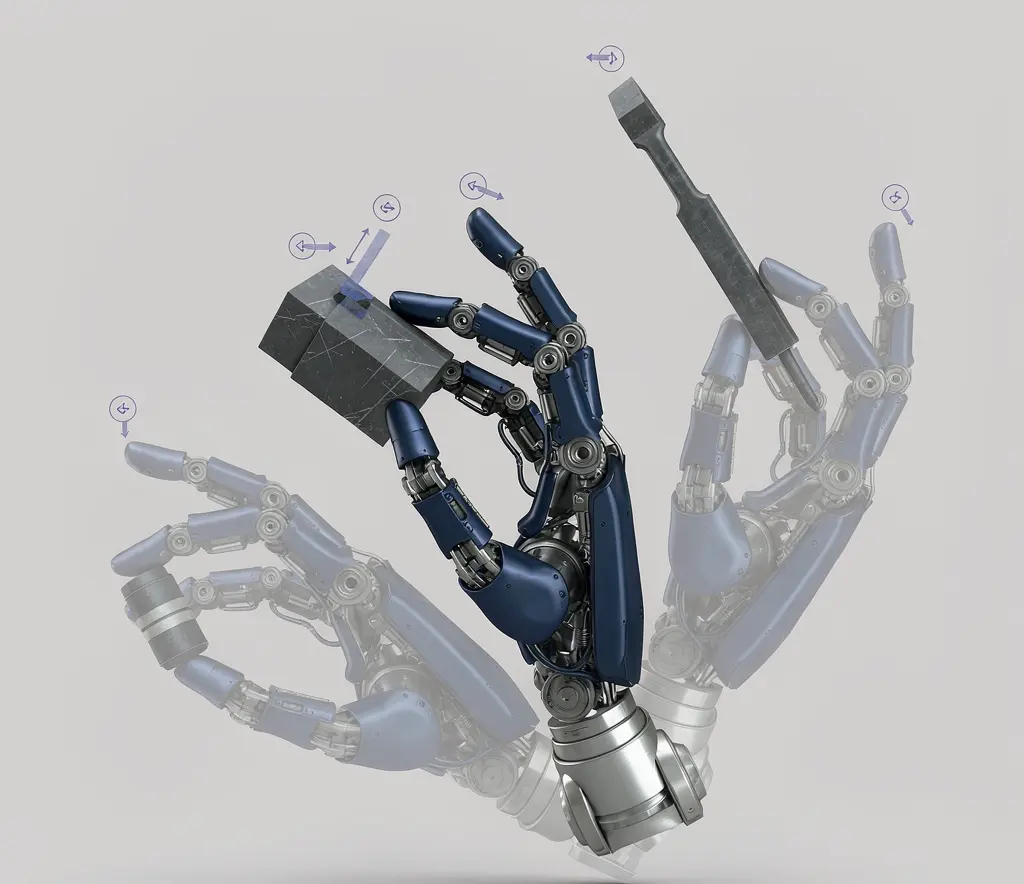
Humanoid Robot Hand Dexterity Verification: Grasp Set, Tool Use, Force Control, and Recovery
Oct 08, 2026

Industrial Exoskeleton Fit and Sizing: Anthropometry, Adjustment Time, PPE, and Shared-Device Programs
Oct 08, 2026

Robot Duty Cycle and Thermal Limits: Why Rated Payload and Speed Do Not Guarantee Continuous Operation
Oct 08, 2026

Robot IP Ratings Explained: What IP54, IP65, and IP67 Do — and Do Not — Prove
Oct 08, 2026
Selecting a Collaborative Robot Arm (Cobot) is not simply about choosing a robot with the highest payload or longest reach. A cobot that appears suitable on a specification sheet may fail in real applications if factors such as effective payload, workspace limitations, tooling requirements, cycle time and operating environment are not evaluated together.
A successful cobot selection starts with understanding the actual task. The robot, end-of-arm tooling, safety system and production environment must work together to achieve reliable automation performance.
This guide explains the key factors buyers should evaluate when selecting a Collaborative Robot Arm, including payload, reach, repeatability, speed, tooling compatibility and safety considerations.
Start With the Task, Not the Specification Sheet
Before comparing cobot models, define what the robot needs to accomplish in the real production environment.
| Task Factor | Questions to Consider | Impact on Robot Selection |
|---|---|---|
| Application type | Pick-and-place, assembly, welding, inspection or machine tending? | Determines payload, speed and tooling requirements |
| Workpiece weight | What object does the robot carry? | Directly affects payload calculation |
| Part size and orientation | Does the robot need to reach inside machines or around fixtures? | Influences reach and workspace design |
| Cycle time | How many operations are required per hour? | Determines speed and acceleration requirements |
| Mounting position | Floor, table, wall, ceiling or mobile platform? | Changes reachable workspace |
| Human interaction | Will operators work near the robot? | Determines safety assessment requirements |
| Environment | Dust, moisture, cleanroom, food or high-temperature conditions? | Affects protection rating and material selection |
The correct selection rule is:
The task and worst-case working position determine the minimum specification—not the marketing parameters.
Payload Selection: Rated Payload vs Effective Payload
What Does Cobot Payload Mean?
Robot payload refers to the maximum mass the robot can support at the end-effector mounting point under manufacturer-defined test conditions.
However, the rated payload is not the same as the actual workpiece capacity.
The real load includes everything attached to the robot wrist:
Effective Payload = Workpiece Weight + Gripper Weight + Sensor Weight + Adapter Weight + Tooling Weight
For example:
A cobot rated for 10 kg payload may carry:
- 3 kg gripper
- 0.5 kg sensor
- 0.5 kg adapter
The remaining capacity for the workpiece is only approximately:
10 kg - 4 kg = 6 kg
not the full 10 kg.
Factors Affecting Effective Payload
| Factor | Influence |
|---|---|
| Gripper weight | Reduces available payload capacity |
| Sensor and camera | Adds additional wrist load |
| Tool length | Creates larger moment forces |
| Workpiece shape | Affects center of gravity |
| Acceleration | Dynamic forces increase during movement |
A long gripper or uneven workpiece can significantly reduce practical payload capability.
Therefore, buyers should evaluate the complete tooling configuration rather than only the robot payload rating.
Robot Reach and Work Envelope
Understanding Reach
Robot reach refers to the maximum distance from the robot base to the end-effector.
However, maximum reach does not mean every position within that range is practical.
Actual accessibility depends on:
- Joint limitations
- Robot mounting position
- Tool length
- Machine interference
- Fixture placement
Work Envelope Considerations
| Constraint | Effect |
|---|---|
| Joint limits | Robot may not achieve required orientation near axis limits |
| Singularities | Movement may become slower or restricted |
| Tool length | Extends reach but increases load and moment force |
| Obstacles | Machines, fixtures and safety barriers may block access |
| Mounting method | Floor, wall and ceiling mounting create different working areas |
The key question is:
Can the robot reach the required position with the actual payload and tooling configuration?
Reach should always be evaluated under real operating conditions.
Repeatability vs Accuracy: Understanding Robot Precision
Precision specifications are often misunderstood during cobot selection.
| Term | Definition |
|---|---|
| Repeatability | The ability of the robot to return to the same programmed position repeatedly |
| Absolute Accuracy | The difference between the commanded position and the actual physical position |
A robot with:
±0.05 mm repeatability
can consistently return close to the same position.
However, it does not mean the robot is automatically within ±0.05 mm of the actual target.
Absolute accuracy depends on:
- Calibration
- Payload
- Temperature
- Installation accuracy
- External measurement systems
When Repeatability Matters
Repeatability is especially important for:
- Pick-and-place operations
- Assembly tasks with taught positions
- Machine tending
- Repetitive handling
Absolute accuracy becomes more important for:
- CAD-based programming
- Vision-guided positioning
- Precision inspection
- Complex assembly
Speed and Cycle Time Evaluation
Robot speed specifications often represent maximum theoretical performance under ideal conditions.
Actual production cycle time depends on:
- Payload
- Acceleration limits
- Safety settings
- Path complexity
- Pick and place movements
- Waiting time
| Factor | Effect on Cycle Time |
|---|---|
| High payload | Reduces acceleration and movement speed |
| Safety mode | Limits speed when humans are nearby |
| Curved movement paths | Requires coordinated axis motion |
| Pick/release process | Requires slower positioning for accuracy |
| Safety transitions | Adds additional movement time |
A realistic cycle calculation should include:
Approach → Pick → Transfer → Place → Release → Retract
not only the robot’s maximum speed.
Degrees of Freedom and Mounting Options
Most collaborative robots use six axes, providing flexible movement and orientation control.
However, more axes do not always mean better performance.
The required degrees of freedom depend on the application.
| Application | Recommended Configuration |
|---|---|
| Simple vertical pick-and-place | 4-axis or 5-axis may be sufficient |
| Welding | 6-axis required for torch angle adjustment |
| Assembly | Higher flexibility may be needed |
| Inspection | Depends on camera angle requirements |
Common Mounting Methods
| Mounting | Suitable Applications |
|---|---|
| Floor/Table Mount | General automation, machine tending, assembly |
| Wall Mount | Limited floor space and side access applications |
| Ceiling Mount | Overhead handling and large workpieces |
| Mobile Base | Flexible multi-station automation |
Mounting position directly affects the robot’s usable workspace.
End-of-Arm Tooling Selection
The end-effector is one of the most important parts of a cobot system.
Common tools include:
- Mechanical grippers
- Vacuum grippers
- Welding torches
- Dispensing tools
- Vision systems
Tooling Compatibility Requirements
| Interface Type | What to Verify |
|---|---|
| Mechanical | Mounting pattern, flange size and weight capacity |
| Electrical | I/O channels and power supply |
| Pneumatic | Air pressure and flow requirements |
| Communication | EtherCAT, Modbus, CAN or other protocols |
| Software | Driver and programming compatibility |
A gripper that fits physically may still fail if the robot controller cannot communicate with it.
Tool compatibility must be checked between the specific robot model and selected tooling.
Collaborative Robot Safety Considerations
A collaborative robot is designed to work near people through integrated safety functions.
However:
Collaborative does not automatically mean risk-free.
Safety depends on:
- Robot speed
- Payload
- End-effector design
- Workpiece shape
- Operator interaction
- Application environment
Common Collaborative Safety Functions
| Safety Function | Description |
|---|---|
| Safety-rated monitored stop | Robot stops when a person enters the monitored area |
| Hand guiding | Operator manually guides robot movement |
| Speed and separation monitoring | Robot slows down when people approach |
| Power and force limiting | Limits contact force during operation |
A lightweight gripper in testing conditions may be safe, but the same robot with:
- Heavy tooling
- Sharp objects
- Hot components
requires additional risk evaluation.
Environment and Protection Requirements
The working environment influences robot selection.
| Environment Factor | Consideration |
|---|---|
| Dust and moisture | Requires appropriate IP protection rating |
| Cleanroom | Requires compatible materials and low particle generation |
| Food applications | Requires hygienic design and approved materials |
| Chemical exposure | Robot materials must resist oils, coolant or chemicals |
| Temperature | Operating range must match the facility conditions |
The robot specification should match the actual environment, not only laboratory conditions.
Collaborative Robot Selection Checklist
Before comparing cobot models, buyers should confirm:
| Item | Required Information |
|---|---|
| Application | Pick-and-place, welding, assembly, inspection, machine tending |
| Workpiece weight | Including tooling and sensors |
| Effective payload | Total wrist load calculation |
| Required reach | Maximum working distance |
| Cycle time | Actual production requirement |
| Mounting method | Floor, wall, ceiling or mobile |
| End-effector type | Gripper, welding tool, camera or dispenser |
| Safety requirements | Human interaction conditions |
| Environment | IP rating, temperature and material requirements |
| Certification | Destination market requirements |
Conclusion
Selecting a Collaborative Robot Arm requires more than matching payload numbers with workpiece weight.
A reliable cobot solution depends on the combination of:
- Effective payload
- Reach and workspace
- Repeatability
- Cycle time
- Tooling compatibility
- Safety requirements
- Working environment
By evaluating the complete application instead of individual specifications, manufacturers can select a cobot system that delivers stable performance and long-term automation value.
AIsirRobot helps buyers evaluate Collaborative Robot Arm configurations based on real application requirements, helping identify suitable robot specifications and integration approaches.
Share on Social:


- PREV: Not PREV
- NEXT: Coffee Robots and Automated Beverage Stations: What Commercial Buyers Need to Know
Contact Us
In This Article
Humanoid Robot Hand Dexterity Verification: Grasp Set, Tool Use, Force Control, and Recovery
Oct 08, 2026
Industrial Exoskeleton Fit and Sizing: Anthropometry, Adjustment Time, PPE, and Shared-Device Programs
Oct 08, 2026
Robot Duty Cycle and Thermal Limits: Why Rated Payload and Speed Do Not Guarantee Continuous Operation
Oct 08, 2026
Robot IP Ratings Explained: What IP54, IP65, and IP67 Do — and Do Not — Prove
Oct 08, 2026