

 Contact Us

 Home /
 Industrial and Service Robots for Business: A Practical Buyer’s Guide

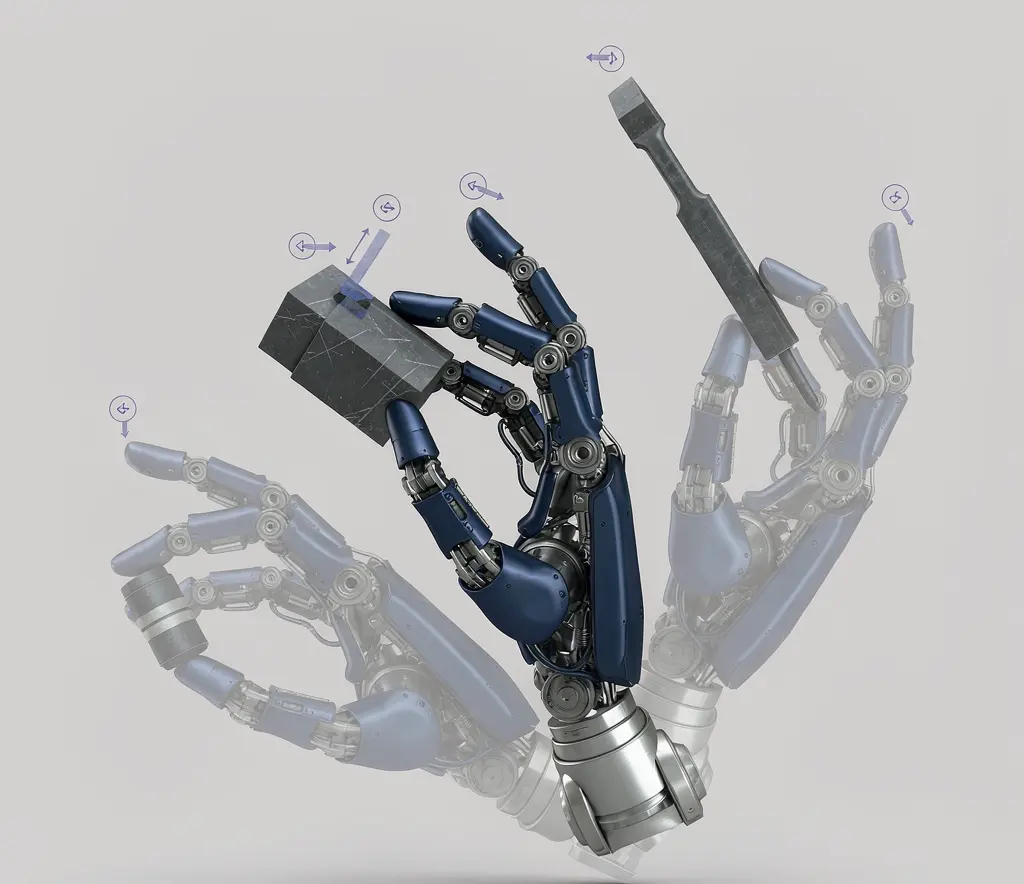
Humanoid Robot Hand Dexterity Verification: Grasp Set, Tool Use, Force Control, and Recovery
Oct 08, 2026

Industrial Exoskeleton Fit and Sizing: Anthropometry, Adjustment Time, PPE, and Shared-Device Programs
Oct 08, 2026

Robot Duty Cycle and Thermal Limits: Why Rated Payload and Speed Do Not Guarantee Continuous Operation
Oct 08, 2026

Robot IP Ratings Explained: What IP54, IP65, and IP67 Do — and Do Not — Prove
Oct 08, 2026
Business robots are no longer limited to automotive factories. Manufacturers, hospitality companies, healthcare facilities and facility management teams are increasingly evaluating robots for tasks that were previously completed manually.
However, selecting a robot is not the same as choosing standard equipment. The correct solution depends on:
- The task to automate
- Working environment
- Required throughput
- Supporting equipment
- Installation conditions
A robot project should begin with the application requirement rather than a product specification sheet.
AIsirRobot helps overseas buyers compare industrial robots, service robots and cleaning robots by organizing application requirements and matching them with suitable robot categories.
What Problems Can Business Robots Solve?
Robots are most effective when the task has characteristics that make manual operation inefficient, inconsistent or physically demanding.
Typical automation opportunities include:
| Task Characteristic | Example Application |
|---|---|
| Repetitive | Picking parts from conveyors and loading CNC machines |
| Hazardous | Welding operations involving fumes, radiation or high temperatures |
| Physically demanding | Palletizing heavy cartons for long working hours |
| Measurable | Cleaning a defined floor area with documented coverage targets |
However, one robot category cannot solve every task.
Examples:
- A welding cobot cannot replace a palletizing robot.
- A floor-cleaning robot cannot perform food delivery.
- A service robot is not designed for industrial automation.
The first step is identifying the specific measurable task and selecting the robot category that matches it.
Three Main Robot Categories for Business Applications
Industrial robots, service robots and cleaning robots have different purposes and selection criteria.
| Robot Category | Definition | Typical Applications | Key Selection Factors |
|---|---|---|---|
| Industrial Robots | Programmable multi-purpose manipulators used for industrial automation | Welding, palletizing, CNC machine tending, assembly and material handling | Payload, reach, repeatability, speed, degrees of freedom and IP rating |
| Professional Service Robots | Robots performing useful tasks for people outside industrial automation | Food delivery, hotel services, indoor logistics and coffee preparation | Payload, compartment capacity, navigation, battery runtime and fleet management |
| Commercial Cleaning Robots | Service robots focused on floor and surface cleaning | Scrubbing, vacuuming, sweeping and dust mopping | Cleaning width, efficiency, tank capacity, floor compatibility and docking requirements |
Important distinctions:
- A collaborative robot arm (cobot) is an industrial robot designed for shared human-robot workspaces under specific safety conditions.
- A delivery robot belongs to the service robot category.
- A commercial cleaning robot is not simply a larger household vacuum robot; it requires different durability, cleaning modules and management systems.
Start With the Application, Not the Robot Model
Many automation mistakes happen because buyers begin with a robot model before defining the application.
A better selection process includes:
1. Define the Task
Clarify what the robot needs to accomplish:
- Welding a component
- Loading a CNC machine
- Moving products
- Delivering meals
- Cleaning floors
2. Identify Measurable Requirements
Important data includes:
| Requirement | Example |
|---|---|
| Workpiece | Weight, size and material |
| Workspace | Required reach and operating area |
| Production target | Cycle time or throughput |
| Environment | Dust, moisture, temperature and people interaction |
| Infrastructure | CNC interface, elevator access, water supply or network |
3. Evaluate Integration Requirements
A robot project often requires additional systems:
- End-effectors
- Fixtures
- Welding equipment
- Elevator interfaces
- Payment systems
- Docking stations
Only after these factors are defined should buyers compare specific robot models.
Understanding Key Robot Specifications
Robot specifications are important, but they are often misunderstood.
Industrial Robot Parameters
| Parameter | Meaning | Common Misunderstanding |
|---|---|---|
| Payload | Maximum mass carried at the end-effector, including tooling, cables and sensors | A 10 kg payload robot does not automatically handle every 10 kg workpiece |
| Reach | Maximum distance from robot base to end-effector | Maximum reach does not mean every position is practical under full payload |
| Repeatability | Ability to return to the same programmed position repeatedly | Repeatability is not the same as absolute accuracy |
| Speed | Maximum movement speed under test conditions | Real cycle time is affected by payload, safety limits and path complexity |
For example, payload calculations must include:
- Gripper weight
- Sensors
- Cables
- Tooling
- Workpiece center of gravity
A robot specification should always be evaluated under the actual application conditions.
Service Robot Selection Factors
Mobile service robots are evaluated differently from industrial robot arms.
| Parameter | Evaluation Focus |
|---|---|
| Payload / compartment capacity | Whether the robot can carry actual items, trays or containers |
| Navigation | Localization accuracy, obstacle avoidance and map reliability |
| Battery runtime | Real operating hours after considering traffic and charging |
| Fleet management | Multi-robot scheduling and monitoring |
A robot with LiDAR does not automatically guarantee good navigation performance.
Buyers should evaluate:
- Obstacle avoidance
- Narrow passage handling
- Route accuracy
- Map stability
Commercial Cleaning Robot Selection Factors
Cleaning robots require different evaluation methods.
| Parameter | What Buyers Should Check |
|---|---|
| Cleaning efficiency | Actual cleaned area instead of theoretical m²/h |
| Tank capacity | Operating time before refill |
| Cleaning mode | Scrubbing, vacuuming, sweeping or dust mopping |
| Floor compatibility | Tile, concrete, epoxy, carpet and other surfaces |
Theoretical cleaning efficiency does not equal real coverage.
Actual performance is affected by:
- Turning overlap
- Obstacles
- Human traffic
- Charging interruptions
- Water refill
- Edge cleaning requirements
Robot Body vs Complete Automation Solution
A common purchasing mistake is treating the robot unit as the complete solution.
In reality, automation requires multiple components.
Industrial Robot System
| Component | Function |
|---|---|
| Robot arm | Motion and positioning |
| End-of-arm tooling | Gripping, welding, suction or dispensing |
| Fixture / positioner | Workpiece positioning |
| Vision system | Inspection and tracking |
| Safety system | Operator protection |
| Installation and commissioning | Calibration and integration |
A robot arm provides movement, but the complete system requires tooling, safety and application-specific equipment.
Service Robot Deployment
A complete service robot project may include:
- Robot unit
- Charging station
- Elevator integration
- Fleet management software
- Payment system
- Network infrastructure
- Staff training
These additional requirements often determine project success more than the robot itself.
How to Evaluate a Robot Supplier or Solution Partner
Different companies play different roles in the robot supply chain.
| Role | Responsibility | Buyer Should Verify |
|---|---|---|
| Manufacturer | Designs and produces robots | Product specifications, documentation and spare parts |
| Brand | Markets products under its name | Warranty and service policy |
| Distributor | Resells products from suppliers | Product range and coordination ability |
| System Integrator | Designs complete automation solutions | Engineering capability and project experience |
| Project Coordinator | Connects buyers with suppliers | Requirement analysis and communication |
AIsirRobot operates as a supply, selection and coordination platform.
It helps buyers:
- Compare robot options
- Organize technical requirements
- Coordinate supplier communication
It does not manufacture robots or guarantee installation and ROI for every project.
Information Needed Before Requesting a Robot Recommendation
Industrial Robot Projects
| Information | Why It Matters |
|---|---|
| Task type | Determines robot category |
| Workpiece size and weight | Determines payload and tooling |
| Working radius | Determines robot reach |
| Cycle time | Defines speed requirements |
| End-effector requirements | Affects payload calculation |
| Existing equipment | Confirms compatibility |
| Environment | Determines safety and protection requirements |
Service Robot Projects
Important information includes:
- Venue type
- Floor plan
- Delivery routes
- Elevator requirements
- Payload dimensions
- Daily task volume
- Network conditions
Cleaning Robot Projects
Buyers should provide:
- Facility size
- Floor materials
- Contaminant types
- Narrow passages
- Operating schedule
- Water and drainage conditions
Common Robot Buying Mistakes
| Mistake | Better Approach |
|---|---|
| Selecting by robot appearance | Start with application requirements |
| Comparing only one specification | Evaluate complete system capability |
| Ignoring peripherals | Include tooling, integration and infrastructure |
| Skipping site evaluation | Verify real operating conditions |
| Expecting guaranteed ROI | Build project-specific cost models |
Conclusion
Selecting the right business robot requires more than choosing a robot model.
Successful automation depends on:
- Correct robot category
- Application requirements
- Integration planning
- Environment evaluation
- Supporting equipment
Industrial robots, service robots and cleaning robots each solve different business problems.
AIsirRobot helps overseas distributors, integrators and business users organize requirements, compare suitable robot solutions and coordinate product information for automation projects.
Share on Social:


Contact Us
In This Article
Humanoid Robot Hand Dexterity Verification: Grasp Set, Tool Use, Force Control, and Recovery
Oct 08, 2026
Industrial Exoskeleton Fit and Sizing: Anthropometry, Adjustment Time, PPE, and Shared-Device Programs
Oct 08, 2026
Robot Duty Cycle and Thermal Limits: Why Rated Payload and Speed Do Not Guarantee Continuous Operation
Oct 08, 2026
Robot IP Ratings Explained: What IP54, IP65, and IP67 Do — and Do Not — Prove
Oct 08, 2026