

 Contact Us


 Home /
Where Can a Cleaning Robot's Wastewater Go?
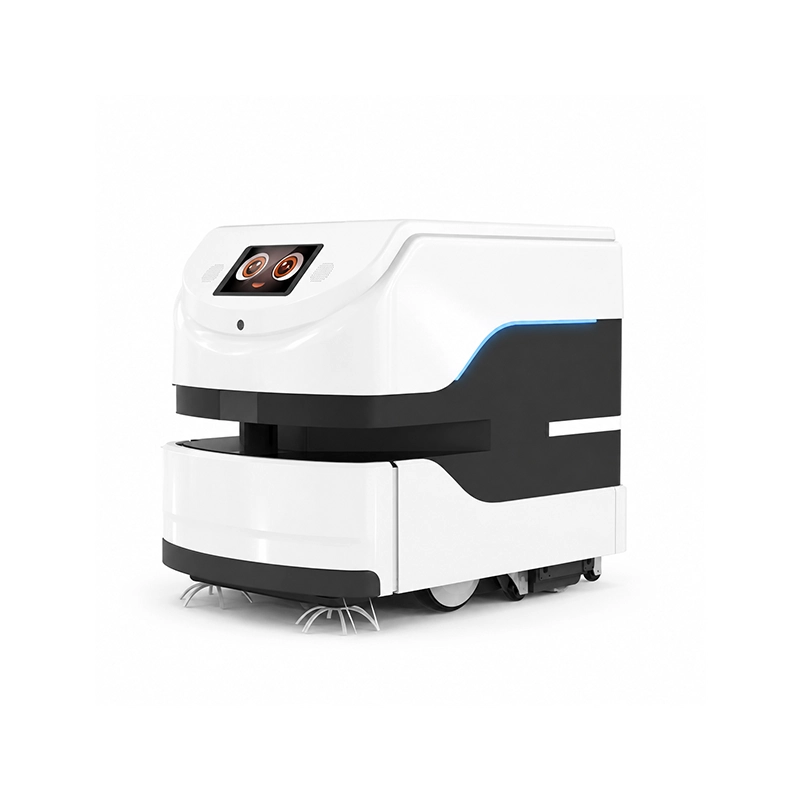


Name the destination before specifying the drain connection. Draw the recovery path first: Recovery tank → ? If that line ends without a named destination, the drain connection is premature. The physical presence of a floor drain is not a discharge permission, and a cleaning robot's manual or dock-based emptying is a handling method, not a certificate for where the water may go.
Trace the recovered liquid to a named destination
The destination is the first question, not the last. Draw the route from the recovery tank through transfer or treatment to the receiving facility, and name the site, the country or region, the receiving party and the applicable requirements. Do not assume every discharge needs the same type of permit; the responsible authority or facility confirms what is required and on what basis.
In the United States, the National Pretreatment Program addresses nondomestic discharges to publicly owned treatment works (POTWs). Applicable requirements depend on the discharge and receiving system, including relevant federal, state and local requirements. Direct discharges to surface waters follow a different permitting route. Use this as a jurisdiction-specific example; neither the robot's drain outlet nor this example determines whether a particular site may discharge its recovered liquid.
Identify what is in the tank and its solids
The destination judgement rests on the real composition of the water. Record the soil source, the cleaning materials and their safety data sheets, and any solids or potentially restricted contaminants. Keep the residual liquid, the solids, the tank service and the contact exposure separate.
Unknown composition must not be waved through as ordinary domestic wastewater, and this article provides no recipe for hazardous-material handling. The recovered content is what the receiving facility and the responsible authority need to see; a drain that exists says nothing about whether this stream may enter it. Trace the physical handling route in the actual machine documentation, then obtain the receiving facility requirements for that waste stream. A tank or transfer mechanism is not evidence of treatment performance or permission to discharge.
Compare manual emptying and docking only after the route is known
Once the destination is known, the handling method can be compared against it.
Service access and the work that remains
Check the tank access, the solids interception or collection, the residual-liquid service, the transfer, and the dock interface, together with the labor each requires. List the work that remains with a person; do not invent a fully automatic discharge function or a fixed tank-cleaning frequency.
The dock interface and the receiving facility
A dock interface is a physical connection. Whether the receiving facility will accept its output is a separate question. Compare the dock configuration against the receiving facility's documented requirements, and keep the two conditions apart.
Close the evidence and responsibility gaps before connection
The output is a checklist the site can finish: wastewater category, site rule, maker limitation, responsible party, and missing material. Spills and anomalies are confirmed by on-site professionals.
The destination decision takes this shape:
- Recovery tank → is the liquid and solids composition clear?
- Composition unknown → record the unknown items, hand to an on-site professional; do not release based on the presence of a drain.
- Composition recorded → are the receiving route, facility requirements and maker handling conditions clear?
- Route or basis unclear → find the facility or the responsible local authority and confirm the applicable rules and required steps.
- Route clear with applicable basis → compare manual transfer and the actual dock configuration → check solids and residual-liquid service → name the responsible person and the anomaly route.
| Question to close | Input / document needed | Confirmed by | When open |
|---|---|---|---|
| Suitability of the receiving route | Country / site, receiving-facility rules, source of the water | Facility / responsible local authority | Do not treat a physical drain as permission |
| Liquid and solids composition | Cleaning material data, soil source, any on-site classification | Customer EHS / facility authority | Keep the specific composition open |
| Tank and handling method | The model's recovery tank, discharge and service documentation | Maker and site engineering / operations | Do not assume the dock has treatment capability |
| Solids, residual liquid and anomalies | Site handling procedure, human responsibility | Customer professionals / operations | Do not hide manual clearing and transfer work |
| Conditions for an allowed connection | A defined route, facility conditions, responsibility record | The corresponding approval authority and project party | Keep open conditions; do not fabricate approval |
Use this decision-record template after the site inputs are confirmed: "For [identified wastewater stream] at [named site], use [documented receiving route] under [applicable facility requirements], with [role] responsible for [remaining solids/service task]." Unprovided fields are not filled in as if they were real site or country conclusions.
Charging, water and drainage infrastructure belong with unattended cleaning requirements. For the earlier step—lifting liquid off the floor—see scrubber water recovery. This decision begins with the material already in the recovery tank.
Bring the identified waste stream, recovery equipment and receiving-facility conditions to an application assessment to organize the equipment and supplier-information questions. The site record must still end with a documented receiving route and its responsible owner—or a clearly open destination question for the appropriate site or receiving authority.
Share on Social:


- PREV: Test Robot Vision Against the Errors Your Process Cannot Accept
- NEXT: Not NEXT